






On most of Durham’s commercial stock the wall is also the structure. The tobacco warehouses that now hold offices, studios and lab space were built as load-bearing brick over heavy timber and wood interior framing, so the masonry keeping water out is the same masonry carrying the floors, and it has to be able to dry. That one fact decides most of the waterproofing decisions on this page. A vapor-impermeable coating brushed onto soft historic brick does not exclude water so much as trap what the wall already holds, and the deterioration then happens behind the film where nobody sees it until brick faces start coming away. Water arrives in quantity, 46.07 inches of precipitation a year at Raleigh-Durham International Airport, and it arrives on elevations that are extraordinarily long: Smith Warehouse alone runs 850 feet by 100 feet, divided into twelve units of roughly 70 feet each. On a building that size a failing joint or a wrongly specified repellent is not a small problem, because the water reaches interior finishes, the masonry decays from within, and owners, tenants and boards end up arguing over a wall nobody has looked at end to end.
Presto Restoration delivers above-grade commercial waterproofing for high-rise and commercial properties across Durham, from the adaptively reused warehouses at American Tobacco, Brightleaf and Golden Belt to downtown office buildings, West Village and the later stock out toward Research Triangle Park. Our difference is the order of operations. We clean and restore a substrate before we protect it, and on brick laid before 1910 that also means specifying a treatment the wall can still breathe through instead of the tightest film on the shelf. Capabilities include breathable masonry water repellents, silicone and elastomeric coating systems, expansion joint and crack sealing, window perimeter sealant, and through-wall flashing. Glass sealing and wet glazing run through the same crews, using our own products such as Glass Defender. Less common work includes Leach Stop Protection for precast concrete panels where a building carries them. All of it stops at grade. Presto works above grade only and does not take on foundations or below-grade waterproofing, in Durham or anywhere else, because deep specialization produces stronger outcomes than generalist promises.
From joint sealants to full coating systems, Presto’s above-grade waterproofing services for Durham buildings fall into two groups: core systems that keep water out of the envelope while still letting a load-bearing masonry wall dry, and specialized restoration-waterproofing services that pair deep cleaning with protection meant to last. Neither group extends to foundations or anything below grade.
Movement is what uses up a sealant joint, and on Durham’s warehouse elevations there is an unusual amount of joint to lose. A building running 850 feet by 100 feet, as Smith Warehouse does, expands and contracts across that entire length, and all of that travel is absorbed by the expansion joints, control joints and cracks in the wall, because absorbing it is what they are there for. Then it rains: 46.07 inches a year at Raleigh-Durham International Airport, driven onto whichever elevation the wind is on, so a joint that has hardened or released from one face is the fastest path water has into the wall. We repair and reseal these joints with high-movement silicone and polyurethane systems chosen to stretch and compress with the building rather than tearing loose, and we specify service life honestly rather than quoting the label. On buildings this long, joint sealing is both the highest-value waterproofing repair available and a quantity problem: the linear footage has to be measured, not estimated off an elevation photograph.
Glass on a Durham building is loaded chemically as much as physically. Mineral-rich runoff off the brick and concrete above, overspray from irrigation and window washing, and ordinary urban pollutants all leave deposits that etch and haze the surface once they are allowed to dry on it. Our proprietary Glass Defender treatment bonds a hydrophobic barrier to the glass so mineral deposits have nothing to grip, water sheets off instead of drying in place, and cleaning crews are needed less often. It earns its keep on the openings this building stock actually has: the large multi-light industrial windows of the converted warehouses carry far more perimeter sealant per square foot of glass than a modern curtain wall does, and that perimeter is what we assess while we are already on the elevation.
Ledges, copings, sills and balcony edges are where water stops moving on a Durham building, and where conventional coatings surrender first. Water that sits on a projecting brick ledge is absorbed rather than shed, and on the warehouse stock those details do not end after 40 feet, they run the full length of an elevation measured in hundreds. On surfaces like these we install high-performance silicone coating systems: seamless monolithic membranes bonded directly to the substrate, which removes the laps and terminations where ordinary products open up first. Silicone tolerates ponding water, sustained UV and sharp thermal swings better than the alternatives, and it can be renewed later without stripping everything back to bare substrate. That makes it our answer for the flat and near-flat details above grade that collect water on Durham commercial buildings.
On any commercial building, the sealant joint between the window glass and its frame is among the first waterproofing components to fail. Once that perimeter seal hardens, splits or releases, driven rain runs straight into the wall. In a solid masonry wall with no cavity and no drainage plane behind it, that water has nowhere to be collected and drained, so it moves through the wall itself and can surface bays away from the opening that let it in. Wet glazing deals with it where it starts. We cut out the spent sealant and install new high-performance silicone that re-establishes a watertight bond between the glass unit and the frame. Presto reglazes storefront, curtain wall, ribbon window and punched window systems alike, and on Durham’s converted warehouses the same crews take on the large industrial openings and their deep masonry reveals, with documented, warrantied work across whole elevations.
Stucco, EIFS and concrete walls develop hairline cracks as they age, and every one of them is somewhere for water to enter. Elastomeric coatings answer that by staying flexible for life: built up to roughly ten times the film thickness of ordinary paint, they stretch across a small crack instead of splitting along it. Our systems are breathable, so interior moisture vapor can still escape, stable under year-round UV, and available in a full palette of factory colors and texture profiles. Where they do not belong is on soft historic load-bearing brick, which is a large share of what Durham has: a film tight enough to bridge cracks on stucco can hold moisture inside a wall whose only route out is its own face, and on that wall the failure shows up as brick spalling behind coating that still looks sound. There we specify a penetrating repellent instead, and if the building is a local landmark or sits in a designated local historic district we raise it at specification stage, because a Certificate of Appropriateness is required for any exterior change and changing the appearance of the wall is exactly what a coating does.
Porous masonry drinks water, and on a Durham warehouse the masonry doing the drinking is also the structure. Brick laid in the 1890s and early 1900s over heavy timber framing has no cavity, no membrane and no drainage plane behind it. It gets wet and then it dries, and the drying is not optional. Presto applies clear, breathable penetrating repellents built on silane and siloxane chemistry, which soak into the substrate and make it water-repellent without forming a film, so the wall sheds rain and still lets vapor out. That distinction is the whole argument on a wall that is holding the floors up: a treatment chosen for maximum water exclusion traps whatever moisture is already in the brick and drives the deterioration inward, where it is a structural matter rather than a cosmetic one. After treatment the brick looks untouched, rain beads and runs off instead of soaking in, and the wall can still dry from the inside out.
What sets Presto apart is sequence: we clean and restore a surface before we protect it. On a Durham building that means new repellents and sealants going onto sound, clean masonry rather than onto a face carrying a century of soiling and old coating, which is most of the difference between work that lasts a decade and work that is gone in three years. The services below take on the specific problems ordinary waterproofing contractors set aside.
Where a Durham building carries precast concrete panels, and the later infill and expansion around the converted districts often does, those panels hold water-soluble minerals that dissolve and travel whenever moisture moves through them. The runoff dries on whatever sits below and leaves stubborn, permanent-looking staining across glass, metal trim and other exterior elements, and it returns within weeks of a cleaning because the cleaning never reached the mechanism. Our Leach Stop Protection service works on the source instead of the stain. We take the existing deposits off and treat the panels so the mineral migration stops, which is the only version of this repair that does not need doing again next year.
Architectural metal panels, curtain wall framing, mullions and Alucobond composite panels take a continual load from repeated wetting and drying, UV exposure, and the mineral-bearing runoff that comes down off the masonry above them. Instead of pushing an owner toward costly panel replacement, we apply protective clear coating systems that seal the metal against corrosion. They also leave the original factory finish visible. The clear coats bond directly to the existing metal surface and block moisture from reaching the substrate underneath. In practice that adds years to material that would otherwise be scheduled for removal. On converted industrial buildings, where replacement metal has to satisfy historic review as well as a budget, that is often the difference between a maintenance line item and a capital project.
Every commercial waterproofing project follows a proven five-phase process: establish where water is actually getting in, specify systems the building’s own substrates can live with, and install them so the envelope stays watertight for years.
We go over every above-grade waterproofing system on the building: joint sealants, window perimeters, coatings, through-wall flashing and the masonry itself, with each failure point photographed and located. Anything below grade sits outside that scope.
In a solid masonry wall the entry point is seldom directly above the stain, and on an 850-foot elevation it can be several bays away. Controlled water testing, moisture readings and visual tracing separate the real entry point from the symptom.
We specify the right products for your substrates, silicones, elastomeric systems, breathable repellents, perimeter sealants, with clearly quantified line items, while our PM team permits through Durham City-County Building and Safety, one joint department rather than two, and coordinates with tenants.
Our trained crews work from rope access, swing stage or lifts as the elevation requires, and on a building measured in hundreds of feet the phasing is settled before anyone goes up. All work is installed to the manufacturer's written specification, under quality control checks and photographic records as it proceeds.
We deliver complete documentation, including warranty information, product data sheets, before-and-after photography, and a maintenance schedule setting out when the joints, repellents and coatings on each elevation should next be reviewed.
Are you seeing water getting in, sealant joints opening up, or a coating breaking down on a Durham building? Tell us which elevations it shows on and send photographs if you have them, and our specialists will scope the work and recommend the most cost-effective path forward.
Call 1-800-785-9927 or Request A Free Quote.
Presto Restoration has been restoring and protecting commercial buildings nationwide for more than 25 years. What a Durham envelope needs is set less by weather than by what the buildings are made of: load-bearing brick over heavy timber in the tobacco districts, 97 contributing buildings in the Downtown Durham Historic District dating primarily from the first four decades of the twentieth century, Duke stone on West Campus, and later precast and metal out toward Research Triangle Park. We work to the North Carolina State Building Code, currently the 2024 edition effective 1 July 2025 with its separate volume for existing buildings, and we permit through one joint department, Durham City-County Building and Safety.
Delivering elite restoration across Durham and the wider Triangle requires a dedicated local infrastructure. To give our clients the most complete care possible, from major envelope restoration through to routine facility upkeep, Presto coordinates with our specialized regional networks.
For day-to-day upkeep and localized facility work, we point property managers to our sister divisions:
Building Restoration Durham: Focused on localized structural repairs and exterior preservation on masonry buildings.
Building Maintenance Durham: Dedicated to the ongoing, preventative maintenance that keeps a Durham property operating flawlessly year after year.
Building Services Durham: Your resource for comprehensive, day-to-day commercial building support across the Durham market.
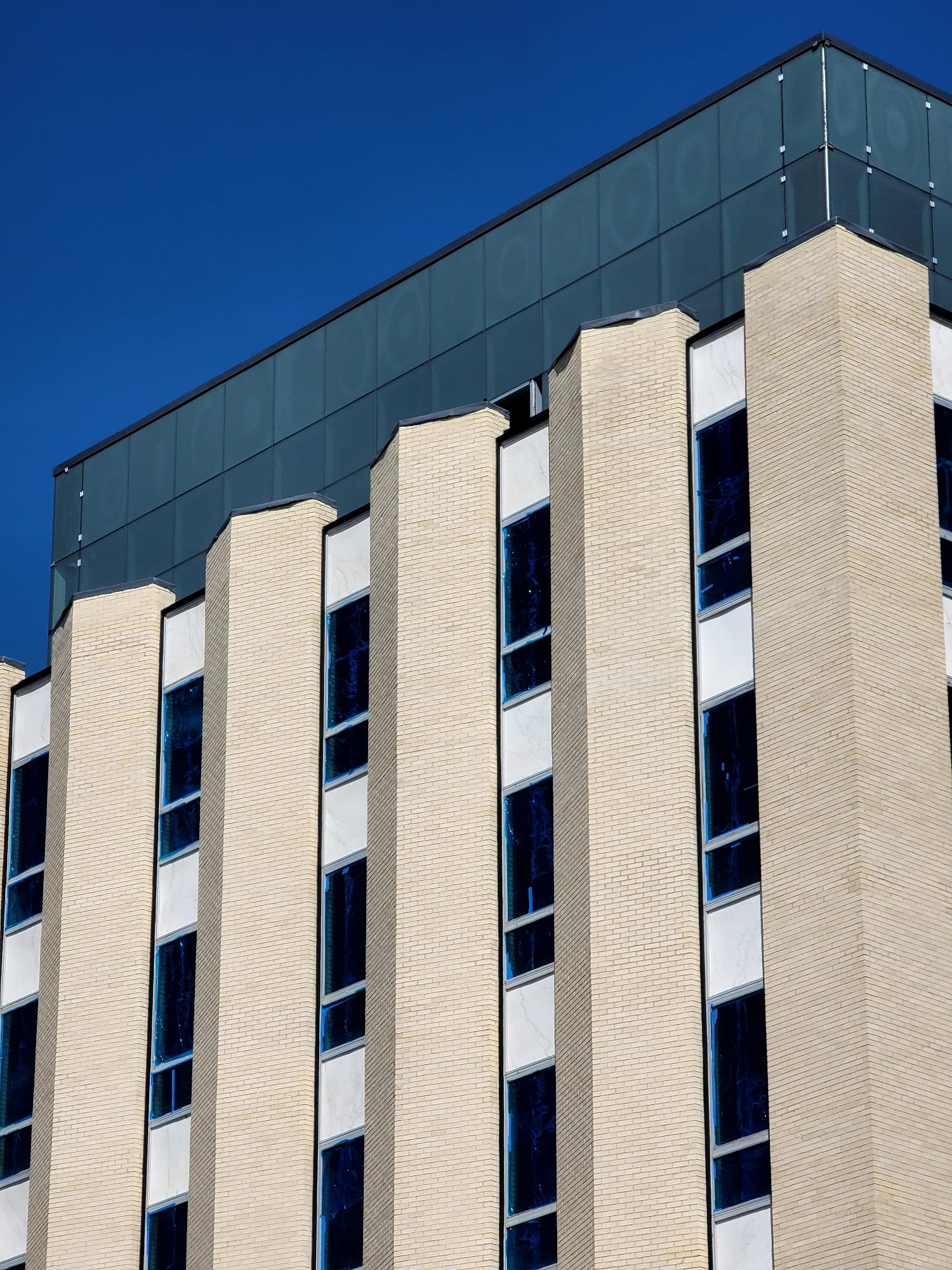
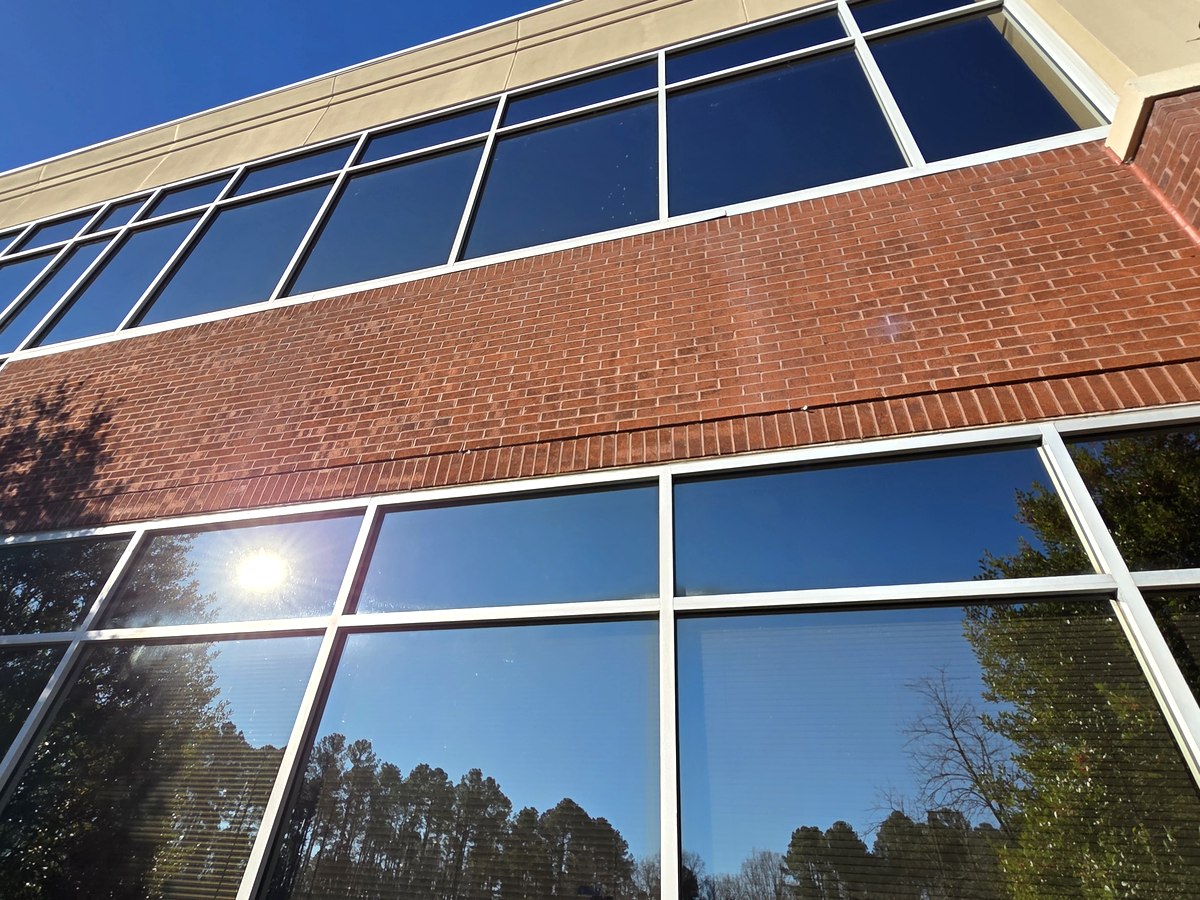
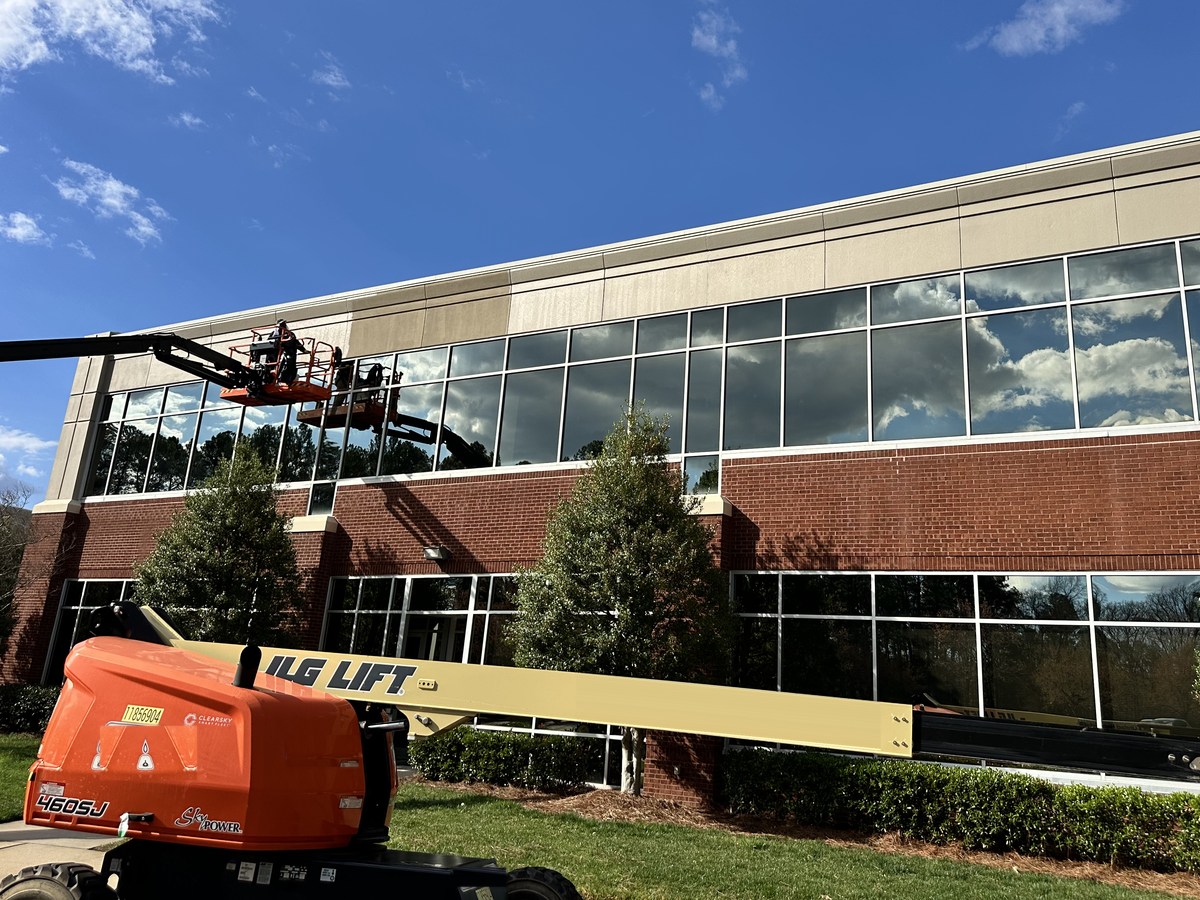
Take a look at a sample of recent commercial waterproofing, caulking, and coating projects Presto has completed across North Carolina.
There is no single interval, because a joint is used up by movement rather than by age. It opens as the wall contracts and closes again as the wall warms, and on Durham’s very long warehouse elevations that movement accumulates across hundreds of feet before it reaches the joint that has to absorb it. Many products are rated for 15 to 25 years, but on exposed elevations taking 46.07 inches of precipitation a year at Raleigh-Durham International Airport we regularly find adhesion loss or cohesive splitting well before that, and the 64 days a year at or below 32 degrees Fahrenheit are a real if unremarkable part of it. Reviewing the whole above-grade envelope every five years is what keeps a failing joint a sealant repair instead of a masonry one.
Waterproofing is the preventative half: sealants, repellents, coatings, flashing and membranes installed so water does not get into the wall to begin with. Water damage restoration is what happens afterward, drying and repairing the inside once it already has. Presto works on the preventative half, and above grade only. We do not take on foundations or below-grade waterproofing, so if water is rising through a slab or coming in through a foundation wall we are the wrong call for it. What we do is renew the exterior systems that keep water out of the envelope, which over any reasonable period costs less than repairing interior finishes again and again.
Yes, and most of our projects run on fully occupied buildings: offices, hotels, condominiums and hospitals, including converted warehouses with ground-floor retail and restaurants directly under the elevation being worked. We use industrial rope access wherever the elevation allows it rather than standing scaffold, put the loudest work outside peak hours, keep tenants informed as the job moves, and phase a long building so only part of it is ever under work at once. Sealant and coating installation is also scheduled into the temperature range the material can actually cure in.
No. Exterior paint is made for appearance: it gives you color and a little weather resistance, but it will not stretch with the wall or bridge a crack. An elastomeric coating is a waterproofing system that also happens to look good, built up far thicker than paint, flexible enough to move with the substrate, and able to span a hairline crack so water cannot get through it. The more useful Durham question is whether either belongs on the wall at all. On stucco, EIFS and concrete an elastomeric system is usually the right answer. On soft historic load-bearing brick it usually is not, because a film that tight holds moisture inside a wall that can only dry through its own face, and there we specify a breathable penetrating repellent instead.
The signs that mean now rather than next year: joint sealant that is cracked, gapped or pulling away from one face; dark streaking down the wall below a failed joint; efflorescence, the white mineral bloom, on brick or concrete; damp patches or bubbling paint on an interior wall; coatings that are chalking, peeling or lifting off the substrate; and brick faces that have started to come away behind coating that still looks sound. That last one is the Durham signal worth acting on quickly, because on a load-bearing wall the material losing its face is the material carrying the floors. Send photographs of the elevations and tell us what you are seeing, and we will scope what is needed and in what order.
Yes, and it is part of the scope rather than an add-on. Our project management team files permit applications directly and handles condominium board approvals, association reviews and any design review submissions a building needs. In Durham that means working to the North Carolina State Building Code, 2024 edition effective 1 July 2025, with its separate Existing Buildings Code volume for work on older stock, and permitting through one joint department, Durham City-County Building and Safety, rather than a city authority plus a separate county one. Where a building is a local landmark or stands in a designated local historic district, a Certificate of Appropriateness is required for any exterior change to it, regardless of the age of the element, how visible it is, or whether a building permit is needed, so we identify that at specification stage and build the review into the schedule. Presto holds nationwide general liability and workers’ compensation coverage and meets every applicable local and state requirement on the job.
A joint left open on an 850-foot warehouse elevation has a great deal of wall to work with before anyone notices it indoors. Tell Presto Restoration what your elevations are doing and we will specify the work while it is still sealant and repellent rather than masonry.
Call us today at 1-800-785-9927 or click Request A Quote.