






A Durham commercial roof is usually not one roof. The warehouse stock the tobacco districts were built from is very long and comparatively narrow, and each building is subdivided by projecting corbeled firewalls that carry up through the roof plane and stand above it: Smith Warehouse, at 850 feet long and 100 feet wide, is broken into 12 such units of roughly 70 feet. What sits on a building like that is a series of bays separated by masonry walls, so the roofing problem here is one of interfaces rather than of open field. Every firewall brings its own coping, counterflashing and membrane termination, and a detail repeated twelve times on one building fails twelve times. Drainage cannot run the length of the building either, since the walls interrupt it, so water has to be taken off within each bay and the number of outlets multiplies with every division. The Bright Leaf district listing records flat or very shallow gable roofs on this stock, which is a reminder that not every roof in the tobacco districts is a true low-slope field. Owners facing that much detail work are routinely told the only answer is to take the whole thing off. Where the structure is sound, it almost never is.
Presto Restoration coats sound commercial roofs with silicone systems, and the usual result is another decade or more of service at a small share of replacement cost. Eligible substrates run from single-ply in TPO, PVC, EPDM and CSPE through built-up roofing (BUR), modified bitumen and cap sheets, to aged or previously coated metal, spray polyurethane foam (SPF), and most acrylic or urethane coatings already in place. On this building stock the scope is written around the terminations before anything else: coping and counterflashing at each firewall, base flashing where the membrane turns up the masonry, and the drains or scuppers serving one bay at a time. The deck underneath matters as much as the covering on top, because these roofs sit over heavy timber and wood framing rather than steel deck or concrete, and attachment, fastening and the behavior of a deck that has been wet are all different for it. Roofing work is carried out under the North Carolina State Building Code, whose 2024 edition took effect on 1 July 2025 and carries a separate volume for existing buildings. The finished roof is one reflective membrane per bay with its wall junctions sealed into it: leaks stopped, cooling load reduced, years added, and not a day of tear-off anywhere in it.
The silicone systems Presto installs are specified for what this market’s roofs actually are: warehouse bays divided by masonry, parapet and firewall terminations recurring at short intervals, and shallow-pitched fields taking 46.07 in of precipitation a year as measured at Raleigh-Durham International Airport. The systems we most often restore on Durham buildings are set out below.
Silicone is the coating chemistry that holds up best where water is slow to leave a roof, and on a bay-divided warehouse roof that is a real condition rather than a hypothetical one. Each bay has to drain on its own, so a blocked outlet or a low area sitting against a firewall has nowhere else to send water and simply keeps it. Days of standing water do not change how silicone behaves: it remains hydrophobic and holds up under UV, while acrylic and elastomeric films soften and give way after prolonged wetting. It also carries reflectivity of up to 90%, which counts on two- to four-storey buildings where the roof is a large share of the exposed surface. Just as usefully, silicone goes down as a monolithic film that can be carried up a firewall or a parapet and terminated without a lap, and laps at those turns are where this stock leaks. Presto installs premium silicone systems, including GE Enduris, once the substrate has passed adhesion testing and the flashings and terminations have been rebuilt. The finished surface is seamless and comes with manufacturer warranty terms.
Single-ply membranes give out at their edges and details long before the field wears out, and a roof split into twelve bays is mostly edges and details. A TPO, PVC, EPDM or CSPE sheet in one of these bays terminates against masonry on two sides, so the sheet’s movement is delivered into base flashings and terminations at short intervals instead of travelling a long uninterrupted run. Add the curbs, drains and penetrations each bay needs for itself and the number of details per square foot on this stock is unusually high. Thin spots, pinholes and small seam openings show up at those details first, and on a converted warehouse each one sits directly over occupied floor space. Silicone over the existing sheet closes those weak points, carries continuous waterproofing across the bay and up onto the masonry that bounds it, and puts a reflective layer back over the whole unit. It is also the approach that keeps tenants in place, which on buildings let to offices, studios and restaurants is usually what decides the job.
Everything an SPF roof does rests on the top coat over the foam, and that coat erodes, with renewal generally due somewhere in a 10-15 year band. On a bay-divided roof that coat does not wear evenly: it goes first where water lingers against a firewall and where foot traffic concentrates around the one or two outlets serving a bay, while the middle of the same bay can still measure sound. Once the coat is through, bare foam takes on water, and foam holding water over a wood deck is a problem for the foam and the deck together. A silicone recoat puts the protective surface back over the foam already in place, closes pinholes and minor damage, and takes the film up the walls and curbs again as one piece. Removing and respraying foam costs a multiple of that, so a foam roof still dry beneath its coat gets recoated rather than replaced.
Asphaltic roofing, meaning built-up roofing, modified bitumen and cap sheets, covers a great deal of Durham’s older commercial stock: warehouse floors converted to offices and studios, and downtown buildings put up across the first four decades of the 20th century. Given a dry deck and dry insulation, these are among the better restoration candidates on this stock. They fail at base flashings, terminations and penetrations rather than out in the field, and on a roof divided by masonry the length of base flashing per square foot of roof is remarkable: two firewall junctions plus a parapet return for every single bay. Silicone coating seals those junctions and halts surface oxidation across the field between them. Oils migrating upward out of an asphaltic substrate will discolor a new coating and undermine its bond, so a manufacturer-approved bleed blocker primer is written into the specification wherever the substrate warrants one. Adhesion and finish appearance both depend on that step.
Restoration is not the right answer for every roof, and establishing that early is what saves money. Saturated insulation, substrate failure spread across a bay, a deck that has lost the capacity it was built with, or an incumbent coating silicone cannot bond to will each rule a roof out. On this stock the deck gets tested rather than assumed: over heavy timber and wood framing, water that has been in the assembly for years can leave rot and fasteners with nothing sound to hold, and no membrane laid on top corrects that. Adhesion testing is taken unit by unit, because a twelve-unit building can carry a different roofing generation on each unit, patched and re-covered at different dates. Sounding and moisture readings run alongside it, and terminations at the firewalls are opened wherever the condition is unclear. Where the answer is no, whether for the roof or for particular units of it, you have that before money is spent, along with the documentation a replacement contractor will ask for.
Every Durham commercial roof restoration runs through the same five phases, ordered so the deck and the terminations are understood before a price is set against them, the details letting water in are corrected first, and the coating goes down one bay at a time rather than all at once.
The roof is recorded bay by bay: membrane type and condition, base flashings, coping and counterflashing at each firewall, curbs and penetrations, and every drain or scupper serving a bay on its own. Anything structural that would disqualify a coating comes out here rather than after mobilization.
Compatibility is established on your own substrate rather than from a product data sheet. Adhesion pulls are taken in more than one unit, with moisture readings anywhere the assembly may still be holding water, because a twelve-unit roof can carry a different history in each unit.
We specify the silicone system, any primer or bleed blocker required, the coping, counterflashing and drainage work that has to come first, measured square footage by bay, and a phased schedule that keeps tenants in the building.
Surface preparation first, then base flashing and termination rebuilds at the firewalls and parapets, then silicone at specified thickness across one bay before the next is opened, with wet-mil readings taken as each unit closes.
At handover you receive warranty paperwork, product data sheets, before-and-after photography unit by unit, and a maintenance schedule naming the outlets and wall terminations to check and how often to check them.
Leaks in one bay, water standing in another, or a roof simply near the end of its expected life? Establish whether coating is possible before a tear-off is authorized. Tell us roughly how large the roof is, how many units the building is divided into, and which of them are giving trouble, and a specialist will say plainly whether silicone belongs on it.
Call 1-800-785-9927 or Request A Free Quote.
A roof carrying this many terminations needs looking after between projects and not only during one, which argues for a network in the market rather than a crew passing through it. Presto therefore pairs its own restoration work with specialized partners here, so coverage runs from a full roof program down to the recurring small items that become leaks.
For routine upkeep and everyday facility work, our sister divisions are the place for a property manager to start:
Building Restoration Durham: Repairs to structure in specific locations, and exterior preservation carried out from rope or stage.
Building Maintenance Durham: Scheduled preventative work: outlets kept clear, minor items dealt with while they are still minor.
Building Services Durham: General commercial building support, handled locally, for properties in Durham and around the Triangle.
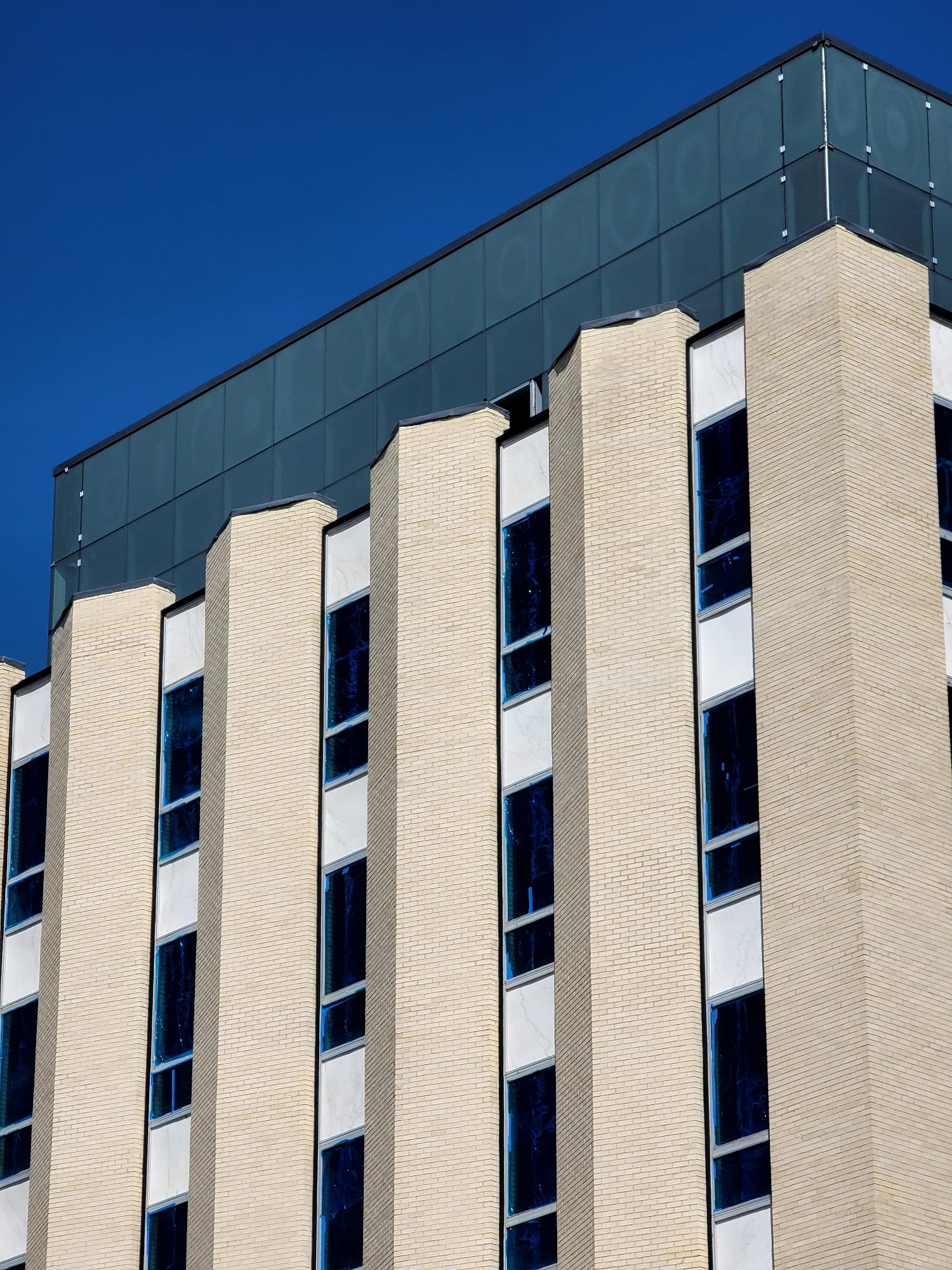
Expect a silicone restoration to come out between 30% and 50% of what tear-off and replacement would cost, the position inside that band depending on roof type, present condition, and how much termination and drainage work has to be done first. What moves the number in Durham is the count of details rather than the acreage. A twelve-unit warehouse roof carries twelve coping and counterflashing runs, base flashing on both sides of every firewall, and outlets serving each bay separately, and a tear-off has to reconstruct all of it, unit by unit, over a heavy timber deck, with tenants on the floor below. Coating leaves the existing roof and its structure where they are, rebuilds only the details that have actually failed, and adds a decade or more of service. You get a scoped roof and a real number, in a form you can put straight next to a replacement bid.
Added service life on a premium silicone system runs from around ten years to around twenty, decided by product choice, applied thickness, the state of the substrate beneath and what maintenance the roof then receives. On this stock the terminations decide it. The field between two firewalls is the straightforward part; it is the coping, the counterflashing, the base flashing on both walls and the one outlet serving that bay which age first, and a coating that has released at a single junction is taking water while the rest of the bay still measures sound. Keeping every outlet clear and inspecting each wall junction on a schedule therefore counts for more here than any other maintenance item. Laid to specification and warranted by the manufacturer, one of these systems will hold its own against a new single-ply membrane at a considerably lower price, and the paperwork for it is handed over at closeout.
Most structurally sound substrates qualify: TPO, PVC, EPDM and CSPE single-ply membranes; metal roofs that are aged or already coated; built-up roofing, modified bitumen and cap sheets; spray polyurethane foam; and most existing acrylic or urethane coatings. On asphaltic roofs a bleed blocker primer usually goes down first, to stop oils working their way up into the new film. The Durham qualification, though, is about the deck as much as the covering. These roofs sit over heavy timber and wood framing, which changes how a system is attached and how the assembly behaves once it has been wet, so we confirm the deck is dry and sound before anything is specified. And because a long warehouse is effectively twelve roofs sharing one address, the survey and the adhesion testing are done unit by unit; additions, re-covers and decades of patching can leave more than one substrate on the same building. One boundary worth naming: coating is a low-slope and shallow-pitch practice, so the steep slate and stone of the Collegiate Gothic roofs on Duke’s West Campus are a different trade entirely from the flat bays of the tobacco districts.
Once the problem has moved off the surface and into the assembly, replacement is the correct answer, and the cases are a short list: saturated insulation, a deck no longer carrying what it was built for, substrate failure through an entire unit, rot in the framing, or an existing coating silicone will not bond to. On a bay-divided roof the finding is frequently partial. One unit that has been taking water at a firewall junction for years can be past saving while the eleven beside it are sound, and replacing that unit and coating the rest in the same season is often the right plan. Over a timber deck the rot question has to be settled first, because a coating laid over framing that has been wet for years conceals the problem instead of ending it. We test before recommending anything and we say plainly when a roof, or a section of it, is beyond restoring, and since tear-off is not work we perform you can take the findings straight to a contractor who does it.
Yes. Silicone reflects roughly 80-90% of solar radiation, against a dark or aged roof surface that absorbs most of it and passes the heat down into the space beneath. On a two- to four-storey warehouse conversion the roof is a large share of the building’s exposed surface and the top floor is the one tenants complain about, so the effect shows up on the utility bill and in how the upper level actually feels through the summer. The return is seasonal rather than year-round, and a coating is not an insulation upgrade. The other half of the benefit is indirect and applies in every month: dry insulation performs to its rated R-value, and it only stays dry while the wall junctions above it are still holding.
No. The work stays on the roof and the floors below remain in use, which on converted warehouse property is generally the only workable arrangement, since the tenancies are offices, studios, restaurants and apartments that cannot close for a season. What the division of the roof changes is sequencing: one bay is coated, closed and left to cure before the next is opened, so only one stretch of the building is live at any point. Air intakes are coordinated with building staff to manage odor during application, and because silicone carries minimum surface temperature and dew point requirements and needs undisturbed cure time, placement is planned against the forecast rather than against the calendar. Working unit by unit also means the tenants affected in a given week are known ahead of time and can be told.
Establish whether your Durham commercial roof will take a coating before capital is committed to tearing it off. Presto Restoration works through the roof unit by unit, tests both the covering and the framing under it, and says plainly whether a silicone system will add years. On a building carrying this much termination detail, the difference against a replacement price is large.
Call us today at 1-800-785-9927 or click Request A Quote.