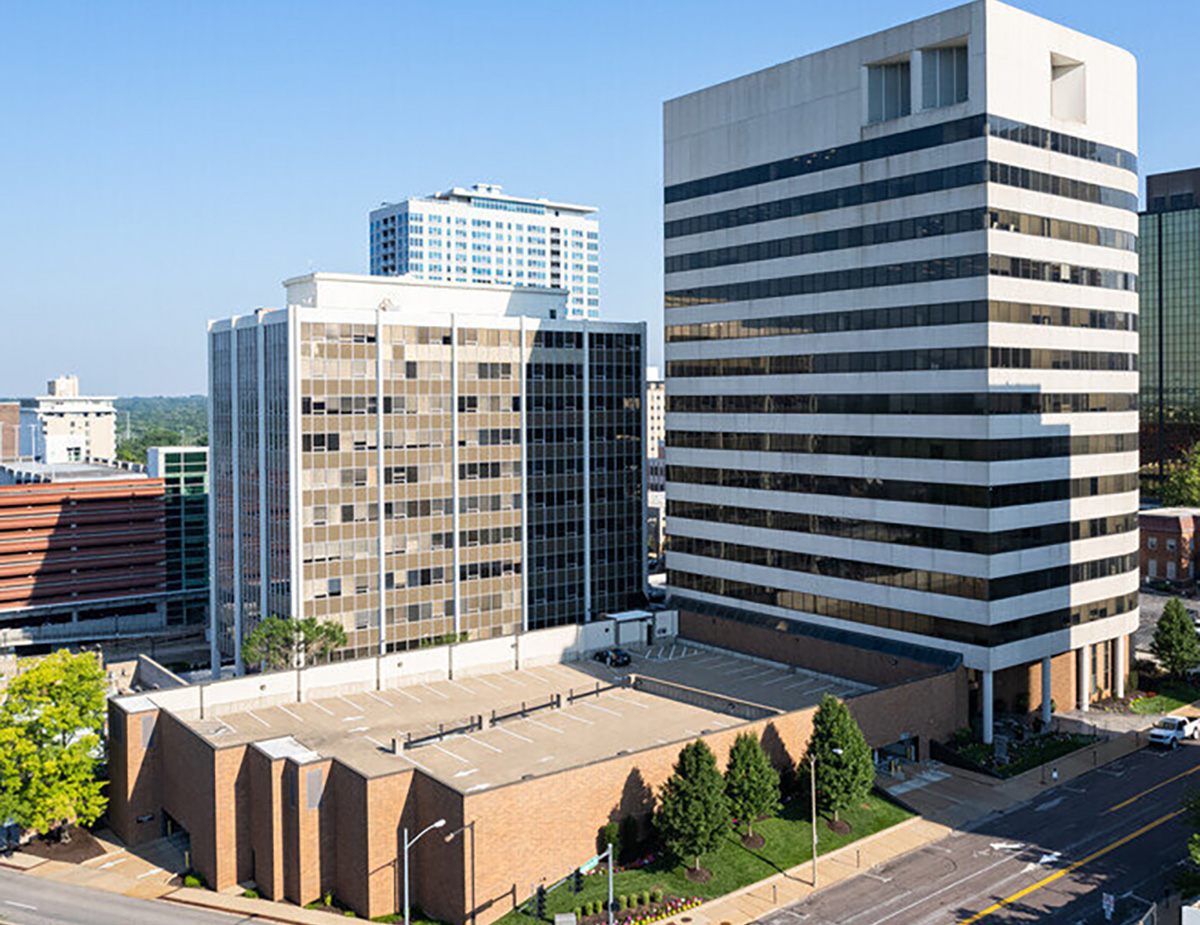


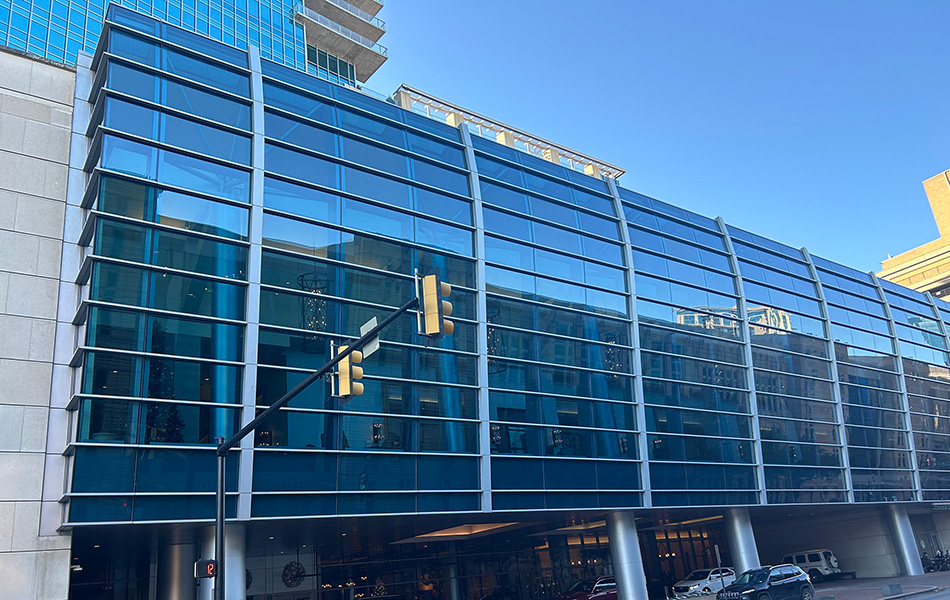






Historic building restoration is the repair of an older or landmark building using materials and methods that match how it was originally built, so the building stays watertight without losing the original brick, stone, mortar, stucco, windows, and metalwork that give it its character and historic value. Buildings from the late 1800s through the mid-1900s were built with soft lime mortars, natural stone, multi-coat stucco, and steel or wood windows that behave very differently from modern materials. Repairing them with today’s standard commercial products, such as hard Portland-cement mortar, sealed acrylic coatings, or aggressive pressure washing, usually speeds up the damage instead of stopping it.
Presto Restoration has restored commercial buildings across the United States since 1998, including historic buildings such as the Hotel Roxy Lofts in Atlanta. Every historic project gets the same deliberate, materials-first approach. Our scopes generally follow the National Park Service’s Preservation Briefs, the field’s most widely respected technical reference, tailored to each building’s architectural style, materials, and local review requirements. That means lime-based mortars matched to historic strength and color, cleaning methods gentle enough for soft stone and aged stucco, and in-kind repairs rather than wholesale replacement. Whether your property is locally designated, sits within a historic district, or is individually listed on the National Register of Historic Places, we deliver work that meets the higher bar historic buildings require.
Presto delivers a full range of historic preservation services for landmark buildings, locally designated structures, and architecturally significant properties across the country.
Mortar failure is the most common problem on historic masonry, and it is also the most frequently botched repair. Buildings from the late 1800s into the 1930s were laid with soft lime mortars that flex with the building, absorb minor movement without cracking the brick, and let moisture escape as vapor. Repointing them with modern Portland-cement mortar traps that moisture inside the softer historic brick or stone, which causes spalling and destroys original material that cannot be replaced. Our masons match new mortar to the original in strength, color, and composition, remove failed joints without damaging the surrounding masonry, and tool the new joints to the original profile. It is the slower, correct way to repoint a historic building, not the shortcut that ruins one. Learn more about our brick and masonry restoration services.
Limestone, sandstone, brownstone, granite, cast stone, terra cotta, and marble define much of America’s pre-war architecture, and cleaning or repairing them the wrong way can cause permanent damage. Aggressive cleaning etches soft stone, strips decades of patina, or bleaches surfaces that were never meant to look brand new. We match the cleaning method to the stone type and its condition, using micro-abrasion, preservation-safe chemical cleaners, and controlled low-pressure water rather than one process for every surface. Where stone has spalled or cracked, we make color- and texture-matched repairs designed to behave like the surrounding original. The goal is always a stone surface that reads as authentically preserved, never over-polished or artificially new.
Original steel-casement and wood windows are signature details of historic buildings, and they are routinely lost to premature replacement. Swapping them for modern aluminum or vinyl units can jeopardize a building’s historic approvals, and the replacement rarely outperforms a properly restored original. Our window restoration keeps the original glass, frames, and hardware in place while fixing what is actually failing: hardened glazing compound, corroded steel muntins, decayed wood, seized hardware, and gapped perimeter sealants that let water in during storms. A well-restored historic window, properly maintained, can outlast a modern replacement unit.
Traditional lime stucco behaves nothing like the acrylic and EIFS products used today. Historic stucco was troweled on in several coats over masonry or wood and metal lath, with each layer designed to let moisture pass through rather than trap it. Patching it with modern cement or acrylic products seals moisture inside the wall, which speeds up deterioration of the surrounding original stucco. We rebuild historic stucco with lime-based formulations, repair failed lath, and finish to match the original texture and hand-applied character. This matters most on Spanish Colonial, Mission, and Mediterranean Revival buildings and other stucco-clad landmarks, where getting it right protects both performance and the look that gives these buildings their value.
Bronze storefronts, cast-iron facades and balconies, wrought-iron gates, copper cornices, and ornamental aluminum grillework appear throughout America’s historic building stock. Weather, pollution, and salt air all drive corrosion on these metals, yet the developed patina on bronze and copper is part of what makes them historically valuable. We remove active, structurally damaging corrosion while preserving authentic patina wherever it is not harming the metal, then refinish using methods that respect the original character. Stripping historic metalwork to bare substrate is a last resort, not our default. The goal is keeping historic character intact, not manufacturing a brand-new look.
Waterproofing a historic building takes a different approach than waterproofing a new curtain-wall tower. Older masonry, lime mortar, and stucco walls were built to breathe: moisture that gets in during a storm is meant to evaporate back out through the wall, not get trapped behind a sealed membrane. Applying fully waterproof, non-breathable coatings to that kind of wall can cause serious hidden damage as trapped moisture works against the original material from the inside, and in cold climates freeze-thaw cycles make that damage worse. Our historic facade waterproofing uses vapor-permeable water repellents and joint sealants that are compatible with lime-based construction, and we apply fully impermeable systems only where the original design called for them.
Working on a historic property calls for a slower, more deliberate process than a standard commercial restoration job. Every Presto historic preservation project runs through a five-phase process built to catch every issue up front, specify period-correct materials, and carry out the work without harming original material that can never be replaced.
We document every area of deterioration on your historic property and separate original fabric (irreplaceable) from later, non-original additions (modifiable). We don't touch anything until we understand the building's history.
We identify the original materials in detail: lime mortar mixes, stone type, original stucco composition, window glazing, and metal alloys. We recommend lab analysis anywhere the original material is uncertain.
We translate findings into a detailed scope with quantified line items and period-appropriate product specs. We coordinate directly with property owners, preservation consultants, architects, and local review boards as needed.
Trained crews carry out the work using period-appropriate materials and traditional techniques where called for. Quality control is strict, since historic projects leave no room for rework on substrate that can't be replaced.
We deliver complete project documentation: before-and-after photography, material data sheets, warranty details, and maintenance guidance. For designated properties, this record can support future preservation board reviews.
Whether your historic property already shows visible wear or you’re getting ahead of it with proactive maintenance, our specialists will provide a free, no-obligation assessment with recommendations grounded in preservation-grade practice.
Call 1-800-785-9927 or Request A Free Quote.
Presto Restoration is headquartered in Atlanta and restores historic and landmark buildings across the United States. Our crews travel to projects nationwide, and we coordinate with preservation architects, consultants, and local review boards wherever your property is located.
Find historic restoration services in your city on our service areas page, or call 1-800-785-9927 to talk with a project manager about your building.
Explore recent historic preservation and landmark restoration projects Presto has completed across the country.
Historic building restoration repairs an older or landmark building using materials and methods that match its original construction, so the building is watertight and sound again without losing its original character. Ordinary restoration uses whatever modern materials do the job; historic preservation adds a second goal of keeping original materials and craftsmanship intact. In practice that means lime mortar instead of Portland cement, gentle cleaning instead of aggressive blasting, and reversible repairs wherever possible. It takes longer and costs more, but it is the only approach that protects both a building’s historic designation and the qualities that make it worth preserving.
Older masonry buildings were built with soft lime-based mortar that is intentionally weaker than the surrounding brick or stone. When the building moves with temperature, humidity, or minor settling, the mortar absorbs the movement instead of the masonry cracking. Lime mortar also lets moisture vapor pass through the wall rather than trapping it. Repoint that same wall with hard modern Portland-cement mortar and moisture gets trapped inside the softer original material, leading to spalling that cannot be undone. Getting the mortar mix right is what keeps the original masonry intact.
Yes, and a properly restored historic building often performs better than people expect. Original steel or wood windows, once restored with fresh glazing compound and perimeter sealant, perform comparably to many replacements. Thick masonry and stucco walls provide real thermal mass that evens out indoor temperature swings. Breathable, vapor-permeable waterproofing often outlasts modern sealed coatings because it does not trap moisture inside the wall. We focus on the building exterior; for HVAC or insulation upgrades, owners typically bring in a contractor experienced with historic buildings.
Historic work moves more slowly than standard restoration because the materials, hand techniques, and quality-control standards are more exacting. A facade restoration on a smaller historic commercial building might run 2 to 4 months, while a full preservation scope on a larger landmark can take 6 to 12 months or more. Timelines also depend on any local historic board approvals required before work starts, which can add weeks or months. We lay out a realistic timeline during scoping so owners can plan around it.
Yes. We have worked across a range of designation levels, from locally designated landmarks and historic districts to properties individually listed on the National Register of Historic Places. Requirements differ depending on the designation, whether a certificate of appropriateness or similar local review is required, and which parts of the scope trigger that review. We review your property’s designation status during the initial assessment and map out what coordination the proposed work will need.
For designated properties, approvals are usually led by the owner working with a preservation architect or consultant who knows the local board’s requirements. Our role is to provide an accurate scope, period-appropriate material specifications, and documentation that holds up to that level of review. We stay in close contact with the owner’s preservation team throughout the project so our work supports any submissions or approvals, and we comply with all applicable local and state requirements on every job.
Yes. Our historic preservation scopes typically follow the National Park Service’s Preservation Briefs, the most widely used technical reference for historic restoration in the country. The Briefs cover masonry cleaning, mortar formulation, historic window repair, stucco repair, and more. Depending on a property’s designation and architectural style, we may add other standards as needed. Owners working with a preservation architect are welcome to review our proposed scope against the relevant Briefs before work begins.
Historic buildings can’t be recreated once they’re gone, and modern materials and shortcuts can’t properly restore them. A free historic property assessment from Presto Restoration pinpoints exactly what your building needs to hold onto its character, performance, and value for the next generation.
Call 1-800-785-9927 or Request A Historic Property Assessment online.