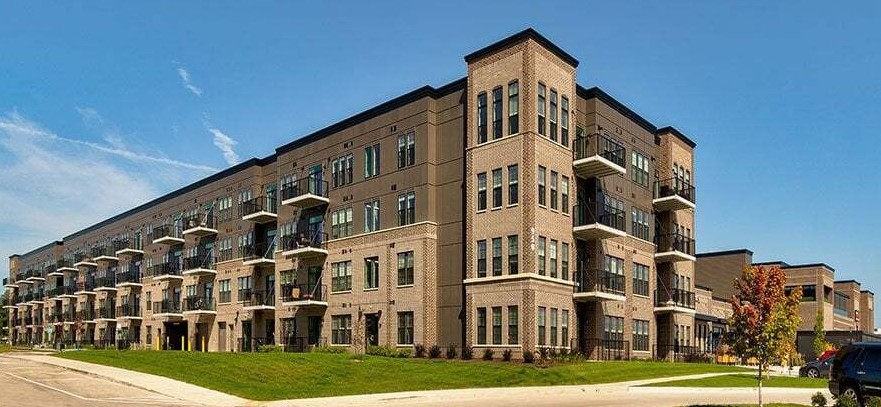
Presto Building Facade Restoration & Waterproofing
Building Facade Waterproofing & Restoration Services 1-800-785-9927

An owner weighing deck work downtown is weighing it on a revenue asset, because structured parking is what makes the office towers, the government complex and the event district usable, and many of those garages tie directly into the skywalk system, which puts the deck above heated occupied space rather than open air. That raises what a failure costs and narrows what a shutdown is worth. The deterioration mechanism runs on its own schedule regardless. Every vehicle leaving a treated street in January carries brine, slush and road salt onto the deck and leaves it to melt, that meltwater moves chloride into every crack, joint and drain, and chloride initiates corrosion in the reinforcing steel inside the slab. Corroding steel expands and expanding steel fractures concrete from within, which is why the damage is structural before it is visible.
The exposed top level meanwhile takes the full freeze-thaw cycle with nothing over it, and every cycle opens the cracks a little further. Presto delivers restoration and waterproofing for above-grade parking across Des Moines, elevated decks, freestanding garages and rooftop levels alike: traffic-bearing membrane systems, horizontal and vertical expansion joint replacement, and sealing of the control, cold and construction joints through which water bypasses the membrane and reaches the slab. We work above grade only, not on foundations or below-grade waterproofing.
Traffic coatings through expansion joint replacement: the complete restoration and waterproofing line, specified against what a Des Moines winter does to an above-grade parking structure.

The membrane is where the money is best spent, because it is the only element standing between winter chloride and the reinforcing steel in the slab. It has to do that while also keeping water out of occupied levels, absorbing constant tire scrubbing, vehicle loads, oil and chemical spills, and moving with a deck that travels through a hundred-degree annual range. On a garage feeding the skywalk system the levels below are heated and occupied, so the cost of a failure is measured in tenant disruption rather than cleanup. Presto installs high-performance traffic-bearing membranes for drive lanes and parking bays and pedestrian-rated systems for walkways, stair towers and rooftop decks, as seamless liquid urethane and polymer coatings bonded tightly to the concrete, which removes the laps where water finds a path. Installation follows manufacturer specification exactly, surface temperature windows included, and is documented in full to protect warranty coverage.
Whether a horizontal joint is sealed or replaced is a decision that this climate tends to settle differently than a mild one would. These joints cross the drive lanes to let the structure flex with temperature and shifting load, and with this much annual range they work harder, and wear faster, than their counterparts further south. Once the seal or the hardware goes, meltwater runs straight through the deck to the levels below carrying chloride with it, so the failure is not cosmetic and does not wait. Presto performs complete horizontal expansion joint replacement including the original hardware, matching the existing system in kind or upgrading to a higher-performing product line where the owner prefers, and the upgrade conversation arises more often here for exactly the wear reason above. Having installed systems from virtually every major manufacturer, our crews select for the structure’s real movement characteristics and traffic volume.


Vertical joints, where the deck meets walls, columns and adjacent building sections, absorb movement that behaves nothing like drive-lane movement and require their own installation technique. In Des Moines they also carry a loading condition the drawings never contemplated, which is plowed snow: clearing the deck pushes it to the perimeter and piles it against these joints, where it sits for weeks as a concentrated slow-release chloride source positioned precisely at the connection. Presto delivers the full scope of vertical joint work, complete system replacement, hardware swaps, resealing and targeted repair. Closing these joints properly eliminates one of the most persistent water-entry paths in a garage and adds years to the surrounding concrete and reinforcing steel.
A structure is watertight only when every pathway has been addressed, so a program scoped around the traffic membrane alone is a program that will be repeated. The remainder is the control joints, construction joints, cold joints and the dozens of penetrations where drains, conduit and structural elements pass through the slab. Presto builds complete waterproofing programs using silicone, polyurethane and polymer sealants selected per joint profile and exposure. Drainage detailing weighs heavily here for a specific reason: a drain that performs faultlessly in a rainstorm can be frozen shut during a thaw, and meltwater that cannot leave the deck remains on it. Detailing at drains, scuppers and penetrations is frequently what separates a garage that stays dry for decades from one that cycles through leak repairs every few years.


Control, cold and minor construction joints hold the hardest-working sealant in the structure and receive attention last, which is why they are so often the actual entry point. They carry wheel loads, stand under ponding meltwater, and are required to remain flexible at twenty below, so they crack and debond early. Presto removes the failed material, prepares each joint to manufacturer requirements with backer rod and primer where specified, and installs traffic-rated sealants rated for the low-temperature movement this climate imposes rather than for a mild one. Sound joint seals prevent chloride-laden water from slipping past the traffic membrane into the slab, which is the failure pattern found consistently in garages that have been waterproofed piecemeal over the years.
Each Des Moines parking deck project runs through the same five phases, structured to identify the actual failure rather than the visible one, specify systems rated for freeze-thaw cycling and de-icing chemical exposure, and deliver waterproofing that holds. Membranes and sealants both carry minimum application temperatures, so the work is built around the open season from the outset.


We walk the entire garage: traffic membranes, horizontal and vertical expansion joints, joint sealants, drains, and any active leaks or staining on the levels below.
Leaks in a parking structure rarely surface where the water actually gets in. Targeted water testing and tracing pinpoint the joints, membranes, or penetrations causing the problem.
We select traffic membranes, joint replacements, and sealants matched to your structure and traffic patterns, with phasing planned to keep the garage as usable as possible.
Crews phase work section by section so parts of the deck stay open. Materials go in per manufacturer spec, with tight control over substrate prep and cure times.
You receive full warranty paperwork, product data sheets, before-and-after photos, and maintenance guidance for every system installed.
Membrane failing, joints leaking, sealant debonding from the joint walls? Describe the condition and our specialists will set out the likely mechanism and the most economical remedy that actually resolves it.
Call 1-800-785-9927 or Request A Free Quote.
A structure requires attention between restoration cycles as much as within them, particularly through a winter that deposits chloride on it weekly, so Presto works alongside specialized regional networks to give owners coverage from major structural restoration through everyday facility upkeep.
For routine upkeep and localized facility services, property managers are encouraged to contact our sister divisions:
Building Restoration Des Moines: localized structural repair and exterior preservation.
Building Maintenance Des Moines: scheduled preventative work across the ownership’s portfolio.
Building Services Des Moines: day-to-day commercial building support across the metro.
See how Presto has protected parking structures and commercial buildings across Iowa.
Ten to twenty years is the nominal range, determined by system, traffic volume and maintenance history, and on an exposed deck in a market that salts its streets all winter the realistic figure sits at the short end. The top level receives the plow, the de-icing chemical and the entire freeze-thaw cycle without anything above it, so it reaches replacement well ahead of pedestrian membranes in covered areas. Ramps and entry aprons also wear early, since that is where vehicles first shed their load of slush. Inspecting the structure on a five-year cycle is what keeps the finding a coating problem rather than a steel problem.
Water dripping or staining on the levels below. Cracking or bubbling in the traffic membrane. Expansion joint hardware that is loose, lifting or leaking. Sealant debonding from joint walls. Efflorescence on the concrete. Rust staining descending a slab edge or column, which ordinarily signals chloride has already reached the reinforcing steel. Surface flaking, or a hollow sound underfoot in a drive lane. Each of those warrants assessment before the condition reaches the structure itself.
In nearly every case. The work is phased across sections so the majority of the structure remains available, scheduling is coordinated with property management, and tenants receive advance notice of temporary lane or level closures. On a garage feeding the skywalk system we also plan around the pedestrian routes, so nobody is displaced outdoors in February to get around the work. Membrane systems do require uninterrupted cure time at a surface temperature within the manufacturer’s window, so brief phased closures occur and the sequence is planned against the forecast.
Sealing renews the sealant material and retains the existing hardware, which is correct where the hardware still accommodates the movement and only the sealant has failed. Replacement removes the hardware or joint system entirely and installs new, which becomes necessary once the hardware is worn or is no longer taking the movement. Given the annual thermal range here, hardware wears faster than it does in a mild climate, so replacement is the correct answer more frequently in this market than further south. We assess the actual condition and recommend on that basis, including upgrades to newer joint systems where the economics support one.
Size and scope govern most of it and the season governs the remainder. A focused membrane replacement on a small deck occupies two to four weeks. A full restoration of a large multi-level structure, traffic coatings with joint replacement and complete sealing, occupies three to five months. Because membranes and sealants both carry minimum application temperatures, field work is planned into the open season and scoping is completed ahead of it, so the project commences on a date rather than on a forecast.
We do. Permit applications for parking deck restoration are filed by our project management team directly with the City of Des Moines, and we coordinate with the general contractor where one is managing other work at the property. Presto carries nationwide general liability and workers’ compensation insurance and complies with the applicable local and state requirements on every project.

The economics turn on timing. Chloride that has already reached the reinforcing steel is a structural repair rather than a coating repair, so the useful window closes before the rust staining appears. Describe what the deck is doing while the remedy is still a maintenance line.
Call 1-800-785-9927 or Request A Quote online.


