


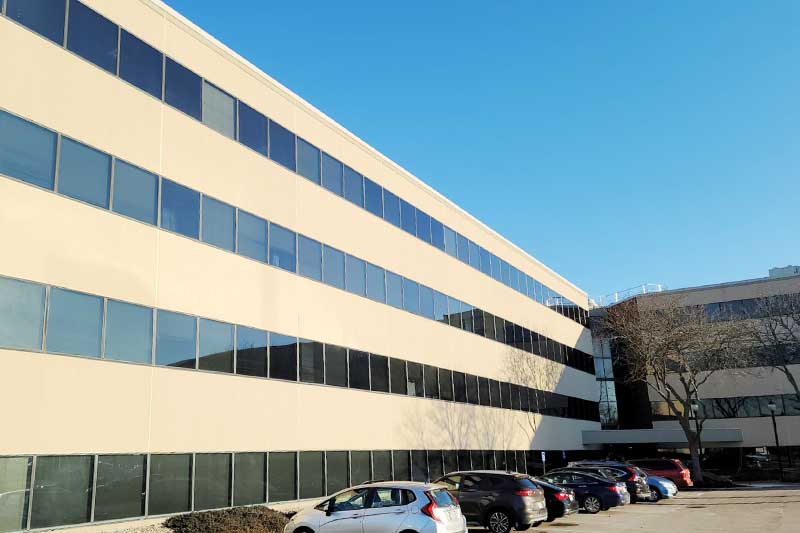
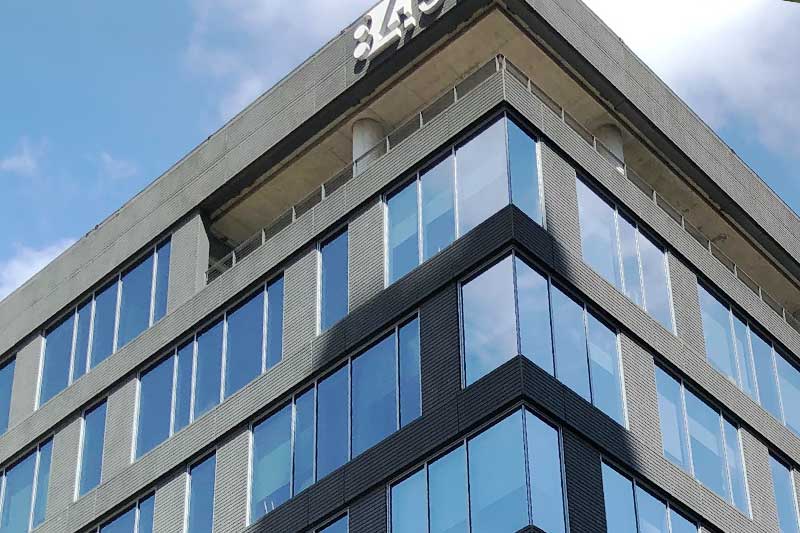
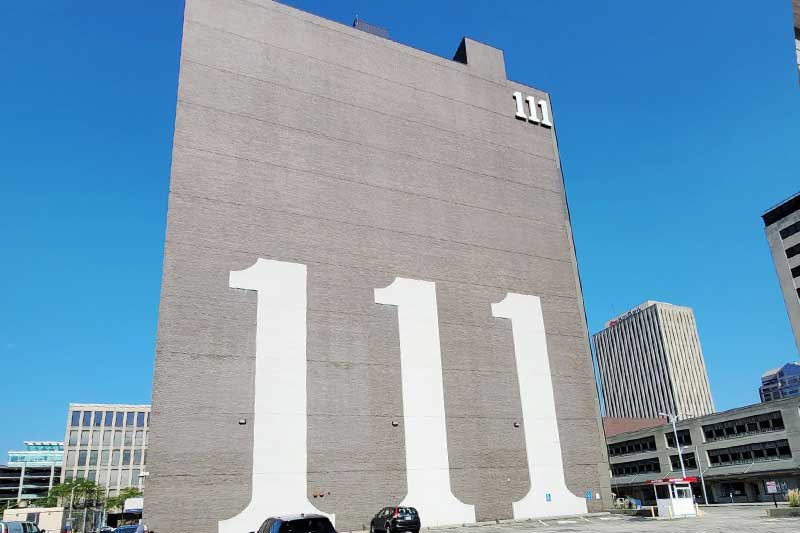





Youngstown’s historic stock was built by the steel industry at its height and it shows: the Stambaugh Building, the bank and office blocks around Central Square, the churches and civic buildings on the Wick Avenue corridor, the houses built by the families who ran the mills, and the older buildings on the Youngstown State campus. The materials are of their period, Berea sandstone, soft-fired brick, cast stone, lime mortar and steel-sash windows, and each has a specific vulnerability in this valley. Freeze-thaw gets behind a sandstone face and lifts it off in sheets. A century of industrial particulate has bonded to porous stone and holds moisture against it. River fog keeps north elevations damp long after the rain has passed. Repair any of that with modern commercial methods and the damage accelerates rather than stops.
Presto Restoration brings hands-on experience with landmark and historically designated buildings across the country, and every historic assignment gets the same deliberate, materials-first approach. Our scopes generally track the National Park Service’s Preservation Briefs, the field’s most widely respected technical reference, applied to the specific stone, mortar and window types a Youngstown building actually has. That means lime-based mortars matched to historic strength and color, cleaning gentle enough for weathered Berea sandstone, and in-kind repair rather than wholesale replacement. Where a property is locally designated we coordinate with the Youngstown Historic Design Review Board, and on tax-credit work we build the scope and documentation around what the Ohio History Connection state historic preservation office will need to see.
Presto delivers a full range of historic property preservation services for landmark buildings, locally designated structures and architecturally significant property across Youngstown, the Mahoning Valley, and the older commercial cores of Warren and Niles.
Mortar failure is the most common problem on historic Youngstown masonry and the repair most often got wrong. Buildings from the 1890s through the 1930s here were laid up with soft lime mortar that could flex with the wall, absorb minor movement without cracking, and let moisture escape as vapor. Repoint that wall with a modern Portland-cement mix and the moisture has nowhere to go but through the softer historic brick or sandstone, which in a freeze-thaw valley means the face spalls off over the following winters and original material is gone for good. Our masons match new mortar to the original in strength, color and composition, cut out failed joints without chewing into the surrounding masonry, and tool the new joint to the original profile. It is the slower, correct way to repoint a historic building rather than the shortcut that ruins one.
Berea sandstone gives Youngstown’s civic and commercial landmarks their character, and it is unforgiving of the wrong cleaning method. Aggressive blasting opens the pore structure and makes the stone absorb more water, not less, which in this climate means faster delamination. Heavy chemical cleaning can leave salts behind that bloom back out for years. We match the method to the stone type and its condition, using controlled micro-abrasion, preservation-safe chemical cleaners and low-pressure water rather than defaulting to one process for every substrate, and we take industrial soiling back far enough to reveal the stone without scouring it. Where a face has spalled or a unit has failed, we make color- and texture-matched repairs engineered to behave the way the original does.
Steel-sash windows are a defining detail of Youngstown’s industrial and institutional buildings, and they are routinely lost to premature replacement. Swapping them for modern aluminum or vinyl usually costs a building its design review approval, and the replacement rarely performs better than a properly restored original. Our window work keeps the original glass, frames and hardware in place and fixes what is actually failing: hardened glazing compound, corroded steel muntins, seized hardware, and perimeter joints that let meltwater in behind the frame. A restored steel window, maintained properly, will comfortably outlive a replacement unit rated for a couple of decades.
Historic stucco behaves nothing like a modern acrylic or EIFS product. It was applied in several coats over wood or metal lath, and every layer was designed to let moisture pass back out rather than hold it in. Patch it with a modern cement or acrylic material and the moisture is sealed inside the assembly, which in a valley winter means the trapped water freezes behind the patch and takes the surrounding original stucco with it. We rebuild it with lime-based formulations, repair failed lath, and finish to match the original texture and hand-applied character. On the Wick Avenue houses and the older institutional buildings, where stucco and stone sit side by side on the same elevation, getting that compatibility right is what keeps the whole wall stable.
Bronze storefronts, cast-iron stairs and railings, wrought-iron gates and ornamental grillework are all over Youngstown’s historic inventory, which is unsurprising in a city that made its money from metal. Road salt and a century of industrial deposition both accelerate corrosion. At the same time, the developed patina on bronze and copper is part of what makes the element historically valuable. We remove active, structurally damaging corrosion while preserving authentic patina wherever it is not compromising the metal, then refinish by methods that respect the original character. Stripping historic metalwork back to bare substrate is a last resort here, not a default.
Waterproofing a historic Youngstown building calls for a different approach than waterproofing a modern one. Older masonry, lime mortar and stucco assemblies were built to breathe: water that gets in during a storm is meant to evaporate back out through the wall. Seal that wall with a modern impermeable membrane and the moisture is trapped, and in a market that freezes repeatedly through the winter the trapped water turns to ice inside the substrate and destroys it from within. Our historic facade waterproofing uses vapor-permeable water repellents and joint sealants compatible with lime-based construction, and we reserve fully impermeable systems for the specific locations the original design intended them.
Historic work in Youngstown runs slower than standard commercial restoration, and it should. Every project moves through five phases built to identify what is original before anything is touched, specify period-correct materials, and carry the work out without losing fabric that cannot be replaced.
We document every area of deterioration and separate original fabric, which is irreplaceable, from later non-original additions, which are not. Nothing is touched until we understand what the building actually is.
We identify the original materials specifically: the lime mortar mix, the sandstone bed and its weathering characteristics, the original stucco composition, the glazing, and the metal alloys. Where the material is uncertain we recommend laboratory analysis rather than guessing at a match.
Findings become a detailed scope with quantified line items and period-appropriate product specifications. We coordinate with owners, preservation consultants, architects, the Youngstown Historic Design Review Board and, on tax-credit projects, the Ohio state historic preservation office.
Trained crews carry out the work with period-appropriate materials and traditional technique where it is called for. Quality control is strict, because there is no rework available on substrate that cannot be replaced.
We deliver full documentation: before-and-after photography, material data sheets, warranty details and maintenance guidance. On designated property that record supports future review board submissions.
Whether the building is already showing visible wear or you are getting ahead of it, describe what you are seeing and our specialists will tell you what preservation-grade practice actually calls for here, and what it does not.
Call 1-800-785-9927 or Request A Free Quote.
Covering Youngstown’s historic buildings and the older commercial cores of Warren and Niles at a consistent standard takes permanent regional infrastructure, not occasional crews. Presto coordinates a network of specialized divisions so owners get seamless coverage, from preservation-grade envelope work down to routine upkeep.
For day-to-day and preventative facility needs, we encourage property managers to reach our sister divisions directly:
Building Restoration Youngstown: Focused on targeted structural repair and exterior preservation at height.
Building Maintenance Youngstown: Dedicated to the preventative maintenance that keeps a historic property from losing original fabric between projects.
Building Services Youngstown: Your resource for comprehensive, day-to-day commercial building support across the Youngstown market.
Recent historic preservation and landmark restoration projects Presto has completed for owners across Ohio.
Ordinary restoration has one goal: get the building watertight and functional again with whatever modern material does the job best. Preservation adds a second and harder goal, which is to keep the original character, materials and craftsmanship while restoring performance. In practice that means lime mortar rather than Portland cement, calibrated cleaning rather than blasting, and reversible repairs wherever they are possible so a future owner is not locked into our decisions. It costs more and it takes longer. It is also the only approach that protects both the designation and the qualities that earned it.
Because the mortar is meant to be the sacrificial element. Buildings of this era were laid up with soft lime mortar deliberately weaker than the brick or sandstone around it, so when the wall moves the joint takes the strain instead of the masonry cracking, and so moisture can escape as vapor. Repoint that wall with a hard modern Portland mix and the relationship is reversed: the joint is now stronger than the stone, moisture is trapped in the softer original material, and the next hard valley winter takes the face off the brick. In a market with this many freeze-thaw cycles, the mortar choice is not a detail, it decides whether the original masonry survives.
Yes, and a properly restored one usually performs better than people expect. Original steel-sash windows, once reglazed with fresh compound and properly sealed at the perimeter, compare well with replacement units. Thick masonry walls carry real thermal mass that evens out interior swings. Breathable, vapor-permeable waterproofing frequently outlasts a modern impermeable coating precisely because it does not trap moisture in a wall that is going to freeze. We work on the envelope; for mechanical and insulation upgrades on a designated property, owners normally bring in a contractor who specializes in that.
Longer than standard restoration, because the materials, the hand techniques and the quality control are all more exacting, and in the Mahoning Valley the season adds its own limit: lime mortar and most coatings cannot be installed in cold weather, so exterior work is planned for roughly April through November. A facade scope on a smaller historic commercial building might run two to four months. A full preservation scope on a larger landmark can run six to twelve months or longer and may carry across two seasons. Review board approval, where it is required, sits on top of that.
We have worked across the range of designation levels, from locally designated sites to properties individually listed on the National Register. What the designation actually requires varies: whether a certificate of appropriateness or a design review board submission is needed, and which parts of the scope trigger that review at all. We establish the property’s status at the start and map out what coordination the proposed work will need before anything is priced.
In Youngstown, local review runs through the Historic Design Review Board, and on tax-credit projects the Ohio History Connection state historic preservation office is involved as well. The approval process is normally driven by the owner and their preservation architect or consultant. Our part is to supply an accurate scope, period-appropriate material specifications, and documentation that stands up to that scrutiny, and to stay in contact with the owner’s team through the project so our work supports whatever submissions are required.
Yes. Our historic scopes typically track the National Park Service’s Preservation Briefs, the most widely used technical reference for this work in the United States. Several of the Briefs map directly onto what Youngstown buildings need: masonry cleaning, mortar formulation and repointing, historic window restoration, and the treatment of sandstone and other porous stone. Depending on designation and architectural style we may layer in additional standards, and an owner working with a preservation architect is welcome to review our proposed scope against the relevant Briefs before work starts.
A steel-era landmark cannot be recreated once the original fabric is gone, and modern materials do not restore it, they replace it. Tell us what the building is doing and our specialists will set out what it needs to hold its character, its performance and its value for the next generation.
Call 1-800-785-9927 or Request A Quote online.