






Water hardly ever enters a commercial building where it finally appears. A stained ceiling tile on the 12th floor can lead back to a sealant joint that failed on the 20th, to corroded parapet flashing, to a hairline crack through a limestone panel, or to a curtain wall perimeter that has been admitting water quietly for months. Indianapolis adds a complication most markets do not have: a thaw releases water that entered the envelope weeks earlier, so the leak a tenant reports in February may have been made in December, and the weather on the day of the complaint tells you nothing about the weather that caused it. Marion County sits on a flat till plain with no sheltering terrain either, so wind-driven rain and severe convective storms load all four elevations at once and the candidate entry points are rarely confined to one face. Skip a real diagnostic investigation and the usual outcome is paying to replace the wrong component, then watching the same stain come back after the next thaw.
At Presto, envelope diagnostics are a required first step on every commercial restoration project, not an optional extra. No repair scope gets proposed until the diagnostic team has established where the water enters, why it enters there, and which restoration approach will genuinely stop it. That sequence is built into the way every job here gets scoped, and it is the reason the restoration holds instead of producing repeat service calls. One thing to note: standalone leak detection is not offered as a small one-off inspection. Diagnostics and consulting are instead folded into a comprehensive commercial restoration project, which typically carries a $50,000+ minimum.
Several diagnostic techniques are available for tracing water intrusion in a commercial building, and which combination gets used depends on the building type, the symptoms being reported, the failure mode suspected and, in this climate, the time of year, because a number of the methods need temperatures above freezing.
Nothing confirms where an Indianapolis envelope is failing as reliably as putting water on a suspected failure point and watching what happens in real time. Controlled testing isolates one element at a time, whether that is a sealant joint, a window or door perimeter, a balcony connection or a section of wall, and floods it under controlled conditions until the candidate leak path is either confirmed or eliminated. Because unsheltered convective storms on the till plain drive water sideways and upward into assemblies, this kind of hands-on isolation is frequently the only way to tell the actual source apart from the place the stain happens to appear. It needs above-freezing conditions, so a winter investigation starts with the non-destructive methods below and books the spray work for the thaw.
Where surface symptoms are not conclusive on their own, infrared thermal imaging picks up temperature anomalies across a facade that indicate trapped moisture, saturated insulation or early-stage failures nothing on the surface reveals. Because wet material takes up and gives off heat at a different rate than dry material, a thermal scan becomes a quick and non-destructive way to read a large curtain wall or masonry elevation before anyone commits to opening it up. It is also the one method a cold Indianapolis winter improves. A large differential between inside and outside is what makes the anomalies read, so a January scan on a heated building is often clearer than anything a summer scan produces.
A moisture meter returns a direct, quantitative reading of how much water is inside drywall, wood substrate, concrete masonry and other porous material. From those readings the team maps the distance water has traveled from a suspected entry point and establishes whether a candidate source is actively saturating the assembly around it. That matters especially on Indiana limestone and soft brick, where a high reading deep in the wall can mean water that arrived in an autumn storm and has been locked there by the freeze ever since, rather than anything leaking on the day of the survey.
On downtown Indianapolis office towers and mid-rise commercial buildings, a drone gets close-up, high-resolution imagery of upper floors, parapets and roof assemblies without anyone carrying the cost and the scheduling load of rope access or swing-stage rigging. Across larger properties the footage documents facade condition through the Mile Square and the districts around it, marks the visible failure points and narrows down which zones justify closer hands-on work. It surveys a whole envelope quickly after a severe storm, which counts for a lot on an unsheltered site where the damage can turn up on an elevation nobody thought to look at.
Invasive testing has its place once thermal imaging, moisture readings and water testing have all left the failure path unclear. It means taking a small section of wall, roof or cladding apart to see what is really going on behind the finished surface. Where we go ahead with it, the openings are targeted, everything found is recorded in photos and notes, and the test area is put back clean and weathertight before the crew leaves. That last point carries extra weight here, because an opening left badly closed ahead of a freeze will cost more than the investigation was ever worth. We keep the method back for the cases where nothing non-destructive will settle the question.
A written report closes out every diagnostic engagement, and it is written around that building rather than from a template. It records what the inspection found, marks the identified failure points with supporting photography, sets out the diagnostic conclusions and recommends the restoration approach. Because most exterior work in Indianapolis has to fit the season between thaw and hard freeze, the report also sequences the recommended scope against that window, so an owner can see plainly what belongs in this year and what can safely wait. From there the report is what the restoration scope and specifications are built on.
A diagnostic investigation opens every Presto commercial restoration project in Indianapolis, and it is finished before the restoration scope is settled. That order of work is what separates these projects from a contractor pricing repairs off what can be seen from the ground.
Each visible symptom goes on record: interior staining, exterior deterioration, tenant complaints and the building’s leak history, including the point in the season each one showed up, which frequently identifies the mechanism by itself.
What the walk-through turns up decides the methods that follow, whether that means drone inspection, infrared thermography, moisture meter readings, controlled water testing, or invasive work where it is warranted, all sequenced around what the season permits.
Findings become a written report specific to the project, paired with a detailed restoration scope, so you can see exactly what was found, how the proposed work resolves it, and what has to be finished before the next freeze.
Execution passes to whichever Presto service line the findings point at, whether that is roof restoration, parking deck, historic preservation, waterproofing or facade, and it is aimed at the confirmed failure points and booked inside the Indiana exterior season.
Where it is called for, post-restoration testing confirms the repair actually stopped the intrusion, and full project documentation follows at closeout. Where a leak only shows during a thaw, that verification may be held over to the following spring.
Chronic water intrusion that earlier repairs have not resolved is exactly what a diagnostic-first approach is for: find the actual source, then fix it properly. Diagnostics and consulting come as part of a comprehensive restoration project, with a typical minimum project size of $50,000+.
Call 1-800-785-9927, or send the details through Request A Free Quote.
Covering the Mile Square, the Wholesale District, Mass Ave and the wider central Indiana market asks for more than one crew. So that clients get the complete range, from major structural restoration down to everyday facility upkeep, Presto coordinates with a set of specialized regional divisions.
Property managers wanting routine upkeep or localized facility services are encouraged to look at our sister divisions:
Building Restoration Indianapolis: Structural repair handled locally, alongside preservation of high-rise exteriors.
Building Maintenance Indianapolis: Ongoing preventative maintenance, keeping an Indianapolis property running as it should.
Building Services Indianapolis: Day-to-day commercial building support, throughout central Indiana.
Recent commercial restoration around Indiana, on projects where diagnostic work identified the true source of water and set the scope that followed.
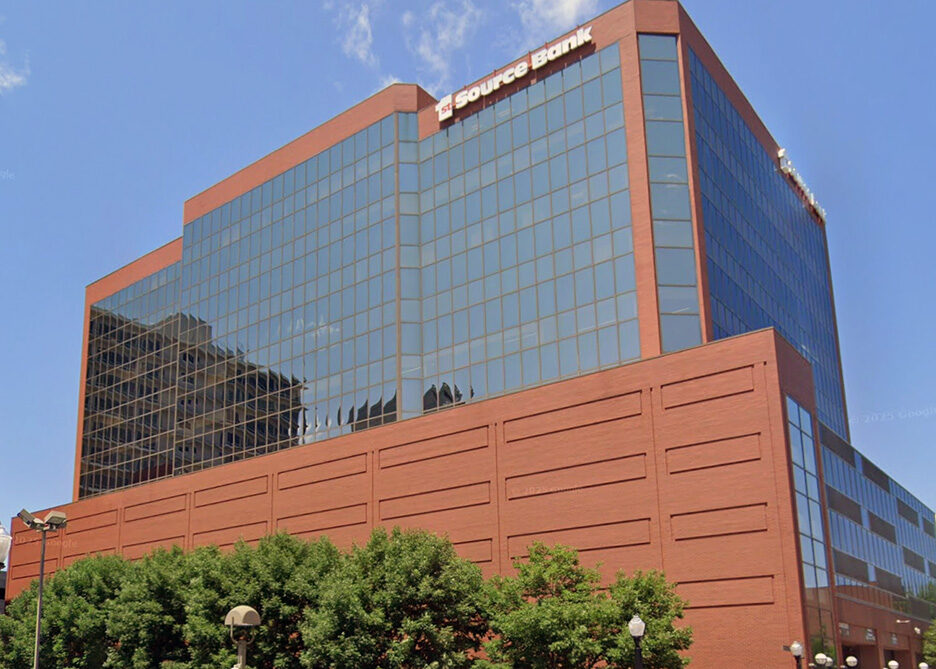
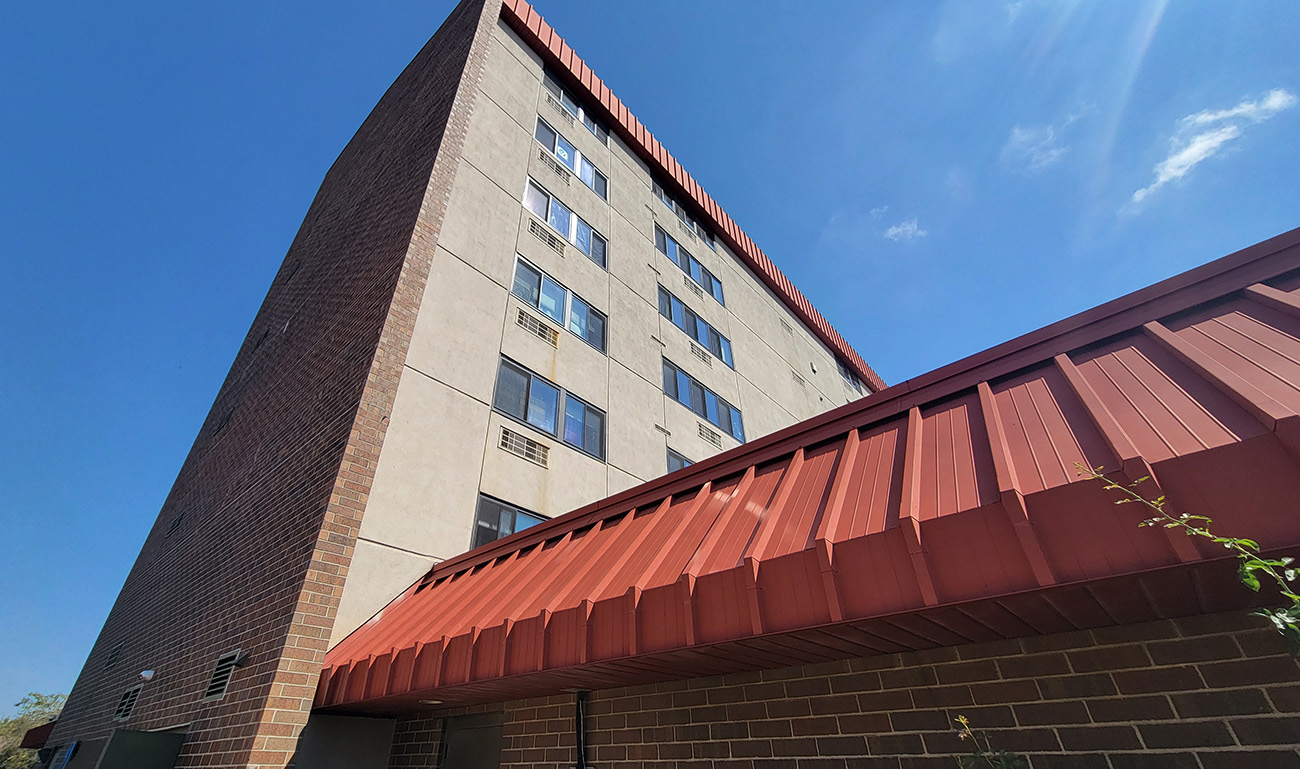
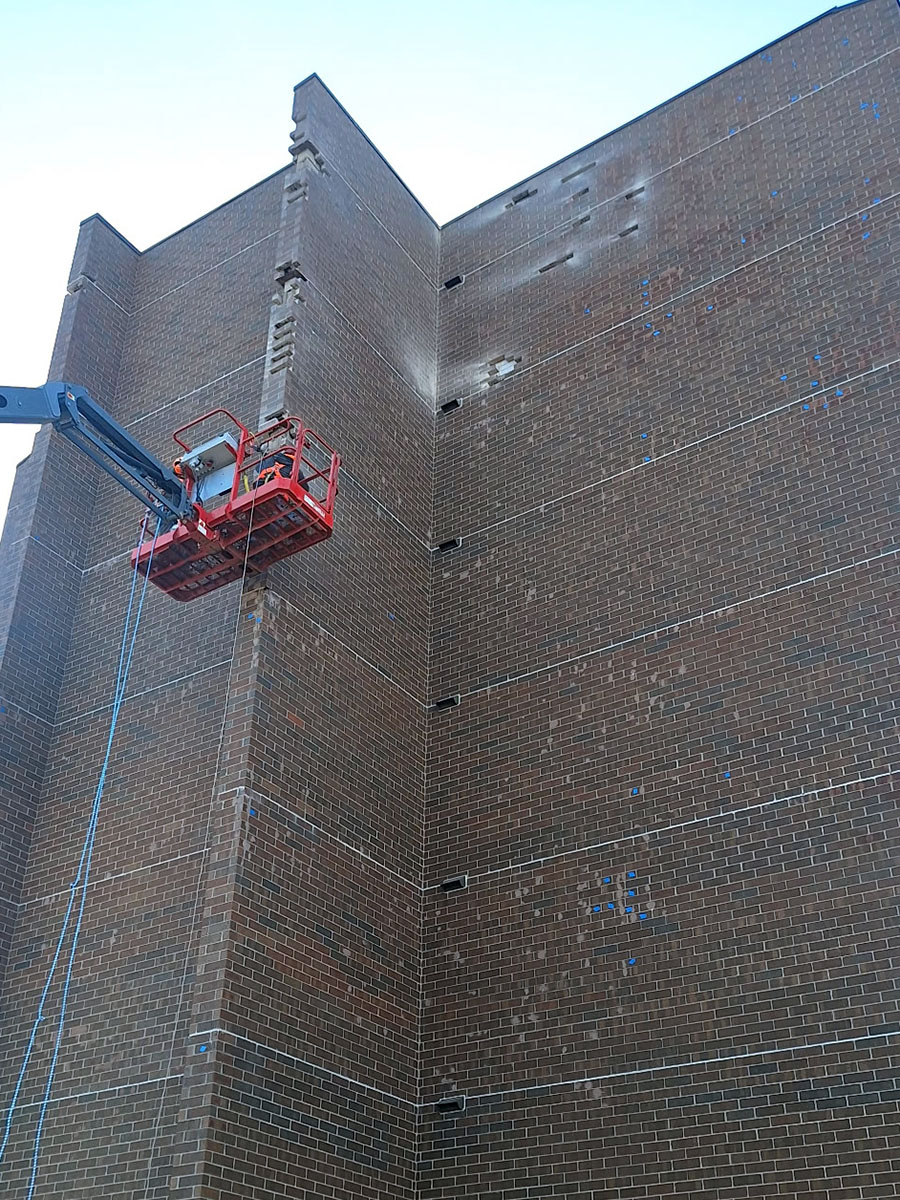
No, and the reason is structural rather than commercial. Our diagnostic work exists to define a restoration scope, so it is carried out as the opening phase of a restoration project rather than sold on its own. Projects at that scale typically start around $50,000. Detached from the repair work that follows, an investigation produces a document and nothing else, and we are not well placed to hand an owner findings we are not going to act on. If what you need is a single inspection, a residential investigation or a low-cost consulting opinion, a specialty inspection practice is the right call and will serve you better than we would.
Five techniques, used in combination: controlled isolated water testing, infrared thermography, moisture meter readings, drone survey, and invasive testing where a small opening is cut to trace the path. Which of them we reach for depends on the building, the symptoms, the failure mode we suspect and, in Indianapolis, the month. Spray testing needs temperatures above freezing, so it waits for the thaw. Thermography runs the other way and performs at its best on a cold day against a heated building, when the temperature difference across the assembly is largest. That seasonal split is why a winter investigation here looks different from a summer one. Whatever the mix, it is chosen to answer a question the restoration scope depends on, not to generate testing for its own sake.
In a freeze-thaw climate, water rarely shows itself where it entered, and often not when it entered either. A stain appearing on the fourteenth floor during a February thaw may have come through a parapet detail four floors above, through an open joint in the limestone, or through a curtain wall perimeter that has been leaking quietly for years, and the water itself may have arrived in an October storm and sat frozen in the assembly ever since. That lag is what defeats symptom-led repair. Skip the investigation and the wrong component gets repaired, the intrusion carries on, and ownership pays two or three times over before anyone finds the real path. Starting with diagnosis is what makes the restoration that follows actually resolve it.
No. Forensic engineering, expert testimony and litigation support all sit outside what Presto does, and we would rather say so plainly than take on work we are not qualified to stand behind. Owners who need it should retain a forensic engineering practice directly. We are often on the same project as one, particularly where an insurance dispute or a construction claim is running alongside the restoration, and we work with those firms readily. We simply do not perform that role ourselves.
It is written for your building and for the decision in front of you, not assembled from a template. Expect documented findings with photography, the failure points we identified and what we believe is causing each, our conclusions, and a restoration scope that responds to them. For Indianapolis properties we also phase that scope against the exterior season, so ownership can see plainly which items should be closed out before the first hard freeze and which can safely hold until spring. The report then becomes the basis for the project specification, which is why it is written to be built from rather than filed.
It depends on the size of the building, how tangled the intrusion is, and which methods the situation calls for. Isolating one suspected failure point is often a day or two. A full envelope investigation covering several candidate areas, with controlled water testing at each, runs one to three weeks. Season is the other variable in Indianapolis: where spray testing is needed and the temperature is below freezing, that portion waits for the thaw while the non-destructive work carries on. We set out the timeline during scoping so property managers can plan around both the investigation and the restoration phasing behind it.
When chronic water intrusion in an Indianapolis building has already survived one round of repairs, the source is rarely where it appears to be, and in this climate it may not even belong to the same month. Working diagnostics first locates the real entry point, so the restoration ends the leak rather than deferring it.
Note: diagnostic and consulting work comes as part of a comprehensive commercial restoration project (typical $50,000+ minimum).
Reach us on 1-800-785-9927, or Request A Quote online.