
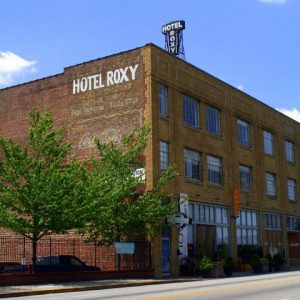






Indianapolis holds an unusually deep bench of commercial-era architecture in a compact downtown. The Wholesale District carries the greatest concentration of 19th-century commercial buildings in the city, Italianate and Romanesque brick and cast iron dating from about 1863 onward, with Union Station of 1888 at its center. A few blocks away, Indiana limestone clads the State Capitol, the downtown monuments and Circle Tower of 1930, while the 1931 Art Deco Coca-Cola bottling plant anchors the Bottleworks District off Massachusetts Avenue. Lockerbie Square, Fletcher Place and Fountain Square hold the residential-scale commercial fabric around them. All of it faces the same winter: water absorbed into soft lime mortar, porous brick and calcareous limestone, then frozen in place for weeks at a time, with de-icing salt concentrating chlorides in the lower courses where the sidewalk meets the wall. Acid deposition works separately on the limestone, dissolving the surface into granular sugaring and dark gypsum crusts. Take any of that on with ordinary commercial methods and the damage generally moves faster, not slower.
Presto has worked directly on landmark and historically designated buildings around the country, and the same materials-first discipline governs every one of them. Scopes here follow the National Park Service’s Preservation Briefs, which remain the most trusted technical reference in the field, adapted to the style, material palette and review requirements of the particular Indianapolis property. In practice that means mortars mixed on a lime base to match the strength and color of what is already there, cleaning kept gentle enough for soft brick and acid-etched limestone, and repair in kind ahead of replacement. It also means working inside the Indianapolis Historic Preservation Commission’s Certificate of Appropriateness process, which governs thirteen historic districts, five conservation areas and fifteen protected properties across Marion County. Wholesale District, Massachusetts Avenue, Fountain Square, Lockerbie Square, Fletcher Place, or a building listed individually on the National Register: the standard the work has to meet is the higher one, and that is what it is built to.
Historic property preservation across the Indianapolis area, covering landmark buildings, locally designated structures and architecturally significant property of every kind.
Nothing goes wrong on historic Indianapolis masonry more often than mortar, and nothing gets repaired badly more often either. Brick buildings through the Wholesale District, put up between the 1860s and the 1930s, used soft lime mortars: flexible enough to move with the wall, forgiving enough to absorb minor stress without cracking, and open enough to pass moisture back out as vapor. That last property decides everything in a freeze-thaw climate: a wall able to dry outward through its joints between thaws never accumulates the water that freezes and spalls it later. Repoint in a modern Portland-cement mix and the moisture is held inside the softer historic brick or limestone instead, so the freeze goes to work on the irreplaceable material rather than the sacrificial joint. Our masons match the new mortar to the original on strength, color and composition, cut failed joints out without biting into the masonry around them, and tool the new work back to the original profile. That is the slow and correct way to repoint a historic building. The shortcut is what ruins one.
Indiana limestone, formally the Salem Limestone, defines the monumental face of this city and is quarried fifty to sixty miles south between Bloomington and Bedford. It is calcareous, so it fails by dissolution rather than erosion: mildly acidic rain takes the surface away a little at a time, leaving granular sugaring on exposed faces and dark gypsum crusts on sheltered ones, while de-icing salt drives chlorides into the splash zone near grade. Cleaning it wrong is permanent. Aggressive blasting strips the case-hardened surface and leaves the stone more absorbent than it started, and harsh chemical cleaners can turn sound stone into fresh crust. So the method is matched to the stone and its condition, whether that calls for micro-abrasion, conservation-grade chemical cleaning or controlled water pressure, rather than one process applied to every substrate on the building. Where stone has spalled or delaminated, repairs are matched for color and texture and engineered to behave like the original beside them. What we are after is a surface that reads as genuinely preserved, never over-cleaned and never artificially new.
Steel-casement and wood windows are a signature detail across Indianapolis’s historic commercial stock, from Art Deco industrial buildings to Wholesale District lofts, and they are routinely lost to premature replacement. Swapping them for modern aluminum or vinyl units will often end a building’s Certificate of Appropriateness eligibility, and what goes in rarely performs better than a properly restored original. Our window work leaves the original glass, frames and hardware where they are and repairs what has genuinely failed: glazing compound gone hard, steel muntins corroding, hardware seized, perimeter sealant gapped so water gets in and then freezes inside the reveal. Maintained sensibly, and paired with an interior storm panel where thermal performance matters, a restored historic window will comfortably see out a modern unit rated for twenty years or so.
Stucco appears across Indianapolis on early-20th-century commercial blocks, institutional buildings and the revival-style storefronts scattered through Fountain Square and Irvington. Traditional lime stucco has almost nothing in common with the acrylic and EIFS products sold today. It went on with a trowel in several coats over wood or metal lath, and every layer of it was meant to move moisture along instead of holding on to it. Go over that with a modern cement or an acrylic-based product and moisture ends up sealed inside the wall assembly, and across roughly 91 freezing nights a year it expands and pushes the surrounding original stucco off its lath. Rebuilding uses lime-based formulations, the lath gets repaired wherever it has failed, and the finish is worked back to the original texture and the hand-applied character that goes with it. Doing that properly protects the performance and the look that give these buildings their value.
Cast-iron storefronts and columns are a defining feature of the Wholesale District, and bronze entrance work, wrought-iron railings and ornamental metal appear throughout the city’s historic inventory. What corrodes them here is not marine air but road salt and water: chloride-laden spray reaches metalwork at street level all winter, and anything standing in a joint or behind a bolted connection freezes and jacks the pieces apart. Against that sits the fact that patina developed on bronze and copper is itself part of the historic value. So active corrosion doing structural damage comes off, patina that is not compromising the metal stays, and refinishing is done by methods that keep the original character. Taking historic metalwork back to bare substrate is a last resort here rather than a starting point. The point is to keep what the building has, not to manufacture something that looks new.
Waterproofing a historic Indianapolis building calls for a different playbook than a tower clad in new curtain wall. Lime mortar, older masonry and stucco assemblies were all built to breathe, which means whatever gets in during a storm is supposed to evaporate back out through the wall rather than sit behind a sealed membrane. In a hard-freeze climate that distinction is not academic. Water shut into a historic wall by an impermeable coating has nowhere to go when the temperature drops, and the expansion that follows does its damage behind the coating, out of sight, until the face spalls away. We waterproof these facades with vapor-permeable repellents and joint sealants that suit lime-based construction, and fully impermeable systems go on only where the original design intended them.
A historic Indianapolis property asks for a slower and more deliberate sequence than an ordinary commercial restoration. Five phases carry each preservation project, arranged to surface every issue at the start, to specify period-correct materials, and to get the work done without harming original fabric that could never be put back.
Every area of deterioration is documented, and original fabric, which is irreplaceable, is separated from later non-original additions, which are not. Nothing gets touched before the building’s history is understood.
The original materials are identified in detail: the particular lime mortar mixes, the Indiana limestone bedding and finish, the stucco composition, the window glazing, the metal alloys. Where a material is uncertain, lab analysis is the recommendation.
Those findings become a detailed scope, quantified line by line, with period-appropriate products named. Coordination runs directly with owners, preservation consultants, architects and the Indianapolis Historic Preservation Commission wherever the designation requires it.
The work is executed by trained crews using period-appropriate materials and traditional technique where it is called for. Quality control is strict, because a historic project has no room for rework on substrate that cannot be replaced, and lime-based materials are scheduled inside their cure windows.
Documentation is handed over complete: photography from before and after, warranty details, data sheets for every material used, and guidance on maintaining them. Where the property is designated, that file will also support a later Certificate of Appropriateness review.
Whether your Indianapolis historic property already shows visible wear, sugaring limestone or failing mortar joints, or you are getting ahead of it before another winter, tell us what you are looking at and our specialists will come back with recommendations built on preservation-grade practice.
Call 1-800-785-9927, or send the details through Request A Free Quote.
Restoration at this level, across Indianapolis and central Indiana, needs more standing behind it than one crew. Presto coordinates with a set of specialized regional networks so that care reaches the full distance, from major structural restoration through to ongoing facility upkeep.
Property managers wanting routine upkeep or localized facility services are encouraged to look at our sister divisions:
Building Restoration Indianapolis: Structural repair on a local footing, together with high-rise exterior preservation.
Building Maintenance Indianapolis: The ongoing preventative maintenance a historic Indianapolis property needs to keep operating cleanly.
Building Services Indianapolis: Commercial building support, day to day, across the whole of central Indiana.
Historic preservation and landmark restoration Presto has carried out recently around Indiana.
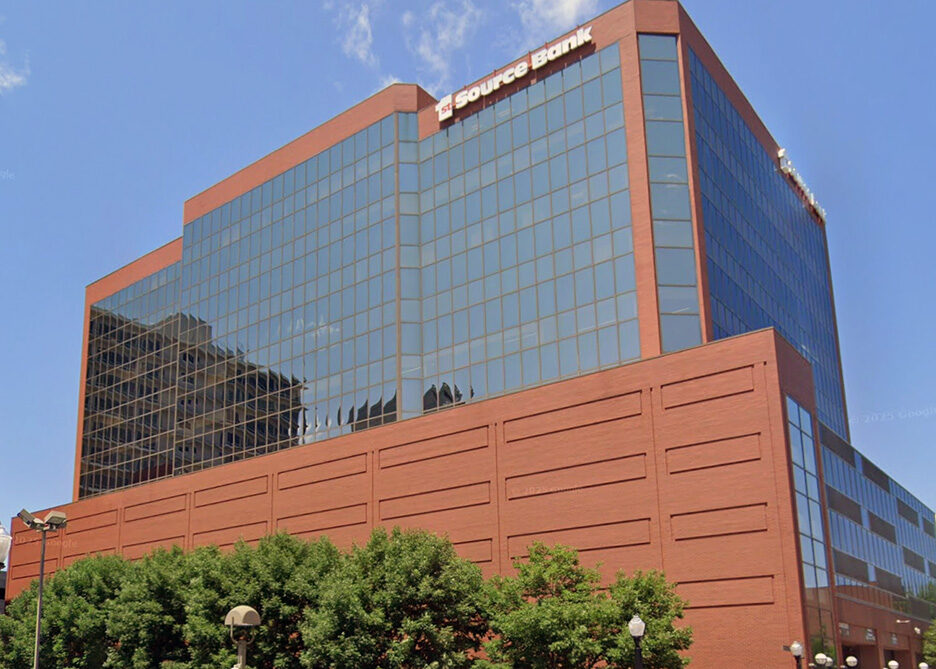
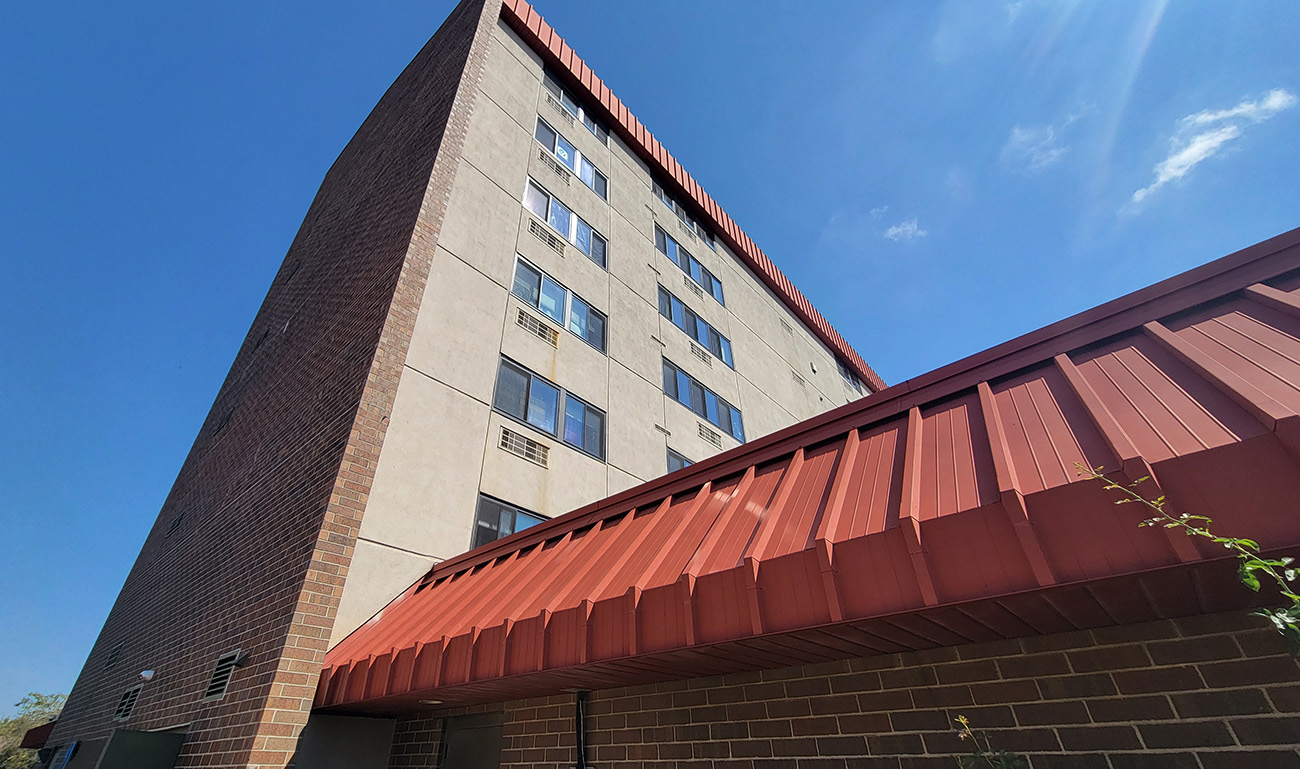
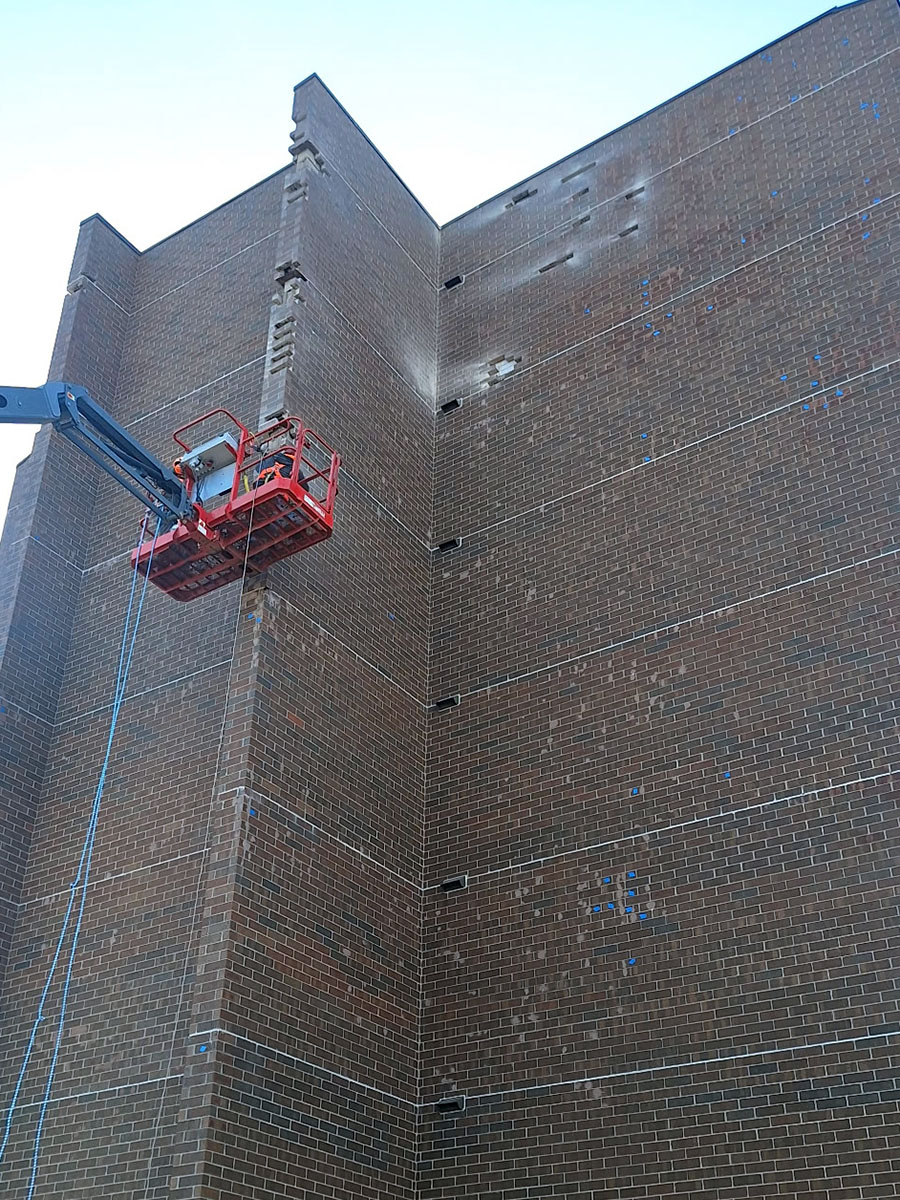
Standard restoration answers one question: what will make this envelope watertight and durable again, using the best material available today. Preservation work answers the same question with a constraint attached, because the original fabric, detailing and workmanship have to survive the process. On an Indianapolis landmark that usually means lime-based mortar matched to the original rather than a modern Portland mix, the gentlest cleaning that will actually lift a soiling crust rather than the fastest, and repairs chosen so a future generation can undo them. It is slower and it costs more. It is also the only route that protects both the property’s designation and the qualities that earned it one.
Pre-war masonry across the Wholesale District, Massachusetts Avenue and Lockerbie Square was laid in soft lime mortar deliberately made weaker than the brick or limestone around it. That is a design decision, not a shortcut. When the wall moves with temperature or settlement, the joint takes the strain and yields, leaving the units themselves uncracked. Lime also stays open to vapor, so moisture that gets into the wall has a route back out. In a city with roughly 91 freezing nights a year, that drying path is the whole argument: water that cannot leave is water that will expand inside the wall. Repoint that same wall in a hard Portland-cement mix and you close the exit. The moisture stays in the softer original material, and the next freeze takes the face off the brick or the limestone rather than off the joint. Getting the mortar specification right is the single decision that determines whether original Indianapolis masonry comes through a winter intact.
Yes, and the results through an Indiana winter tend to surprise owners. Original steel casement and wood sash, properly restored with new glazing compound and a sound perimeter seal, close the gap on modern replacements, and an interior storm panel adds performance without changing the exterior or complicating a Certificate of Appropriateness. The heavy masonry walls of this building stock carry real thermal mass, which flattens the swings a lightweight envelope would pass straight through. Vapor-permeable waterproofing routinely outlasts a modern impermeable coating on these walls for the same reason lime mortar does: it does not trap the moisture that later freezes. Our scope ends at the envelope. Mechanical and insulation upgrades on a designated property are work for a contractor who specializes in historic-rated buildings, and we are glad to work alongside one.
Preservation runs slower than standard restoration, because the materials are less forgiving, more of the work is done by hand, and the quality bar is set by review rather than by us. A smaller historic commercial facade might occupy a few months. A full scope on a landmark property runs from half a year upward, sometimes well beyond. Two Indianapolis-specific factors stretch that further. Lime mortars and stuccos have narrow placement temperatures and must not freeze before they cure, which in practice confines exterior masonry to roughly April through October. And Certificate of Appropriateness review at the Indianapolis Historic Preservation Commission has to be resolved before work begins, which can add weeks or months ahead of mobilization. We build both into the timeline at scoping rather than discovering them later.
We work at every designation level, from locally protected sites through properties individually listed on the National Register. In Marion County the layer that governs day to day is the Indianapolis Historic Preservation Commission, which administers thirteen historic districts, five conservation areas and fifteen protected properties. The districts with the most commercial fabric are the Wholesale District, Massachusetts Avenue, Fountain Square, Lockerbie Square and Fletcher Place. What a given property actually requires depends on its designation, on whether a Certificate of Appropriateness is triggered, and on which elements of the scope fall inside review at all, since routine maintenance often does not. We establish that at the initial survey and set out the coordination the work will involve before anything is priced.
On designated property the submission is normally led by ownership, usually with a preservation architect or consultant who knows how the commission reads an application. Our contribution is the technical half: an accurate scope, material specifications appropriate to the period and the substrate, and documentation detailed enough to survive Certificate of Appropriateness review. We stay in contact with that team as the application moves, so what we propose and what they submit stay aligned. Worth noting that this review runs alongside ordinary construction permitting rather than replacing it. Where the scope calls for it, the state Construction Design Release and the city Class 1 Commercial Structural Permit are both still required.
Our specifications are written against the National Park Service Preservation Briefs, which remain the standard technical reference for this work in the United States. Several map directly onto Indianapolis building stock. Brief 2, on repointing mortar joints in historic masonry, and Brief 6, on the damage abrasive cleaning does, are the two we come back to most, because so much of the older commercial fabric here is soft-fired brick and Salem Limestone quarried in the Bloomington and Bedford belt fifty to sixty miles south. Briefs covering dimension stone, historic window restoration and stucco repair come into play according to the property. Depending on designation and style we may add further standards on top. Owners working with their own preservation architect are welcome to test our proposed scope against the relevant Briefs before we start.
A historic building cannot be made again once it has gone, and modern materials and shortcuts will not put it back. Tell us what your Indianapolis building is showing and our team will set out what it needs in order to keep its character, its performance and its value into the next generation.
Reach us on 1-800-785-9927, or Request A Historic Property Quote online.