





Indianapolis sits roughly 700 miles from the nearest ocean, and its building envelopes fail for reasons that have nothing to do with salt spray. Around 91 nights a year drop below freezing and about 25.5 inches of snow falls on the city, so water that soaks into a mortar joint or a limestone bedding plane during a November thaw can freeze hard and stay frozen for weeks. Each refreeze drives the crack a little wider. De-icing salt compounds it, but it arrives by truck and by tire at ground level, attacking plaza decks, slabs at grade, traffic coatings and the lower courses of a facade rather than drifting onto a parapet. Indiana limestone, the stone that clads the State Capitol and much of downtown, is calcareous and dissolves slowly under acid deposition, sugaring and crusting where rain runs and chloride collects at splash height.
Presto Restoration has worked commercial envelopes across the country for more than 27 years, on towers, on parking structures and on protected historic fabric. What the crews bring to a building here is a specification written for a hard inland winter: industrial-grade caulking systems, elastomeric and silicone coatings, and breathable repellents chosen so calcareous stone can dry out instead of holding moisture behind a film. From the glass of the Mile Square to the Wholesale District’s 19th-century brick and cast iron, and on to the Art Deco Bottleworks District off Mass Ave, the work restores how a property looks and rebuilds the moisture barrier standing behind its value.
Exterior restoration, waterproofing and envelope consulting, scoped for commercial property in the Mile Square, the blocks around it and the eleven counties of the wider Indianapolis metro.
Water that gets in behind the cladding takes value out of a building faster than almost anything else on a maintenance list. Our Indianapolis scopes treat plaza decks, wall assemblies, window perimeters and joints at grade as one connected path for water, then close that path with membranes and sealants rated to keep moving in the cold. The specification assumes a joint that will hold meltwater frozen for weeks at a stretch, and chloride that arrives at street level rather than off a parapet.
A facade in Indianapolis is asked to do two jobs at once. On the Tipton Till Plain there is no ridge or higher ground upwind, so wind-driven rain loads every elevation instead of one sheltered side, and that same surface is what tenants and lenders read the building by. We rebuild both jobs: sealant renewed joint by joint, architectural metal refinished, glass restored, elastomeric coatings applied where the substrate needs them. Salem limestone is cleaned gently and sealed breathably, and brick is repointed in mixes matched to what the wall was built with.
View Our Indianapolis Facade Restoration Services →
Indianapolis parking structures take punishment from two directions at once. Vehicles carry de-icing salt off the street and drop it onto the deck through the whole winter, and those chlorides soak into slabs that then freeze and stay frozen. When traffic membranes wear through and expansion joints fail, salt-laden water reaches embedded rebar and spalling begins. We break that cycle with traffic-bearing coating systems, concrete repair, joint renewal and waterproofing above grade.
A commercial roof in Indianapolis usually has more life left in it than a tear-off proposal allows for. Restoring a sound deck can add another 10-20 years for a share of what replacement costs. We put down silicone and elastomeric systems, rebuild flashings and penetration details, and correct ponding before the first hard freeze turns standing water into a split seam. Reflective finishes then hold rooftop temperatures and cooling load down through an Indiana summer.
Indianapolis keeps an unusually deep bench of commercial-era architecture, from the Wholesale District’s 19th-century brick and cast iron to the 1931 Art Deco bottling plant that now anchors the Bottleworks District. Work on buildings like these has to use period-correct materials and trades who know the detailing, and it has to move through the Indianapolis Historic Preservation Commission, which issues Certificates of Appropriateness across thirteen historic districts and five conservation areas. Owners, architects and review staff all sit at the same table with us while an aging structure is stabilized and its original detailing brought back, so the character that won the designation in the first place survives the work rather than being traded away for it.
In Indianapolis a leak almost never announces itself where it started. During a thaw, water can track several floors through an assembly before anything appears on a ceiling. Our diagnostic teams locate the real opening using controlled isolated water testing, infrared thermography when the temperature differential allows it, moisture meter readings, drone imaging and close inspection from suspended access. What comes back is a documented failure point, so the restoration scope rests on evidence instead of assumption.
Presto Restoration has been protecting commercial property nationwide for more than 27 years. What sits alongside that record here is a working picture of how an Indianapolis envelope actually gives way: a deep sustained freeze rather than a daily cycle, chloride delivered at grade, acid attack on calcareous Salem limestone, and a permitting path that runs through a state Construction Design Release before the city will issue its Class 1 Commercial Structural Permit.
Covering downtown Indianapolis and the eleven counties around it properly takes more than a crew and a truck. Presto coordinates with specialized central Indiana partners so that a property gets the full range of care, from major envelope restoration down to routine upkeep.
Property managers who need day-to-day support can go to our sister divisions directly:
Building Restoration Indianapolis: Targeted structural repair and exterior preservation work on high-rise buildings.
Building Maintenance Indianapolis: Ongoing preventative maintenance that keeps an Indianapolis property performing across the whole year.
Building Services Indianapolis: Day-to-day commercial building support, covered end to end across the Indianapolis market.
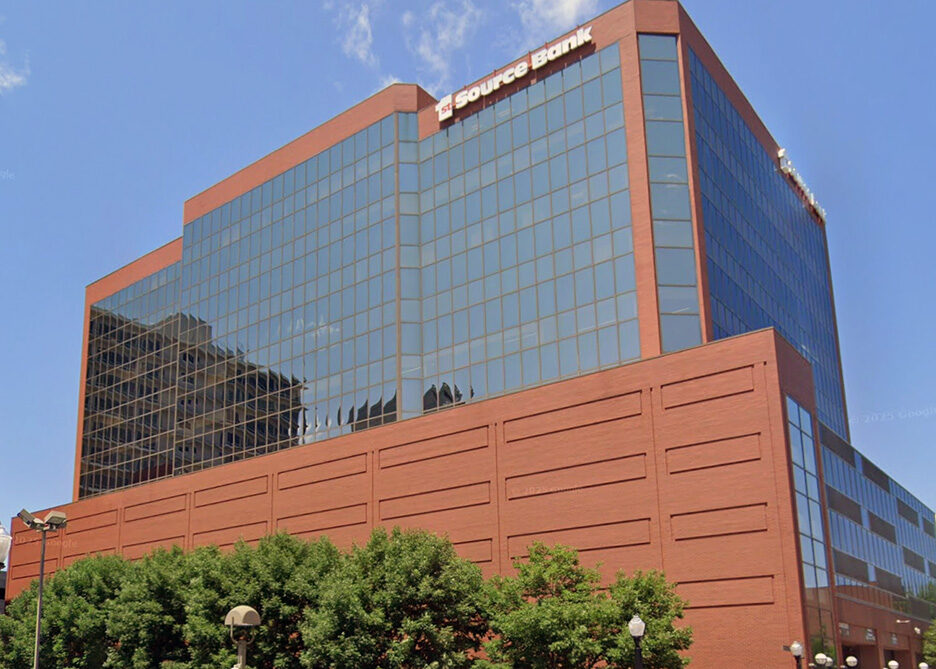
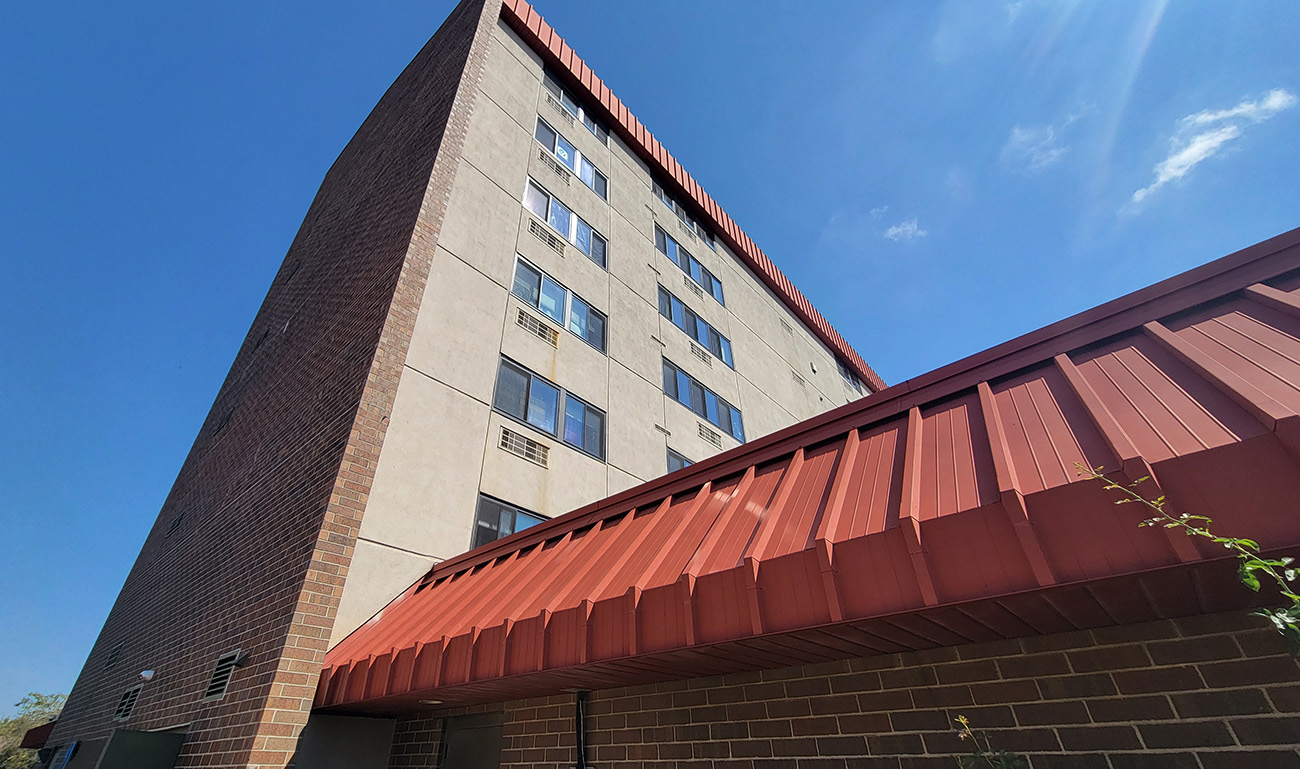
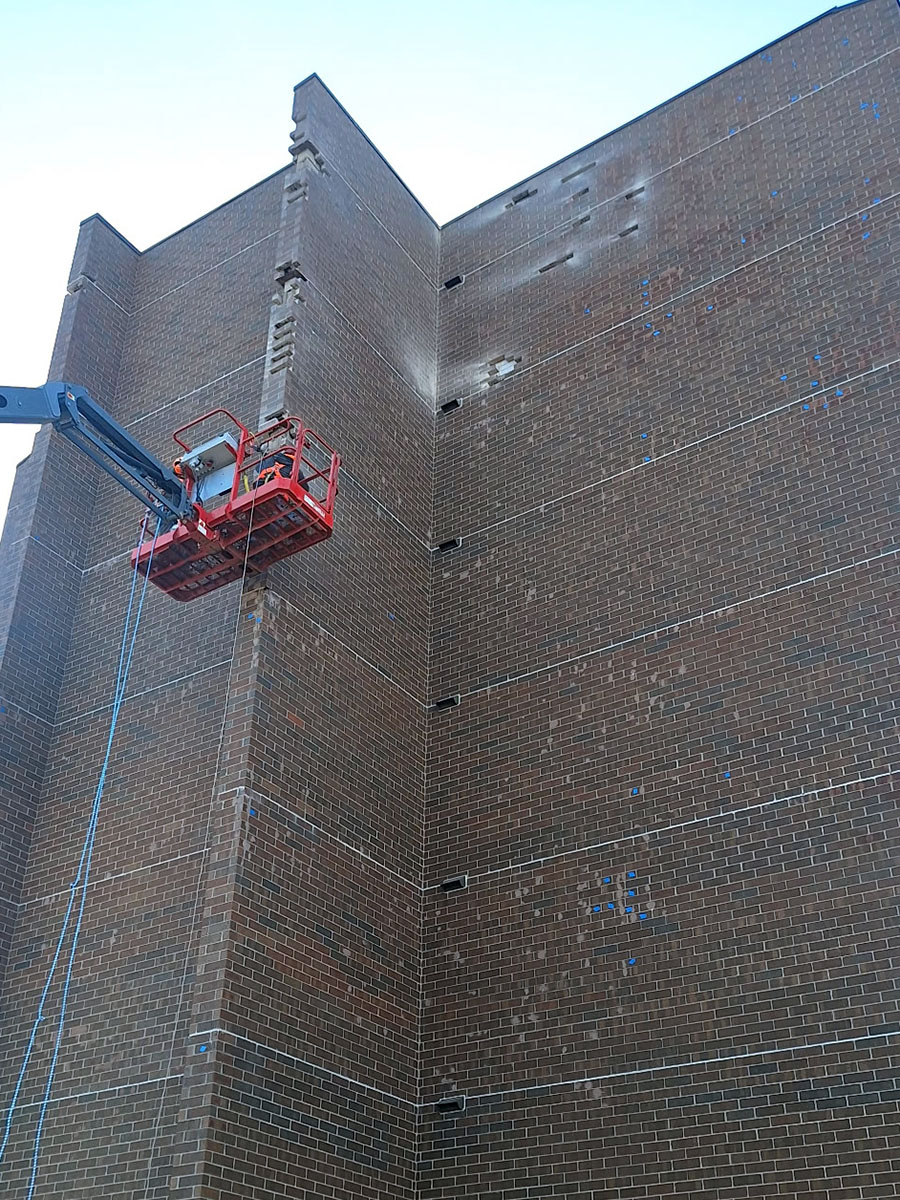
Our Indianapolis work runs across the full commercial range: Mile Square office towers and their 1980s curtain wall, hotels, structured parking, hospital and university campuses, state and county government facilities, Wholesale District loft conversions in 19th-century brick and cast iron, and IHPC-designated landmarks. Surface types follow the building stock here, so a typical year covers sealed glazing systems, architectural metal, Indiana limestone and cast stone, soft-fired brick, stucco and EIFS, cast-in-place concrete, and low-slope roofing.
It works in stages. Rain and melting snow soak into mortar joints, limestone bedding planes and hairline cracks during a thaw, then roughly 91 nights a year below freezing lock that water in place and expand it. Because the cold here is sustained rather than a daily cycle, saturated masonry can stay frozen for weeks at a time, and every refreeze widens the crack a little further. De-icing salt adds chloride to the water at plaza level and along the lower facade courses, corroding embedded steel and crystallizing inside the stone. Acid deposition works separately on Indiana limestone, dissolving the calcareous surface into the granular sugaring and dark soiling crusts visible on many older downtown elevations.
Two things set the schedule in Indianapolis, and only one of them is scope. Sealants, coatings and repointing mortars all carry minimum application and cure temperatures, so productive exterior work is confined to the stretch between the spring thaw and the first hard freeze. Inside that window, a targeted joint and sealant campaign on a mid-rise is measured in weeks, while a full envelope restoration on a twenty-story-plus downtown tower is measured in months and will often be phased across two seasons. We scope and permit through the winter so crews can mobilize the day conditions allow, and we sequence work zones to keep lobbies, garages and tenant access open throughout.
Yes, and Indianapolis routes commercial work through two authorities rather than one. A Construction Design Release from the Indiana Department of Homeland Security, Building Plan Review Section, has to be in hand before the City of Indianapolis Department of Business and Neighborhood Services will issue the Class 1 Commercial Structural Permit that covers Marion County under Unigov. Our project managers file both as a matter of course, and work through the general contractor where one is already running broader construction on site. If an owner would rather hold the permits in their own name, that is a normal arrangement and we will support it. Presto is insured nationwide for general liability and workers’ compensation.
Maintenance is the recurring cosmetic work that keeps a property looking presentable: window washing, pressure cleaning, touch-ups. Restoration is corrective. It rebuilds waterproofing that has failed, swaps out sealant that has gone hard, repairs concrete that has spalled and metal that has corroded, and puts the envelope back in a condition where it can actually hold water out. In a climate that drives water into masonry and then freezes it solid, restoration protects structural integrity. Maintenance only preserves appearances between restoration cycles.
Because nothing else will prompt you. Indiana sets no periodic facade inspection requirement and the City of Indianapolis sets none either, so an owner here gets no filing date, no cycle and no reminder. Inspection is a risk decision ownership makes unprompted, which is exactly why deferred envelope work tends to run longer here before anyone looks at it. The building tells you instead. Joints that have hardened, split or pulled back from the substrate; rust bleed tracking down from metal components; spalled concrete or rebar showing through; limestone gone granular or carrying a dark crust; interior damp appearing on the windward side after a storm. Indianapolis sits on open plain with no sheltered elevation, so severe-convective wind drives rain onto all four faces and there is no quiet side to leave until later. One Indiana Square lost glass across sixteen stories to tornado-strength wind in 2006 and was ultimately overclad, completed in 2009. Call 1-800-785-9927 or send the Request A Quote form and we will tell you what you are looking at.
Noticing envelope wear on your Indianapolis building? Describe what you’re seeing and we will tell you which repair it actually calls for.
Call 1-800-785-9927, or send the details through Request A Quote.