






Water gets into an Indianapolis building envelope the ordinary way and then does something a warm climate never makes it do: it freezes. Around 91 nights a year fall below 32 degrees and roughly 25.5 inches of snow accumulates, so moisture absorbed into a joint, a coating pinhole or a porous masonry face during a thaw expands in place and stays expanded for weeks at a time. De-icing salt raises the stakes at ground level, loading plaza decks, slabs at grade, traffic coatings and the lower facade courses with chlorides that corrode steel and crystallize inside stone. Once a waterproofing system gives way under that cycle, water starts moving through interior walls, architectural metal corrodes, masonry breaks down, and Indiana limestone begins sugaring at the face.
Presto works above-grade commercial waterproofing on Indianapolis high-rise and commercial property, from Mile Square office towers to Wholesale District brick and the converted industrial buildings off Mass Ave. What sets the approach apart is the order of work: restoration comes first. Rather than running fresh caulk over a deteriorated surface, we clean and restore the substrate and then waterproof it, which is why the finished work holds. The capability list runs from sealing at expansion joints and cracks, through elastomeric and silicone coating systems, to breathable water repellents for masonry. Wet glazing and glass sealing are backed by our own products, among them Glass Defender, and there are narrower answers as well, such as Leach Stop Protection on precast concrete. We work exclusively above grade, never on foundations or below-grade waterproofing, because a narrow specialization delivers more than a broad promise.
Presto’s above-grade waterproofing work in Indianapolis, anything from a single sealant joint through to a whole coating system, divides into two families. The first is the core group that holds an envelope watertight. The second pairs deep cleaning and restoration with protection meant to last, and it is where the harder problems go.
Concrete and steel-framed buildings in Indianapolis are designed to move under wind load and temperature change, and in a climate running from subzero mornings to humid July afternoons that movement is considerable. Most of it ends up concentrated in expansion joints, control joints and cracks across the facade. Once the sealant in a movement joint gives out, that joint becomes the quickest route for wind-driven rain to get inside, and whatever water lodges there ahead of a hard freeze widens the opening from within. We cut those joints out and reseal them with high-movement silicone and polyurethane built to stretch and compress alongside the building across the full annual range instead of tearing away from it. On a building here, sealing the joints properly is often the highest-value waterproofing repair on the list.
Glass on Indianapolis buildings takes a steady chemical beating. Alkaline runoff from limestone and concrete above, winter road spray carrying chloride and grit, hard-water deposits left by snowmelt and irrigation, and ordinary urban particulate all leave residue behind, and left alone that residue etches and hazes a pane for good. Our proprietary Glass Defender treatment lays a hydrophobic barrier onto the glass and gives minerals nothing to grip. Water runs off in a sheet rather than drying where it sits, cleaning cycles get easier and further apart, and the windows keep their clarity through season after season of freeze, thaw and road salt.
On an Indianapolis building, meltwater lingers longest on ledges, parapets, balcony edges and the other horizontal details, which is exactly where a conventional coating gives up first. Snow banks up on them, melts slowly through the day and refreezes after dark. What we put on those surfaces is a high-performance silicone coating system: a seamless monolithic membrane bonded straight onto the substrate, which removes the laps and terminations ordinary products give way at. Silicone happens to do well in exactly the conditions that finish other coatings off, meaning standing water, ice loading and temperature swinging hard in both directions. That is why it is our first answer for the flat and near-flat surfaces here that hold snow and water.
The sealant joint between a window unit and its frame is usually among the first waterproofing components on a tower to go. When that perimeter seal hardens, splits or lets go, wind-driven rain runs straight into the wall cavity, and once inside it can move several floors away from the breach before anything appears on a ceiling. On the downtown towers put up between 1982 and 1990 this is live right now, because their original glazing sealant has been in service for thirty-six to forty-four years. Wet glazing fixes it where it starts. The spent sealant comes out and new high-performance silicone goes in, restoring a watertight bond between glass and frame. We reglaze storefront, curtain wall, ribbon and punched window systems alike, and the wet glazing is documented and warrantied across a whole building.
Stucco, EIFS and concrete walls develop hairline cracking sooner or later, and in Indianapolis each crack is an entry point followed by a freeze. An elastomeric coating answers that by never fully hardening. Laid on at something like ten times the film build of ordinary paint, it stretches over small cracks instead of splitting along them, which matters where a wall can travel more than a hundred degrees between January and July. The systems breathe, so interior moisture vapor leaves rather than being trapped where it can freeze, and the factory range runs a full set of colors and texture profiles.
Porous masonry such as brick, block, precast, cast stone and Indiana limestone drinks in water. In central Indiana that means saturation going into a freeze, efflorescence streaks, accelerated surface loss and damp interior walls, with chloride from salted streets concentrating in the splash zone near grade. What goes on the wall is a clear penetrating repellent built on silane and siloxane chemistry, which soaks in and turns the substrate hydrophobic while leaving its appearance alone. Afterward the wall reads as untreated, but rain and meltwater bead up and run off instead of soaking in. Cured, these sealers are invisible, and on calcareous stone the part that counts is that they stay vapor-permeable, so the wall can still dry outward rather than carrying moisture all winter.
What separates Presto is the order of operations: surfaces are cleaned and restored before anything gets sealed over them. Two steps rather than one produces waterproofing that looks better, holds up better and outlasts the standard job. The restoration-waterproofing services below deal with problems an ordinary waterproofing contractor has no answer for.
Precast concrete panels carry water-soluble minerals that leach out whenever moisture finds a path through them. The runoff settles on whatever sits below as stubborn staining across windows, metal trim and other facade elements, and it looks permanent. Repeated freeze-thaw makes it worse each winter by opening fresh capillary routes through the panel. Cleaning on its own rarely holds, because the staining returns within weeks when the leaching itself was never addressed. Our Leach Stop Protection service treats the cause: existing staining is cleaned off and the precast is treated to block further mineral migration, which is how a building that has fought recurring window staining for years finally stops fighting it.
Alucobond composite, curtain wall framing, mullions and the architectural metal panels around them take constant punishment from road-salt aerosol at street level, from moisture pushed in behind gaskets by freeze-thaw, and from years of accumulated urban particulate. Rather than steering an owner toward wholesale panel replacement, we put down clear protective coatings that seal metal off from corrosion while leaving the original factory finish visible. The clear coats bond to the existing surface and keep moisture and chlorides off the substrate underneath, which adds real service life to material already on the building. More often than not that removes the need for a replacement project altogether, and it cuts what maintenance costs over the long run.
Waterproofing projects here run on the same five phases, arranged to get the diagnosis right, to specify systems that suit the particular building, and to deliver performance that survives an Indiana winter.
Every above-grade waterproofing system on the building gets surveyed, from sealed joints and coatings through to exposed plaza decks and masonry walls, with each failure point photographed and written up.
Water intrusion on Indianapolis buildings often traces back to unexpected sources, and a spring thaw can reveal damage that started in December. Controlled testing, moisture readings and visual tracing are what separate the actual cause from the place the stain shows up.
Products are specified to the substrates actually in front of us, whether silicone, elastomeric systems or traffic membranes, with quantities set out line by line. The state Construction Design Release, the Indianapolis DBNS permit and tenant coordination sit with our PM team.
Crews work from rope access, swing-stage or lifts depending on what the building allows. Installation follows manufacturer specification and stays inside the temperature windows those products need, under quality control and full documentation.
You finish with the complete file: warranty information, product data sheets, photography from before and after, and seasonal maintenance guidance written to get the most years out of the systems just installed.
Water intrusion, failing sealants or coating deterioration showing up on your building? Tell us what you are seeing and our specialists will point you to the most cost-effective way forward.
Call 1-800-785-9927, or send the details through Request A Free Quote.
Presto Restoration has spent more than 27 years protecting and restoring commercial property across the country. That experience meets a market where the controlling variables are a deep sustained freeze, de-icing salt delivered at grade, acid-sensitive Indiana limestone, and a two-tier permitting path: a Construction Design Release from the Indiana Department of Homeland Security, then a Class 1 Commercial Structural Permit from the City of Indianapolis Department of Business and Neighborhood Services.
Delivering restoration at this level across Indianapolis and central Indiana depends on more than one crew. So that a client gets the whole span of care, from major structural restoration through to ongoing facility upkeep, Presto coordinates with a set of specialized regional networks.
Property managers wanting routine upkeep or localized facility services are welcome to look at our sister divisions:
Building Restoration Indianapolis: Repairs at the structural level, plus preservation of high-rise exterior fabric.
Building Maintenance Indianapolis: The preventative maintenance program that keeps an Indianapolis building running well in every season.
Building Services Indianapolis: Day-to-day commercial building support, right across central Indiana.
Recent waterproofing, caulking and coating work Presto has completed for Indiana property owners.
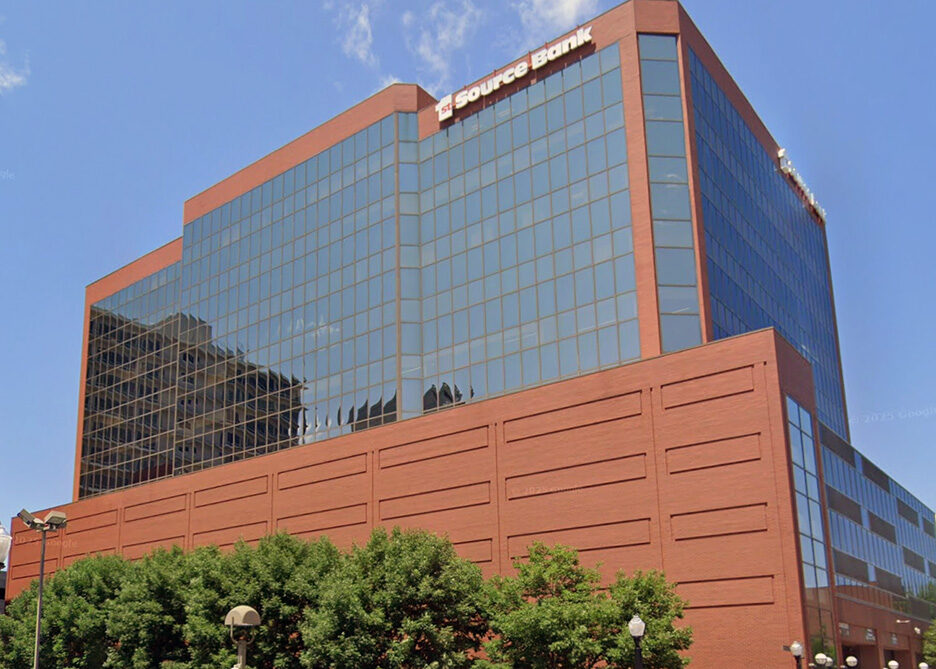
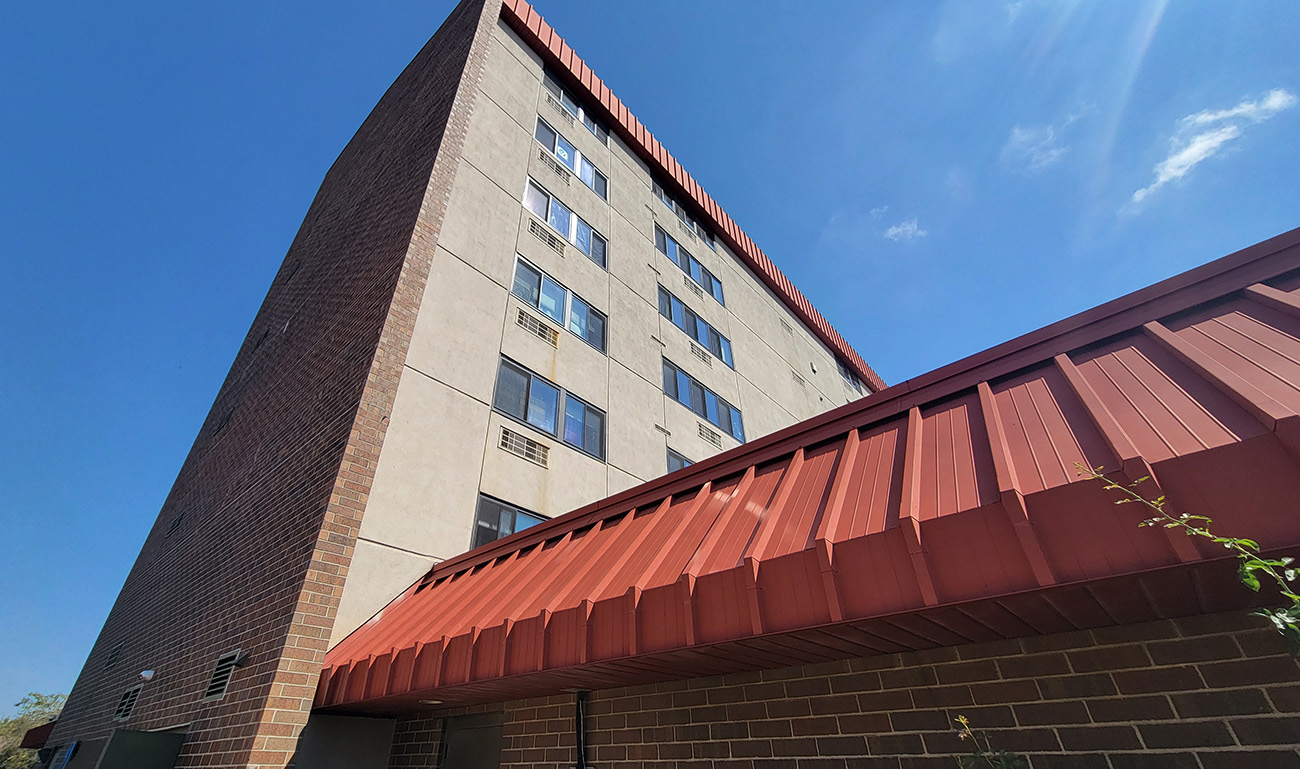
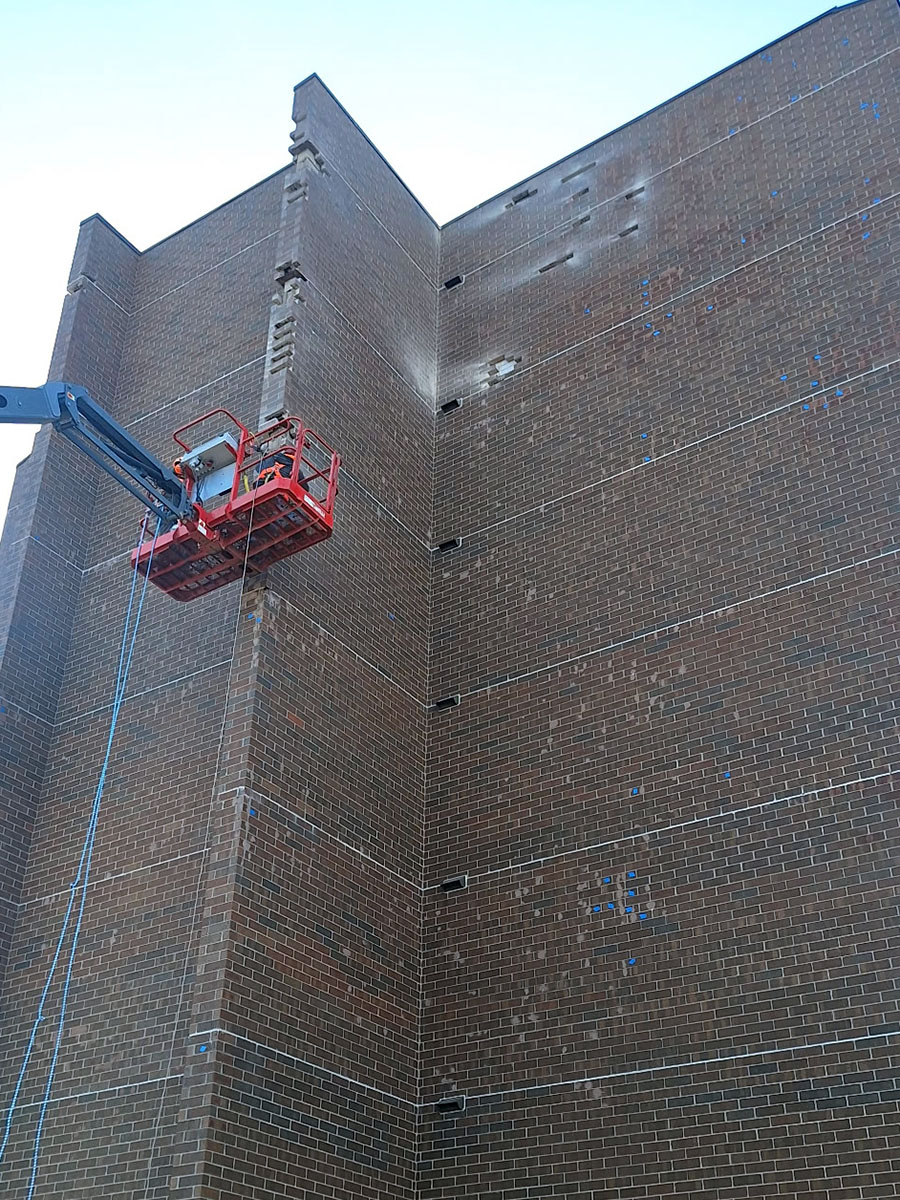
Central Indiana is hard on exterior sealant for one specific reason: a joint holding water when the temperature drops is pried open from the inside, and that happens dozens of times across a winter rather than once. Manufacturers rate these products at 15-25 years. On exposed high-rise elevations here, and particularly on anything catching winter road spray, we see meaningful failure well short of that. A whole-envelope look on a five-year cycle is the reliable way to catch it while it is still a sealant line item rather than an interior repair. The downtown cohort built between 1982 and 1990 is the one to watch: that glazing is now 36 to 44 years old and reaching the end of sealant and gasket service life as a group.
No. Waterproofing is preventative: properly installed sealants, coatings and membranes that stop water entering the building at all. Water damage restoration is what happens afterwards, once water is already inside and interiors have to be dried out and rebuilt. Presto works only on the preventative side, maintaining and restoring the exterior systems that keep water out, which in a freeze-thaw market costs far less over time than remediating the same interior twice in a winter.
Yes. Occupied buildings are the normal case rather than the exception, and that includes hospitals, hotels, university facilities and full office towers. Rope access takes the place of scaffolding wherever the elevation allows, loud work is scheduled away from peak hours, tenants get notice ahead of each phase, and entrances, lobbies and loading stay in service throughout. The constraint that actually moves a waterproofing schedule in Indianapolis is temperature, not occupancy.
They are different products doing different jobs. Paint is a finish: it colors the wall and sheds a little weather, but it is thin and it cannot follow the substrate when the substrate moves. An elastomeric coating is a waterproofing membrane that happens to be decorative. It is applied many times thicker, it stays flexible, and it spans hairline cracking instead of splitting along it. That last property is the one that matters here. An Indianapolis wall can swing well over a hundred degrees between a January night and a July afternoon, and any crack that opens under that movement is a place for water to sit and then freeze. A coating that bridges the crack keeps water out of the wall. Paint over the same crack simply cracks too.
Largely, yes. Sealants, elastomeric coatings and masonry repellents carry minimum application and cure temperatures, so the productive exterior window runs from the spring thaw through late autumn. That makes winter the right time to scope, specify and permit, including obtaining the Indiana Construction Design Release that sits upstream of the city permit, so crews can mobilize the moment conditions allow. Interior-side investigation, documentation and planning continue year-round.
Yes, and there are two layers to it in Indianapolis. A Construction Design Release from the Indiana Department of Homeland Security, Building Plan Review Section, sits upstream of the city process, and the City of Indianapolis Department of Business and Neighborhood Services then issues the Class 1 Commercial Structural Permit under Unigov. Our project management team files both, handles any owner association or design review submissions the property needs, and coordinates with the general contractor where one is running other work on site. Our general liability and workers’ compensation cover is nationwide, and the scope is built to meet whatever Marion County and state requirements apply to it.
A small sealant failure in October becomes a frozen, widened joint by February. Tell us what the joint looks like now and we will point you at the repair while it is still cheap.
Call 1-800-785-9927, or send the details through Request A Quote.