




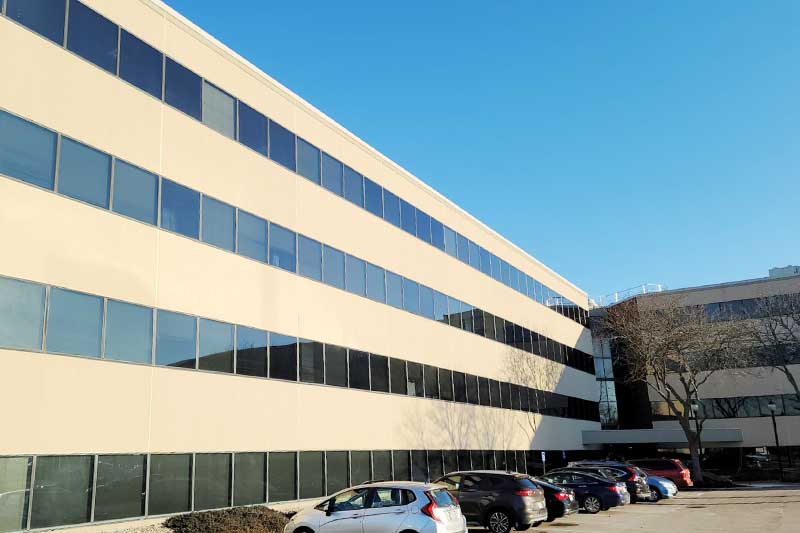
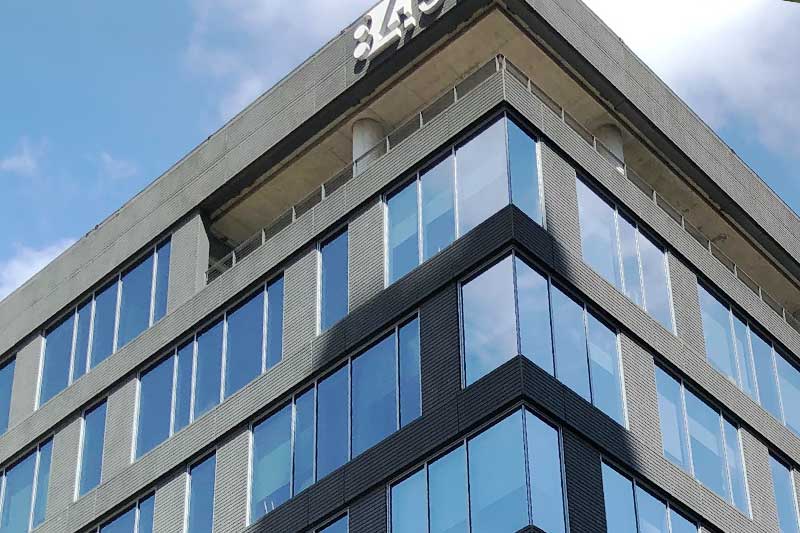
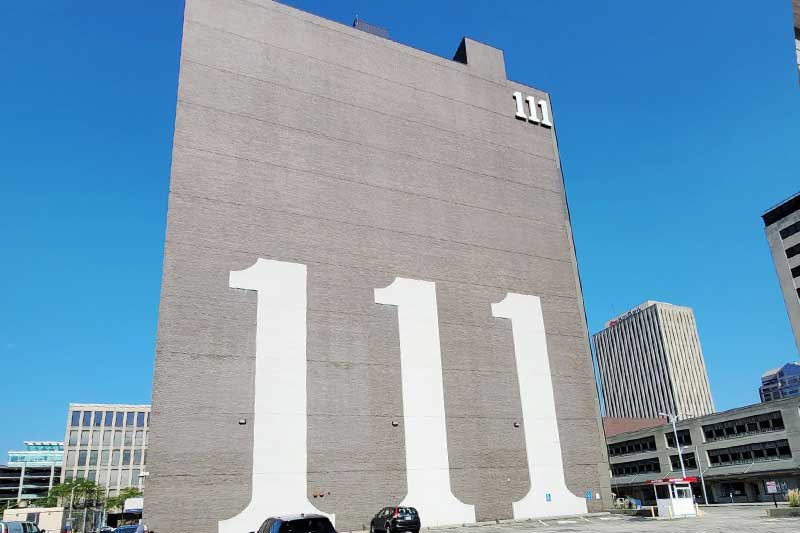


Cleveland hands a building owner a deadline that most cities do not. Under Chapter 3143 of the Codified Ordinances, a building of five storeys or 75 feet that has passed thirty years must have its exterior walls critically examined every five years to ASTM E2270-14, with the report filed to the Director of Building and Housing as safe, safe with a repair programme, or unsafe. The lake largely decides what that report says. A normal year drops 63.8 inches of snow and leaves cover on the ground about 45.8 days, and because the shoreline holds temperatures close to freezing rather than well below it, saturated masonry crosses that line again and again instead of staying locked. Behind glazed terra cotta and at corroding relief angles, that is how a wall face lets go.
Presto Restoration works nationwide and has spent more than 25 years on high-rise exteriors, parking structures and landmark buildings, restoring and waterproofing them. Cleveland work is planned around a narrow application window, because a market with 49% of possible sunshine gives walls very little chance to dry in winter, so caulking, coatings and masonry repair get sequenced when substrates will genuinely cure. From steel-frame towers in Historic Erieview and Playhouse Square to brick loft blocks in the Warehouse District, Ohio City and Tremont, we bring the exterior back to a defensible condition and keep water on the outside of it.
Presto Restoration brings a full range of exterior restoration, waterproofing and envelope consulting to commercial property across Cleveland, Cuyahoga County and the east-side snow belt.
Water gets into a Cleveland envelope during the thaw far more often than during the storm. We treat everything above grade as one system, taking in wall assemblies, plaza and terrace decks, window perimeters, parapets and coping, and we specify membranes and sealants that stay elastic through a winter of repeated crossings of the freezing point rather than one long deep freeze.
A Cleveland facade gets read twice, once by the tenants who look at it and once by the inspector who has to classify it under Chapter 3143. We rebuild both readings through full sealant replacement, repointing, terra cotta and stone repair, architectural metal refinishing, glass renewal and elastomeric coatings, so the wall sheds meltwater instead of storing it and looks like an asset somebody is minding.
View Our Cleveland Facade Restoration Services →
A Cleveland garage takes in whatever the street hands it: slush loaded with wheel-carried de-icing salt, meltwater running toward drains that refreeze overnight, and a deck that thaws on top while the slab underneath stays cold. Once the traffic membrane wears through and the joints open, that brine finds the rebar, the corrosion swells and concrete comes off in sheets. We turn the cycle around with concrete repair, new expansion joints, structural waterproofing and a fresh traffic coating system.
A tear-off in Cleveland has to be threaded through a weather calendar that seldom cooperates, and the building often never needed one. Restoration buys 10-20 more years out of a roof that still has service left in it, at a fraction of what replacement costs. We put down elastomeric and silicone coating systems, rebuild flashings, curbs and penetration seals, and flatten ponding areas before the next thaw finds them. With snow lying roughly 45.8 days a year, we watch drift loading at parapets and refreeze at scuppers and internal drains closely.
Cleveland kept its nineteenth and early twentieth century commercial fabric, from Warehouse District loft blocks of the 1870s to the Society for Savings and Rockefeller buildings and the 1920 and 1921 Playhouse Square theatres. Exterior work on them runs through the Cleveland Landmarks Commission, which issues a Certificate of Appropriateness under Chapter 161 and has 45 days to act across 29 local historic districts. We prepare those submissions, match period materials and detailing, and make repairs that hold up to Secretary of the Interior review.
A leak in a Cleveland building almost never announces where it began. Open-fetch lake wind can drive water in at a coping or a spandrel joint and it will run several storeys before it marks a ceiling, and a winter stain is often meltwater that entered weeks earlier. Our specialists isolate the real failure with close facade review, moisture meter surveys, drone imaging, controlled water testing, and infrared thermography when conditions allow, so the scope rests on documented fact.
Presto Restoration has spent more than 27 years protecting commercial buildings across the United States. In Cleveland that national record gets pointed at a specific set of problems: terra cotta and masonry carrying decades of meltwater cycling, corrosion jacking at relief angles and spandrel beams, and the five-year exterior wall examination that Chapter 3143 requires of older buildings.
Looking after downtown Cleveland, the Flats and the east-side commercial neighbourhoods properly takes more than one trade on site. Presto works with specialist Northeast Ohio partners so an owner can cover the whole range, heavy structural restoration at one end and everyday facility upkeep at the other.
For day-to-day upkeep and routine facility work, property managers are welcome to draw on our sister divisions:
Building Restoration Cleveland: Handles focused structural repair and exterior preservation on high-rise property.
Building Maintenance Cleveland: Covers the ongoing preventative maintenance that keeps a Cleveland property performing through a long winter.
Building Services Cleveland: A resource for broad, day-to-day commercial building support right across the Cleveland market.
Presto takes on most kinds of commercial and high-rise property in Cleveland: steel-frame office towers of the 1920s, Warehouse District and Ohio City loft conversions, hotels, parking garages, hospitals, government buildings, university and campus property, and designated landmarks. Our crews work the full range of exterior surfaces: glass curtain wall, metal panel, terra cotta, stone, masonry, stucco, EIFS, concrete and roofing.
Lake Erie delivers volume and repetition rather than extreme cold. A normal year brings about 63.8 inches of snow with cover on the ground roughly 45.8 days, and the eastern Cuyahoga snow belt takes more than the airport figure suggests, because the Portage Escarpment lifts lake moisture as it comes ashore. Masonry saturates, then the shoreline holds temperatures near freezing, so a joint crosses that line over and over instead of sitting frozen. With 49% of possible sunshine, the wall also dries slowly, so each crossing starts wetter than the one before it.
Scope and building size set the schedule, and in Cleveland so does the calendar. Two to four weeks covers targeted sealant work on a mid-rise; a downtown tower taken through a full facade restoration runs three to six months. We book cure-sensitive work into the narrow window a cold, cloudy market allows, and we phase zones so tenants, garages and lobbies stay in use the whole time.
Yes. We file with the City of Cleveland Department of Building and Housing, Division of Construction Permitting, and we coordinate the inspections. Patching a roof needs no permit while a full replacement does, and exterior work that changes appearance inside one of the 29 local historic districts needs a Certificate of Appropriateness first. We also work alongside the engineer of record on repair scopes written out of a Chapter 3143 examination. General liability and workers’ compensation cover is nationwide and in force on every job we run.
Maintenance is the repeating cosmetic round of window cleaning, pressure washing and touch-ups that keeps a property looking cared for. Restoration is corrective: rebuilding failed waterproofing, replacing spent sealant, repairing spalled masonry and corroded steel, and giving a wall back its ability to shed water. In Cleveland the difference bites, because a wall that has only been cleaned still carries water into every freeze that follows.
Look for sealant joints that are cracked, shrunken or pulling free; rust bleed running below lintels, relief angles and metal trim; terra cotta or stone that is spalled or sounds hollow; interior staining that shows up during a thaw rather than during rain; efflorescence spreading over masonry faces; and coping or edge flashing that has lifted. Any of these signals envelope failure that is already active, not a cleaning problem. If the building is five storeys or more and past thirty years, the next Chapter 3143 examination will record them anyway, and repairs cost less before that report is filed.
Seeing open joints, rust bleed or spalled terra cotta on your Cleveland building? Tell us what you have found and we will match it to a scope that holds through a lake-effect winter.
Call 1-800-785-9927 today, or click Request A Quote.