








San Antonio holds three centuries of building in a single inventory, and very little of it was made from anything that arrives on a modern truck. The five Spanish colonial missions carry eighteenth-century limestone bedded in lime mortar and now sit inside a UNESCO World Heritage listing. King William, Lavaca and Dignowity Hill hold nineteenth-century masonry that has since become offices, restaurants and small commercial space. Downtown carries the 1920s towers, the Tower Life Building and the Emily Morgan among them, in limestone, brick and terra cotta. Fort Sam Houston alone is an enormous military masonry estate still in daily use, and the Pearl Brewery, Port San Antonio and Brooks show what happens when industrial and base property is re-tenanted rather than cleared. What ties all of it together is soft stone. Local limestone, caliche, lime render and mortar designed to move, breathe and shed moisture as vapor behave nothing like the materials a modern envelope contractor reaches for first.
Presto Restoration has worked directly on designated and landmark property in many parts of the country, and on those jobs the material sets the schedule rather than the other way round. Our scopes generally follow the National Park Service’s Preservation Briefs, the technical reference most preservation architects and review staff already keep to hand, and we adapt that guidance to the stone, the mortar and the review process actually in front of us. In practice that means lime mortars mixed to the strength and color of what is already in the wall, cleaning gentle enough for soft limestone and hand-floated render, and repair in kind wherever the original can be saved. It also means knowing who signs the work off. Exterior work in a San Antonio local historic district requires a Certificate of Appropriateness from the Historic and Design Review Commission, and the director of the Office of Historic Preservation holds final authority over those applications and can depart from what the commission recommends. A scope written without that in mind comes straight back.
Landmark buildings, locally designated commercial property and structures that simply predate everything around them all draw on the same set of preservation trades from Presto, across San Antonio and Bexar County.
Failed mortar is where most historic masonry in San Antonio begins coming apart, and a bad repointing job is the quickest way to finish it off. Limestone laid in the eighteenth and nineteenth centuries, and much of the brick that followed it, was bedded in lime mortar deliberately made weaker than the units around it. The joint was meant to be the sacrificial part: it takes up movement, it cracks before the stone does, and it lets water leave the wall as vapor. Fill those joints with a hard Portland-cement mix and the stone becomes the weak element instead, so the face spalls away and material that cannot be replaced is simply gone. Our masons cut out failed joints by hand rather than running a saw through the arrises, mix to match the existing mortar in strength, color and aggregate, and tool the finish back to the profile the wall already had.
Local limestone, caliche block, cast stone and the occasional marble surround account for most of the decorative stonework in San Antonio, and every one of them is softer than it looks. Pressure that would be routine on a modern precast panel will erode a tooled limestone face, strip the weathered surface a wall has spent two centuries acquiring, and leave the building looking newer than the day it was cut. We choose the cleaning method against the stone and its condition rather than running one process across a whole elevation, working through poultices, low-pressure water and micro-abrasion where each is the right answer. Cracked and spalled units are made good with mortars matched for color, texture and porosity so they weather at the same rate as the stone beside them.
Wood sash in King William and Monte Vista, and steel casements in the downtown towers, are usually the first thing an owner is told to tear out. Replacement is rarely the cheaper answer and it complicates a Certificate of Appropriateness application, because the windows are a large part of what the commission is looking at. Most of what fails on a historic window is not the window itself: it is hardened glazing putty, corroded muntins, painted-shut hardware, decayed sills where a South Texas downpour has been sitting for hours, and perimeter sealant that gave up years ago. We repair those and keep the original glass, frames and hardware in service, which on a maintained sash means decades more than a modern unit will give.
Stucco over stone and over lath turns up everywhere in San Antonio, from mission-era walls to the modest commercial stock on the near east and near south sides, and none of it behaves like the acrylic and EIFS systems sold today. Traditional lime stucco was floated on in coats meant to carry moisture through the wall and release it again, which is precisely why it is still there. Patch it with a cement or acrylic product and the moisture is sealed into the assembly behind, where it works on the original render and the masonry until the two fail together. We rebuild in lime-based mixes, replace lath and keying that has let go, and float the finish to the texture and slight irregularity of the surrounding hand-applied work. On a building with a Certificate of Appropriateness in play, that match is not a nicety. It is what the application is judged on.
Bronze entrance screens on the 1920s towers, cast-iron porch work and gates through King William and Government Hill, pressed-metal cornices downtown and the ornamental grilles on the older Fort Sam Houston buildings all belong to the same inventory. Inland the enemy is less corrosion than heat, ultraviolet and the wet-dry cycling that lifts and chalks a coating until bare metal is exposed for a season at a time. Patina on bronze and copper is part of the historic surface, so we leave it wherever it is not concealing active loss of metal, remove only what is genuinely destructive, and refinish in a system suited to the alloy. Stripping ornamental metal back to bright substrate is a last resort here, never the starting point.
A historic wall in San Antonio has to be kept dry by different means than a sealed curtain wall four blocks away. Limestone, lime mortar and traditional render were built to take water in during a heavy convective downpour and hand it back to the air over the following days. Wrap that assembly in an impermeable coating and the water still gets in, at a coping, a sill or an open joint, but now it cannot leave, and it spends the summer driving salts out through the face of the stone. We specify vapor-permeable repellents and sealants compatible with lime-based construction, and hold fully impermeable systems back for the details where the original builders used a barrier anyway, such as horizontal surfaces and the bed under a parapet cap.
A three-hundred-year-old wall gives you one chance to get the repair right, so the sequence matters far more here than it does on a modern building. Every Presto preservation project moves through five phases, built to find the whole problem before anyone opens a joint, to specify materials that suit what is already in place, and to keep review requirements ahead of the trowel instead of behind it.
Deterioration is mapped elevation by elevation, and what is original to the building is told apart from what a later hand added, because only one of the two is irreplaceable. No specification is written until that history is clear.
The existing lime mix, the limestone or caliche unit, the render composition, the glazing system and the metal alloys are all identified before anything is ordered. Where a material is genuinely uncertain, a sample goes out for laboratory work.
Findings become a quantified scope with period-correct product specifications. We work alongside owners, preservation architects and consultants, and supply the documentation a Certificate of Appropriateness application has to carry.
Crews work in traditional materials, and by hand wherever the substrate calls for it. Supervision is tight, because a mis-cut joint or a burned stone face on eighteenth-century fabric is not something a second visit can put back.
You receive photographic records before and after, product data, warranty terms and a maintenance schedule written around the materials used. On a designated property that file supports whatever the next review cycle asks for.
Whether the stonework on your San Antonio building is visibly failing or you are trying to plan the next ten years of upkeep, tell us what you are looking at and our preservation team will point you toward the right repair and the right order to do it in.
Call 1-800-785-9927 or Request A Quote.
A historic building needs attention between the large projects as much as during them, and preservation is only one of the trades involved in keeping one standing. Presto coordinates a set of specialist sister divisions so that an owner in San Antonio is not assembling a fresh vendor list for every task the property throws up.
For routine upkeep and the smaller works between preservation cycles, property managers are welcome to approach them directly:
Building Restoration San Antonio: Targeted masonry and structural repair on older commercial buildings.
Building Maintenance San Antonio: Scheduled maintenance that stops a historic property sliding backwards between projects.
Building Services San Antonio: Everyday commercial building support across Bexar County and the counties beside it.
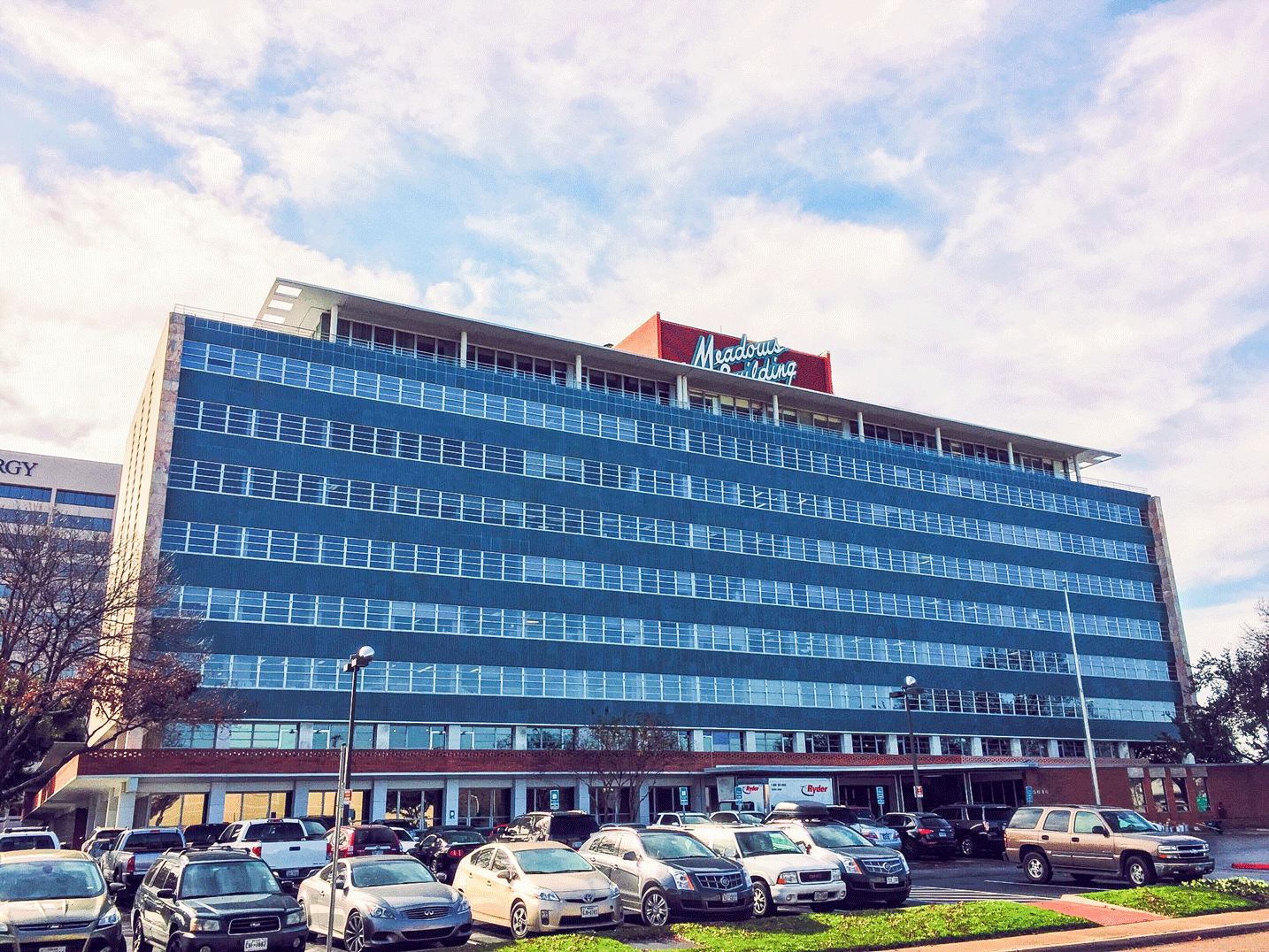
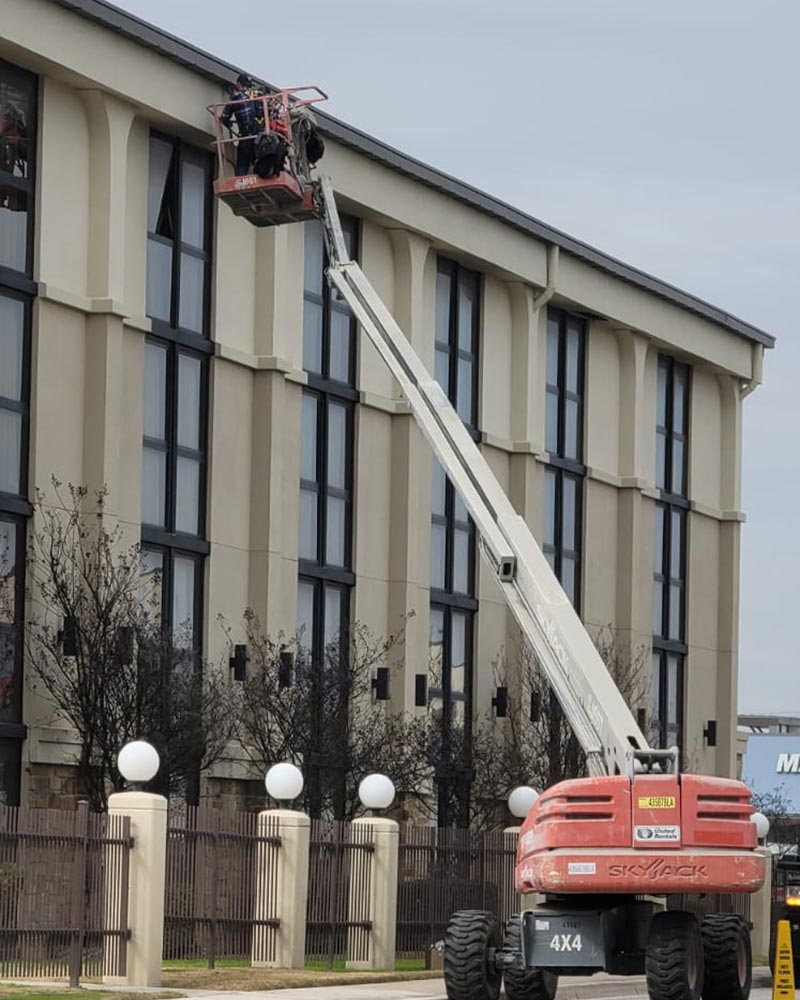
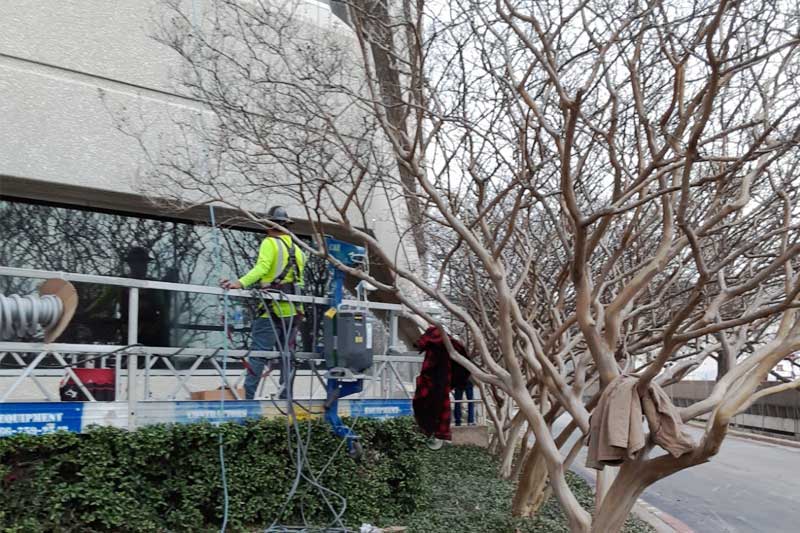
A selection of the preservation and landmark restoration work Presto has carried out on Texas buildings.
The aims are different, and that changes nearly every decision on site. A standard restoration is judged on whether the building is watertight and serviceable afterwards. On a designated property you have to reach that same point without consuming the material and workmanship that made the building worth the trouble in the first place. So the mortar is lime rather than cement, the cleaning is calibrated instead of aggressive, and repairs are kept reversible wherever that is possible so the next generation is not stuck with our decisions. It is slower and it costs more per square foot. It is also the only route that leaves a San Antonio landmark still holding the protections it has.
It usually destroys the stone. Mortar in a mission wall, in King William masonry or in a 1920s downtown facade was made soft on purpose, so that the joint rather than the unit absorbs movement and lets water out as vapor. Portland cement reverses that relationship. The joint becomes the hardest thing in the wall, so thermal movement and trapped moisture find their release through the face of the limestone instead, which spalls and takes the tooled surface with it. That surface cannot be honestly replaced. Matching the original mix in strength, porosity and color is the whole of the work.
Better than most owners expect. Thick limestone and rendered masonry walls carry real thermal mass, which flattens the daily swing far more effectively than a thin modern wall does. Original sash and casements, once reglazed, rehung and properly sealed at the perimeter, perform close to replacement units and outlast them comfortably. Vapor-permeable coatings tend to outlive impermeable ones here because they are not holding moisture against the substrate through a hundred-degree afternoon. We work on the envelope; mechanical and insulation upgrades belong with a contractor who specializes in historic-rated systems.
Longer than a comparable modern job, because hand technique and material curing set the pace rather than crew size. On a modest commercial building here, envelope work of any size is generally a two to four month exercise, and a full scope on a downtown landmark can sit anywhere between six months and a year. The larger variable is review: a Certificate of Appropriateness application goes before the Historic and Design Review Commission on its own calendar, and that can add weeks before anything is touched. We build the review time into the program at scoping so nobody is caught out by it.
Yes, and the district matters because it determines what has to be approved. Exterior work inside a San Antonio local historic district requires a Certificate of Appropriateness, whether the property is individually designated, sits within the district only, or is also listed on the National Register. We establish which of those applies to your building at the outset, then set out exactly what the proposed scope will put in front of the commission.
Applications for exterior work in a local district are reviewed by the Historic and Design Review Commission, which is staffed by the Office of Historic Preservation. One point catches owners out more than any other: the OHP director holds final authority over applications and may decide against the commission’s recommendation. Owners and their preservation architect lead the submission. We supply the accurate scope, the material specifications and the documentation that will stand up to that reading, and we program the work around the outcome.
Chiefly the National Park Service Preservation Briefs, which remain the most widely used technical reference for this work and cover the ground San Antonio buildings genuinely need: masonry cleaning, mortar formulation, stucco and render repair, window restoration and the handling of soft stone. Where a designation or a particular building type calls for more, we layer additional standards on top. Bring your preservation architect in early and we will gladly set the proposed scope beside the relevant Briefs before anyone lifts a tool.
Once eighteenth-century limestone is lost it does not come back, and modern products applied in good faith are one of the commoner ways it goes. Tell us what you are looking at on your San Antonio building and our preservation team will tell you what it needs, and in what order.
Call 1-800-785-9927 or Request A Project Quote online.