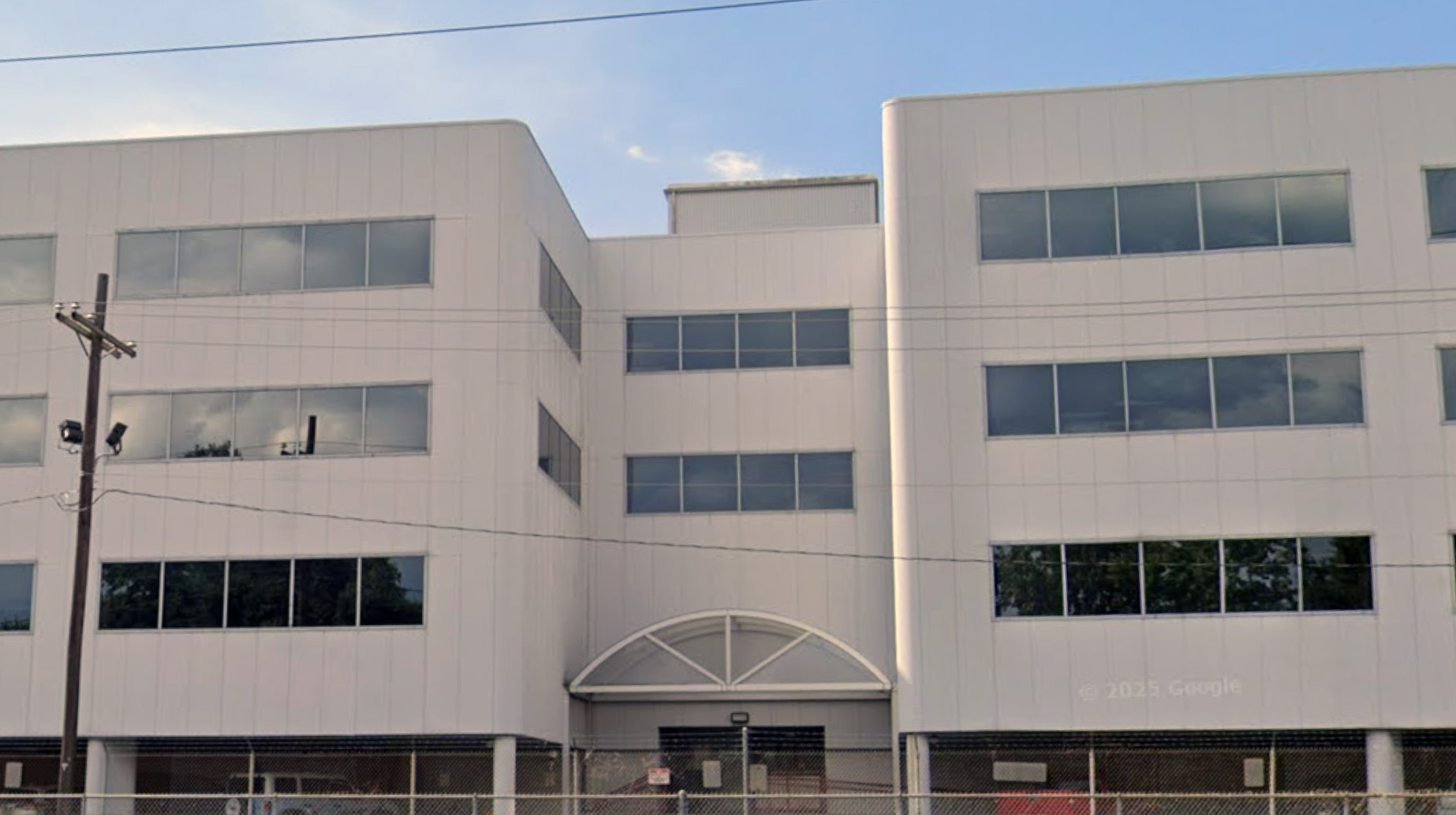
Presto Building Facade Restoration & Waterproofing
Building Facade Waterproofing & Restoration Services 1-800-785-9927

A low-slope commercial roof in New Orleans has to do three jobs that rarely coincide. It has to shed roughly 62 inches of rain a year, much of it arriving in short violent bursts that overwhelm a drain the moment one is partly blocked. It has to stay attached through hurricane-season uplift, which pulls at the perimeter, the corners and every flashing termination rather than at the field of the roof. And it has to survive months of Gulf sun and near-constant humidity, which embrittle a membrane, chalk a coating, and keep organic growth alive in any spot that holds water. Settlement adds the final complication: as a building shifts, a deck that once drained now ponds, and the water sits precisely where a coating is weakest.
Presto restores commercial roofs rather than replacing them. A tear-off in this city means opening a building to the sky in a climate where a thunderstorm can build in an hour, and for a roof that is still structurally sound it is usually avoidable. We install high-performance silicone systems, rebuild flashings, curbs, parapet terminations and penetration seals for wind uplift, and correct the drainage that settlement has quietly undone.
Presto installs high-performance silicone coating systems built for standing water, hurricane-season uplift and a long humid summer, adding years of service life to a structurally sound New Orleans roof without a tear-off.
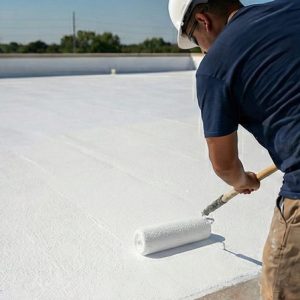
Silicone is the strongest coating chemistry available for roofs that sit under standing water, and in New Orleans that is not an occasional condition but a routine one. Afternoon storms through the summer arrive faster than a partly blocked drain can clear, and any deck that has settled out of its designed fall will hold water in the low spots for hours afterward. Acrylics soften and re-emulsify under that kind of repeated ponding. Silicone does not: it stays intact through continuous wetting, holds its reflectivity under sustained UV, and remains flexible across the thermal range a Gulf summer puts a roof through.
Single-ply membranes take their damage here from the sun and the damp rather than from the cold. Years of high UV thin the surface mil, embrittle the sheet and open seams, and the humidity that follows every storm keeps organic growth working in the shaded areas and around rooftop equipment. Coating a sound single-ply roof restores the weather surface, re-seals the seams and terminations, and puts a reflective layer back over a membrane that has lost its own. It also lets us re-detail the perimeter and corner attachments, which is where wind uplift actually starts on a New Orleans building.


Spray polyurethane foam depends entirely on its protective top coat, and in this climate that coat wears out sooner than the 10-15 year interval quoted elsewhere. Sustained UV is one reason; the other is that foam is unforgiving about water. Any breach in the coating lets moisture into the foam, where the high humidity here gives it no route back out, so a small coating failure becomes saturated insulation rather than a stain. Recoating on schedule is what keeps an SPF roof serviceable, and it is dramatically cheaper than the alternative once the foam has taken on water.
Asphaltic roofing, built-up roofs, modified bitumen and cap sheets, is common across the older commercial and multifamily stock in Mid-City, the Warehouse District and Uptown. These systems respond well to coating, and in New Orleans the reflective element is worth as much as the waterproofing element: a dark asphaltic surface runs extremely hot through a Gulf summer, and the thermal cycling that comes with it works seams and flashings loose year after year. A silicone system stops the water, drops the surface temperature substantially, and takes that daily movement out of the assembly. Bleed blockers are specified where the asphalt would otherwise stain through.


Restoration is not the right answer for every roof, and we would rather establish that before anyone spends money. Structural deterioration, saturated insulation, widespread substrate failure or existing coatings that have chalked past the point of adhesion all rule a roof out. Wet insulation is the one that catches people here: in a climate this humid a roof can carry a great deal of trapped moisture without looking dramatic from above, and coating over it seals the water in permanently. We test adhesion on the actual substrate and check for moisture in the assembly before we recommend a system, and if the roof is not a candidate we say so.
Every New Orleans roof restoration follows the same five-phase process: confirm the roof is genuinely a candidate for coating, prepare it properly, install to specification, and document what was done. The first phase carries more weight here than it does in a drier market, because a roof carrying trapped moisture must never be coated over.


A full walk of the roof: membrane condition, flashings, penetrations, drains, curbs and parapet terminations. We map where water actually stands after rain rather than where the drawings say it should run, and flag anything structural that would rule out coating.
We test adhesion on your actual substrate and check the assembly for trapped moisture before committing to a coating plan. In a climate this humid that second check is the one that matters: coating over saturated insulation seals the water in and turns a repairable roof into a replacement.
We specify the silicone system, any primers or bleed blockers, flashing and penetration repairs, drainage corrections and wind-uplift detailing at perimeters and corners, with square footage and a programme that allows for the working days rain will cost.
Crews clean and prepare the surface, complete flashing and termination repairs, and apply the coating at manufacturer-specified thickness. Application is timed to the forecast and to dew point, because a silicone system applied to a damp deck or into an overnight condensation cycle will not build the film it is supposed to.
Full documentation at handover: warranty paperwork, product data sheets, before-and-after photography, and a maintenance plan that puts drain clearing ahead of hurricane season rather than after it.
Is the roof leaking, holding water after every storm, or coming to the end of its expected life? Before committing to a tear-off, it is worth establishing whether the roof is a candidate for coating instead. Tell us what you are seeing and our team will point you toward the right answer, including telling you when restoration is not it.
Call 1-800-785-9927 or click Request A Quote.
A roof in this climate needs attention between projects as much as it needs the project itself, and clear drains before a storm are worth more than any coating. Presto coordinates a network of specialised divisions so owners across Orleans, Jefferson and St. Tammany Parishes get that continuity.
For day-to-day and preventative support, property managers can approach our sister divisions directly:
Building Restoration New Orleans: Localised structural repair and exterior preservation work.
Building Maintenance New Orleans: Preventative maintenance that keeps a humid-climate property ahead of the damp year-round.
Building Services New Orleans: Day-to-day commercial building support across the New Orleans market.
Restoration typically runs a fraction of replacement cost, and in this market there is a second saving that does not show on the quotation. A tear-off leaves a building open to the sky, and between the summer thunderstorm pattern and hurricane season that exposure carries real risk, along with the contingency and temporary protection costs that come with managing it. Coating a sound roof avoids the exposure entirely, keeps tenants working, and sends nothing to landfill.
A properly installed silicone system on a well-prepared substrate generally carries a 10-20 year manufacturer warranty, and silicone is specifically the chemistry that holds those numbers where water stands. That matters here more than the warranty length does. Acrylic coatings soften under repeated ponding, and on a New Orleans roof, where drains are tested hard several times a week in summer and settlement has often flattened the fall, ponding is the normal condition. Keeping the drains clear is the single biggest thing an owner can do to reach the top of that range.
Single-ply membranes such as TPO, PVC, EPDM and CSPE; metal roofs, including previously coated ones; built-up roofing, modified bitumen and cap sheets; spray polyurethane foam; and most existing acrylic or urethane coatings. The decisive question is not the roof type but whether the assembly underneath is dry and sound. We test adhesion on the actual substrate and check for trapped moisture before recommending anything.
When the deck or structure has deteriorated, when the insulation is saturated, when the substrate has failed over a wide area, or when an existing coating has chalked past the point where anything will bond to it. Saturated insulation is the common disqualifier in this city, and it is easy to miss: a roof can hold a great deal of water in the assembly while still looking serviceable from above. Coating over that seals the moisture in permanently and destroys a roof that could otherwise have been repaired. If yours is in that condition we will tell you, and we have no replacement contract to sell you instead.
Yes, and the effect is larger here than in most markets because the cooling season is so long and so humid. A dark asphaltic or aged single-ply surface absorbs heat all day and drives it into the building; a reflective silicone finish sends most of that solar load straight back. Beyond the energy bill it takes heat out of the roof assembly itself, which reduces the daily thermal cycling that works seams, flashings and terminations loose season after season.
No. Coating work happens entirely on the roof, there is no tear-off, and the building stays open and occupied throughout, which is one of the main reasons owners choose restoration. Roof access, equipment staging and any work near air intakes are coordinated with building management in advance. The one variable worth planning around is weather: application is scheduled to the forecast and to dew point, so a run of storms will move working days without affecting anyone inside the building.

Before committing to a tear-off, find out whether your New Orleans roof qualifies for restoration instead. Tell us what you are seeing and our team will tell you honestly which of the two you are looking at.
Call us today at 1-800-785-9927 or click Request A Quote.