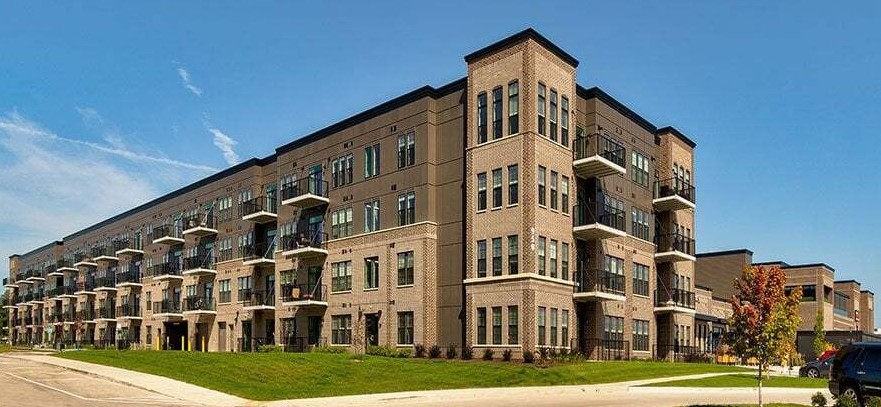
Three eras stand within a few blocks of each other here. The Haymarket district at the fork of Main and Pearl is two-story vernacular brick built between 1865 and 1930, storefronts framed in cast iron and finished with pressed metal cornices. The 100 Block on West Broadway is the late-Victorian commercial run. The Dodge House of 1869, the old rotary jail and the 1905 Carnegie library that now holds the Union Pacific museum carry national listing. Behind all of it sits the working railroad city: depots, wholesale houses and shop buildings in red and buff local brick with limestone trim. Every one of those materials fails differently, and a Missouri valley winter finds each failure in turn. A lime joint takes on water, freezes and opens a fraction wider, and it does that forty or fifty times between November and March. Plowed snow banked against a wall holds meltwater and de-icing chemical against the bottom four feet for weeks at a stretch. Ice standing in the seam of a metal cornice corrodes it from the side nobody can see.
Presto has worked on landmark and locally designated property across the country, and the method does not change from one to the next: establish what the building is made of before deciding what to do to it. Scopes track the National Park Service’s Preservation Briefs, the technical reference the field defers to, adapted to the style, the material palette and the review path of the individual Council Bluffs property. In practice that means lime mortar batched to the original’s strength and color, cleaning calibrated to soft local brick and century-old limestone rather than one method used everywhere, and repair in kind instead of replacement. It is also what keeps a building’s Certificate of Appropriateness standing. Local designation, a position inside a historic district, individual National Register listing: the bar rises with each one, and the scope is written to clear it.
Landmark buildings, locally designated structures and architecturally significant property across Council Bluffs and Pottawattamie County are served by Presto’s complete range of historic preservation work.

Ask what most often goes wrong on old masonry in Council Bluffs and the answer is the joint rather than the brick. Ask what most often goes wrong in the repair and the answer is the same joint. Builders here worked in soft lime mortar for three reasons: it moves when the wall moves, it gives way before the brick does, and it lets water leave as vapor. That third property is the one this climate turns on, because vapor that escapes is not liquid waiting to freeze. Portland cement reverses all three at once. It is harder than the brick around it, so the brick becomes the sacrificial material. It closes the wall, so moisture that gets in stays in. And the first hard freeze after a wet week takes the brick face off course by course, permanently. Our masons cut failed joints by hand rather than grinding through the arris, batch mortar to match the original for strength, color and sand, and tool the finished joint to the profile the building was built with.
Limestone does the quiet structural work on a Council Bluffs commercial block: sills, lintels, water tables and belt courses, with cast stone and the occasional terra cotta detail above. It is also the first thing ruined by an enthusiastic cleaning. Pressure that would be harmless on granite etches soft limestone, takes off a century of weathered surface and leaves a building looking newer than it has any business looking. The condition map here runs bottom to top and it is predictable: sills and base courses take winter street splash and salt spray and are routinely decades worse than the same stone twenty feet up, which makes a single cleaning specification applied across a whole elevation wrong by definition. We set method against material and condition, drawing on micro-abrasion, preservation-grade chemical cleaners and controlled water, and where stone has spalled we cut in repairs matched for color, texture and weathering behavior so the patch ages with the wall rather than against it.


Wood double-hung sash is standard across the Council Bluffs historic inventory and it is the detail most often thrown away first. Replacement with vinyl or stock aluminum can put a Certificate of Appropriateness out of reach, and the unit that goes in is typically rated for twenty-odd years against an original that has already done a hundred and twenty. The case owners hear is winter comfort. The honest answer is that the draft is air rather than heat: it arrives through a failed perimeter seal and a sash that no longer sits tight, and neither of those is a glass problem. We repair what is actually failing. Hardened glazing compound, rotted sill and rail sections, seized hardware and open perimeter joints all come back. The original glass, frames and hardware stay where they are. Add a storm panel where one is wanted and the restored assembly outlives the replacement that would have taken its place.
A fair share of the historic stock here carries stucco or cement plaster, some original to early twentieth century commercial infill and institutional buildings, some applied over older masonry during a later remodel. It has almost nothing in common with the acrylic and EIFS systems sold today. The historic material went on in coats over wood or metal lath, and every coat was meant to pass moisture along rather than hold it. Close that system with a modern cement or acrylic patch and the water that finds its way in behind has nowhere to go in January. What follows is easy to recognize once you know to look for it: an intact patch ringed by failed original, the ring a little wider each spring. We rebuild in lime-based formulations, replace lath where it has gone, and finish to the original texture, irregularity included, because that irregularity is what tells you a person applied it.


Cast-iron storefront columns and pilasters, pressed sheet metal cornices and window hoods, wrought-iron rail and ornamental grillework: on a nineteenth century commercial block the metal usually carries the building’s character. It also fails where nobody is looking. A cornice is a horizontal plane, high up, assembled from sheet with seams in it. Snow sits on it for weeks together, meltwater tracks in behind the sheet, and corrosion works outward from the concealed face until the ornament begins to move. By the time anything is visible from the sidewalk the fixings are already loose. We take off active corrosion that is doing structural damage, leave patina that is doing none, re-secure and repair sheet assemblies, and refinish by methods chosen for the metal actually in front of us. Taking historic metalwork back to bare substrate is where we end up when nothing else will serve, not where we start.
A historic building and a curtain-wall tower want opposite things from a waterproofing scope. Masonry laid in lime, with plaster behind it, was designed as a wall that takes on some water during a storm and gives it back to the air afterward. Seal that wall with a fully impermeable coating and the water still gets in, at a joint, at a sill, around a window opening, and then it cannot leave. In this climate that is not a slow problem. Trapped water freezes, and freezing water is what takes masonry apart from the inside out. Our historic scopes use vapor-permeable repellents and sealants compatible with lime construction, and put impermeable systems only where the original design intended one. Presto works above grade only, not on foundations or below-grade waterproofing.

Historic property moves at a different tempo than standard commercial restoration, and the calendar in Council Bluffs tightens it further, because lime mortar will not cure below freezing and masonry phases therefore belong inside the open season rather than at the edges of it. Five phases carry every preservation project: find the problems before anyone is on site, identify the material, specify period-correct replacements for it, and do the work without costing the building fabric that cannot be made again.


We document every area of deterioration on your historic property and separate original fabric (irreplaceable) from later, non-original additions (modifiable). We don't touch anything until we understand the building's history.
We pin down the original materials in detail: specific lime mortar mixes, the local brick and limestone in the wall, original plaster composition, window glazing, and metal alloys. Lab analysis is recommended anywhere the material is uncertain.
We translate findings into a detailed scope with quantified line items and period-appropriate product specs. We coordinate directly with property owners, preservation consultants, architects, and local review boards as needed.
Trained crews carry out the work using period-appropriate materials and traditional techniques where called for. Quality control is strict, since historic projects leave no room for rework on substrate that can't be replaced.
We deliver complete project documentation: before-and-after photography, material data sheets, warranty details, and maintenance guidance. For designated properties, this record can support future preservation board reviews.
Already seeing deterioration, or getting out in front of it? Either way, describe what the building is doing and our specialists will come back with recommendations grounded in preservation-grade practice rather than in whatever finishes soonest.
Call 1-800-785-9927 or Request A Free Quote.
Holding a consistent standard across the Haymarket, the 100 Block and the rest of the Council Bluffs historic inventory takes infrastructure that stays put rather than crews who arrive and leave. Presto coordinates a network of specialized regional divisions so coverage runs unbroken, from major historic envelope restoration down to routine upkeep.
For day-to-day and preventative work, property managers are welcome to reach our sister divisions directly:
Building Restoration Council Bluffs: localized structural repair and exterior preservation.
Building Maintenance Council Bluffs: the preventative maintenance that keeps water off a wall before winter can use it.
Building Services Council Bluffs: day-to-day commercial building support across the city.
Explore recent historic preservation and landmark restoration projects Presto has completed across Iowa.
Ordinary restoration asks one question: what gets this building dry and working again. Preservation asks that question and a second one alongside it, which is what the building is made of and how to keep that intact while the first question gets answered. The second question is what drives the choices. Lime mortar rather than Portland cement. Cleaning set against the substrate rather than one method run across a whole elevation. Repairs that a future preservationist can undo, so our judgment does not become their constraint. The work runs longer and costs more. It is also the only way the building keeps both its designation and the qualities that earned it one.
The joint on a pre-war Council Bluffs wall is deliberately the weakest part of it. Lime mortar is softer than the brick it holds, so when the wall moves with heat, cold or settling, the joint takes the movement and the brick does not crack. It is also open to vapor, which means water that gets in during a wet week leaves as air rather than sitting in the wall. In a place that crosses freezing forty or fifty times between November and March, that second property decides whether a wall survives the winter. Portland cement is harder than the brick and closed to vapor, so it inverts both: the brick becomes the sacrificial material, the water stays put, and the first deep freeze takes the faces off. Matching the mortar is the whole job.
It can, and a restored one usually beats expectations. Start with where the cold is coming from. Most of it is air moving through a failed perimeter seal and a sash that no longer sits tight, not heat passing through the glass, so restoring the sash and resealing the perimeter closes most of the gap with nothing original removed. Add a storm panel, inside or out, and the assembly is competitive with a replacement unit. Thick masonry carries real thermal mass on top of that. And breathable waterproofing often outlives an impermeable coating here, because it is not holding water inside the wall for January to freeze. Our scope is the envelope. Interior mechanical and insulation upgrades on a designated building are specialist work and owners bring in a contractor for them.
Two things set the schedule: the exacting pace of hand work, and the weather. Lime mortar will not cure below freezing, so exterior masonry phases run spring through autumn, and a project that starts late in the season carries into the following one rather than pushing through. Inside that window, a facade restoration on a smaller commercial building is generally two to four months of field work. A full scope on a larger landmark property can run six to twelve months or longer. Add whatever local board approval has to land before anyone is on site. We put the real dates in writing at scoping, including which phases have to sit inside the open season.
Yes, at every level of designation, from locally designated sites to buildings listed individually on the National Register. Council Bluffs has a good deal of both. What changes from one to the next is the review: whether a certificate of appropriateness or a comparable local approval is required, and which parts of the proposed scope actually trigger it. That gets established during the initial evaluation, before a scope is written, so the coordination the work will need is known from the start rather than discovered partway through.
On a designated property the approval is generally driven by the owner and a preservation architect or consultant who knows the local commission, with the State Historic Preservation Office in the loop on National Register and tax-credit work. Our contribution is the technical record that submission rests on: an accurate scope, period-appropriate material specifications, and documentation written to survive that level of review. We stay in contact with the owner’s preservation team from start to finish so the work lines up with whatever has to be approved, and we meet the applicable local and state requirements on every job.
Yes. Scopes track the National Park Service’s Preservation Briefs, the technical reference the field works from. The Briefs happen to cover the exact problems this building stock presents: how to clean masonry without etching it, how to formulate mortar for a soft wall, how to restore a wood sash, how to repair sheet metal and cast iron, and what moisture does inside a historic wall when it freezes. Style and designation sometimes call for additional standards layered on top. Owners working with a preservation architect are welcome to check our scope against the relevant Briefs before anyone starts.

A historic building cannot be made again once it is gone, and modern materials will not properly restore one. Every freeze-thaw season working on open joints and saturated brick carries off a little more original fabric, and none of that comes back. Knowing exactly what the building needs, and the order to do it in, is what holds character, performance and value together for the generation after this one.
Call 1-800-785-9927 or Request A Quote online.




