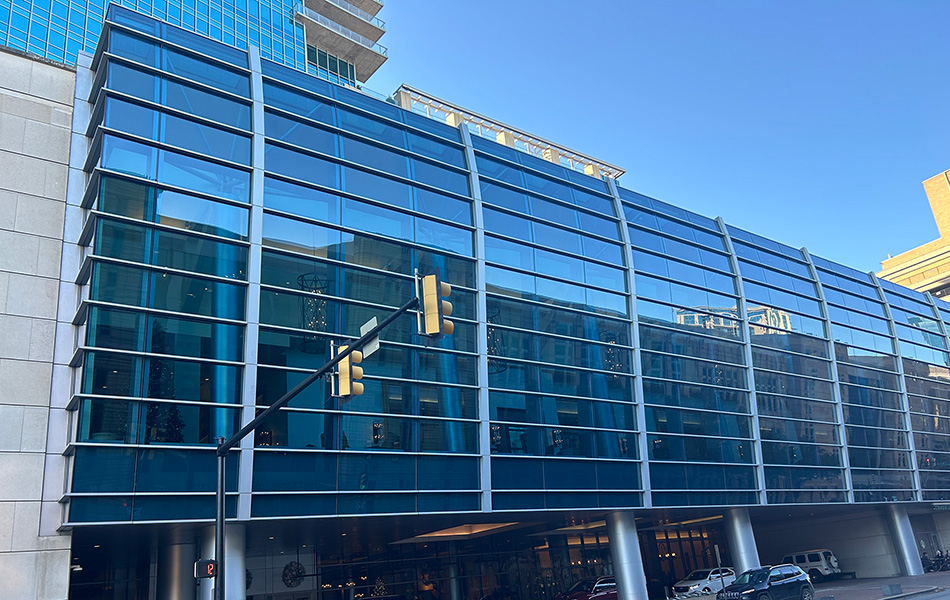


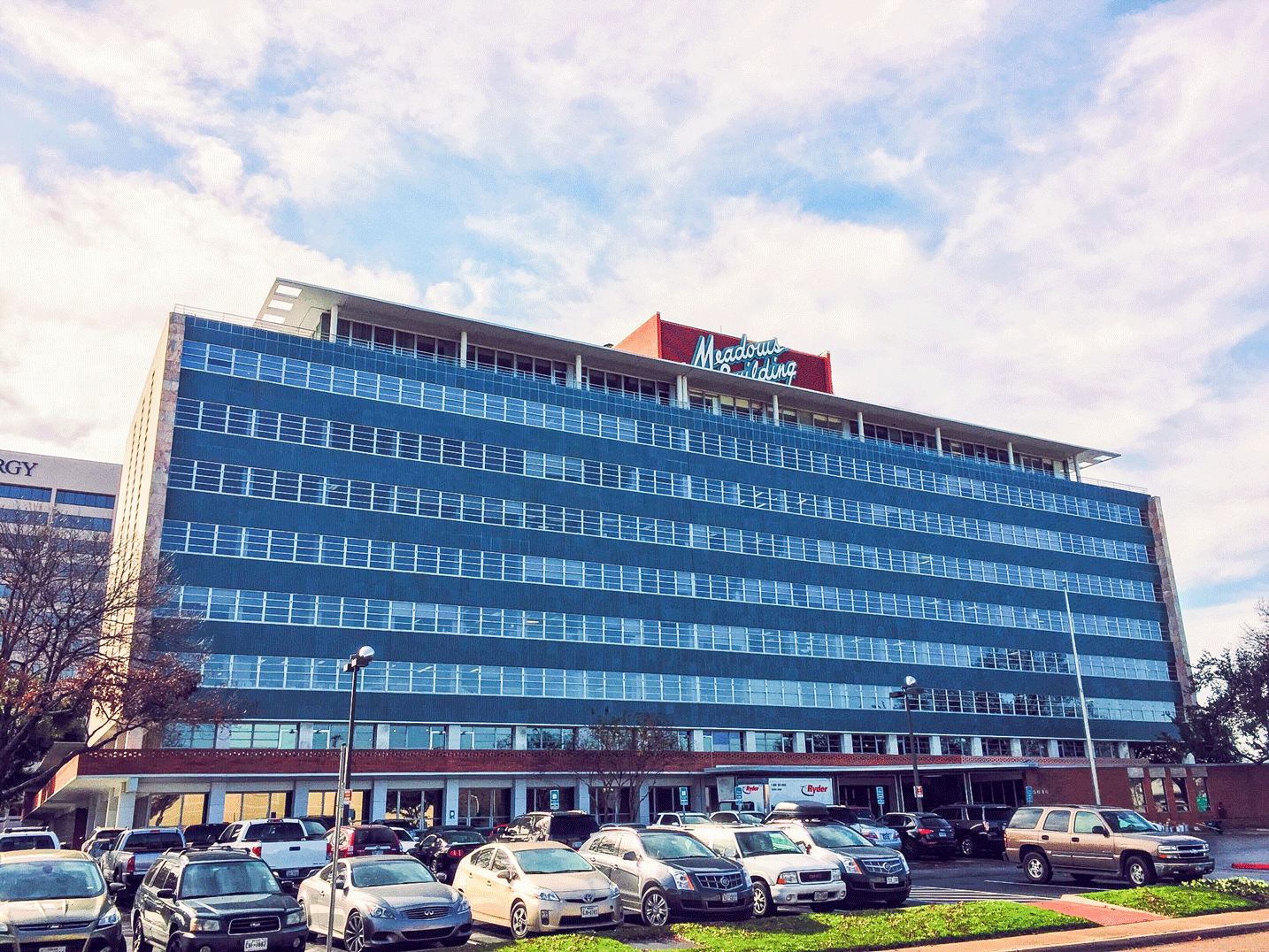
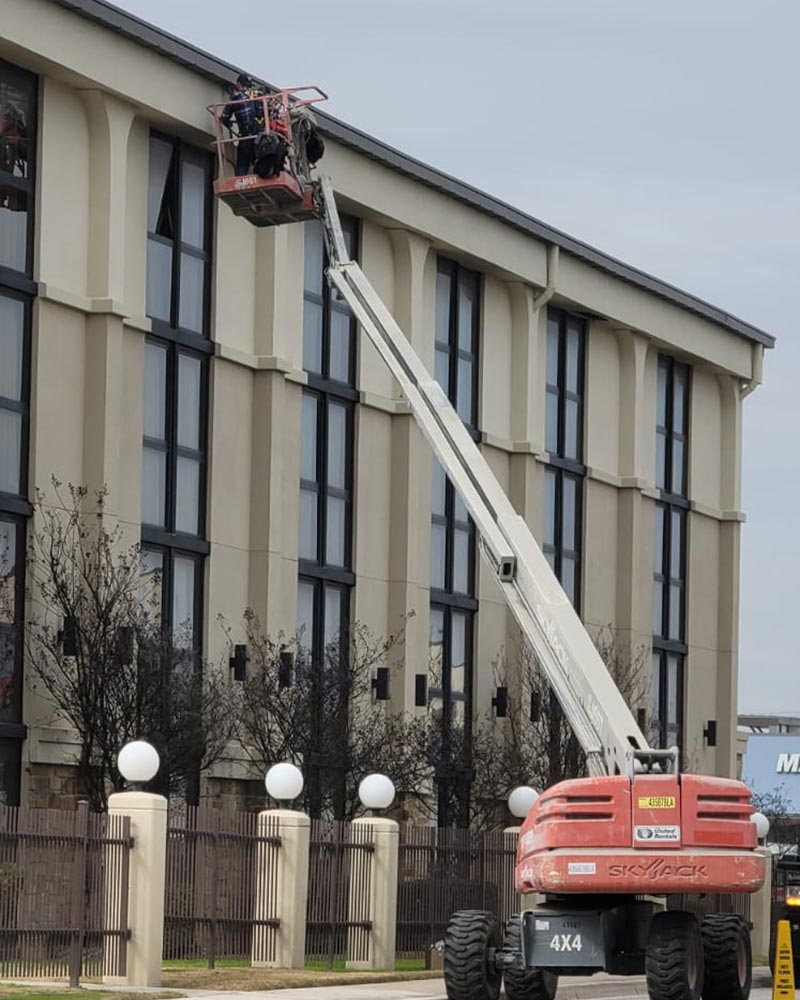

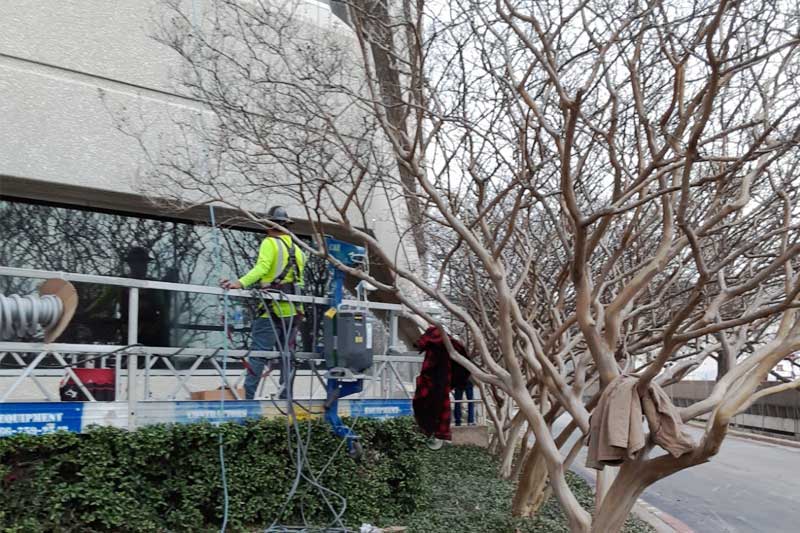






Water almost never enters a commercial building at the point where somebody finally notices it. A damp patch over a lobby ceiling in a downtown hotel can begin two floors higher, at a sealant joint that chalked out through a long South Texas summer, at a coping detail, at a window perimeter, or at a hairline crack in stucco that only opens under thermal load. San Antonio makes that trail harder to follow than most markets do. Weeks pass with no rain at all, a leak path sits dormant and dry, and then one violent convective storm drives more water at an elevation in forty minutes than the whole previous month delivered. Limestone and stucco assemblies drink water and give it back slowly, while glass and metal shed it in seconds, so on a property that mixes both the way in and the interior symptom are rarely anywhere near each other. Owners who repair what they can see tend to pay twice and watch the same stain come back with the next downpour.
Presto Restoration treats diagnostics as the opening move on a commercial restoration project rather than an add-on to one. Our team establishes where water is crossing the envelope, what failed to let it through, and which repair will actually close that path, before a scope or a price gets written. Because intrusion here is episodic, we produce the conditions that open a suspect joint on a scheduled morning instead of guessing from a photograph and waiting on the sky. That discipline is the reason our restoration work holds rather than generating return trips. One thing to be clear about up front: we do not take small one-off inspections. The diagnostic and consulting side of this work lives inside a full restoration project, and those projects normally begin around $50,000.
No two intrusion problems read the same way, so Presto matches the method to the evidence in front of it. What we run on a given San Antonio project depends on the assembly, the substrate, the symptom a tenant reported, and the failure we already suspect.
Nothing settles an argument about a suspect joint like putting water on it and watching what the building does. We isolate one candidate at a time, a sealant joint, a window or door perimeter, a balcony connection, a stucco transition, and load it under controlled conditions until the path either shows itself or is ruled out. This matters more here than in a place that rains steadily, because a dormant path in San Antonio can go unseen for weeks and then open all at once under a single hard convective downpour. Directed testing lets us create that condition on a morning we choose rather than waiting for weather to cooperate.
Wet material holds heat and releases it on a different schedule than dry material, and an infrared camera reads that difference across an entire elevation at once. We use it to find saturated insulation, moisture trapped behind stucco, and early envelope failures that give up nothing to the eye. On a Medical Center tower or a re-tenanted building at Port San Antonio, a thermal sweep narrows a hundred thousand square feet of wall down to the two bays worth opening, which keeps invasive work small and the investigation affordable.
Meters give us numbers instead of impressions: actual moisture content inside gypsum board, wood framing, concrete masonry, limestone and other porous substrates. Plotting those readings shows how far water has run from where it entered and whether a suspect source is still feeding the assembly. The readings do the opposite job too. After a humid stretch a wall can read elevated with no active leak at all, and telling those two apart is what keeps a restoration scope honest about the repair it proposes.
Getting a camera to the top of a downtown tower or out across a wide low-slope roof once meant rope access or a swing stage and a week of scheduling. A drone returns high-resolution imagery of parapets, coping, upper-floor sealant runs and roof transitions in an afternoon. We fly hotel property along the River Walk, offices on the Broadway corridor and large single-owner buildings out toward UTSA, mark the visible failures, and use that map to decide which elevations earn hands-on work. After a storm it is the quickest way to read a whole envelope before crews commit anywhere.
Sometimes thermal imaging, moisture readings and water testing agree that something is wrong and still disagree about where. At that point we open a small, deliberate section of wall, roof or cladding and look at the assembly itself. Openings are cut where the evidence points, photographed and written up as they are exposed, then closed and made weathertight before the crew leaves for the day. It is the last method we reach for rather than the first, because non-destructive work answers most questions on most buildings and costs the owner far less.
Every engagement closes with a document written for one building and nobody else. It records what we observed, names each confirmed failure point with photographs, explains why that detail let water through, and recommends the restoration approach that answers it. We write for the reader, since a hotel asset manager on the River Walk, a property manager in the Medical Center and the owner of a converted brick building at the Pearl are each deciding something different. The report then carries forward as the basis of the scope and specifications we propose.
Diagnostics come first on every San Antonio project we take, and the restoration scope is not finalized until that investigation closes. The order is the whole difference between a Presto proposal and a price quoted off whatever damage happens to be visible from the sidewalk.
We log every symptom on the record: interior staining, exterior deterioration, tenant reports, and what earlier contractors repaired and when, so the testing that follows starts from evidence rather than a hunch.
What the first pass turns up decides the method: directed water testing, thermal imaging, moisture mapping, an aerial survey, or selective openings when non-destructive work leaves the path unresolved.
The findings become a written report and a matching restoration scope, so an owner can see what was confirmed, what caused it, and exactly which work closes the path for good.
Crews carry out the confirmed repair under whichever Presto service line fits: facade, waterproofing, parking deck, roof restoration or historic preservation, pointed only at the failures the testing proved.
Where the situation warrants it we retest the repaired area to prove the intrusion has stopped, then hand over the complete project record at closeout.
If a San Antonio building keeps taking water after repairs that were supposed to settle it, the entry point was probably never confirmed. Tell us what you are seeing and where it turns up, and our team will point you toward the fix that matches it. Diagnostic work of this kind travels with a full restoration project, and those projects normally begin around $50,000.
Call 1-800-785-9927 or click Request A Quote.
Covering downtown and the River Walk, the Pearl and the Broadway corridor, the Medical Center and the Northwest Side takes more than one kind of crew. So that a property gets the full range, from major envelope restoration down to routine upkeep, Presto works alongside our specialized sister divisions.
For day-to-day building services and smaller site work, property managers are welcome to look at these divisions:
Building Restoration San Antonio: Handles targeted structural repair and exterior preservation on taller buildings.
Building Maintenance San Antonio: Built around the preventative maintenance that keeps a busy commercial property running without surprises.
Building Services San Antonio: Broad day-to-day commercial building support for property teams across South Texas.
A look at recent Presto commercial restoration work across Texas, where the investigation came first, found the real point of entry, and set the scope of the repair that followed.
No. The diagnostic work rides inside a full commercial restoration scope, and the projects it belongs to normally start around $50,000. That is not a gate for its own sake. The method exists to produce a repair specification, and a findings report with no restoration behind it tends to sit in a drawer. An owner who wants one leak looked at, a residential property reviewed, or a low-budget consulting opinion is better served by a specialty inspection firm, and we will say so rather than take the work.
Directed water testing on isolated joints and perimeters, infrared thermal imaging, moisture mapping with meters, aerial drone survey, and selective openings when the non-destructive methods run out of answers. Which of those we use depends on the assembly, the substrate and the symptom being reported. We choose the methods that will change the repair scope and skip the ones that would only produce a thicker report.
Because the stain and the way in are rarely in the same place. Water showing on the eighth floor of a downtown hotel may be entering four floors up at a coping joint that chalked out over the summer, at a stucco crack that only opens on a hot afternoon, or at a window perimeter that has been failing quietly for years. Skip the investigation and the wrong component gets repaired, the intrusion carries on, and the owner pays for the same wall two or three times. Here the problem compounds, since a dry month can hide a path completely until the next downpour finds it again.
No. Forensic engineering, expert testimony and litigation support sit outside what we do, and an owner who needs them should retain a forensic engineering firm directly. We do work alongside those firms on restoration projects tangled up in insurance or legal disputes, including arguments over who owns a leak in a multi-tenant building, but the engineering opinion in such matters comes from them and never from us.
Each report is written for one building and one decision. Expect the observed conditions with supporting photography, the failure points we confirmed and what we believe caused each one, our conclusions about how water is moving through the assembly, and the restoration approach we recommend in response. It is written to be used rather than filed, because the document turns directly into the specifications for the work that follows.
It depends on the size of the building, how many paths are in play and which methods the evidence calls for. One suspect detail on one elevation can be settled in a day or two. A full envelope investigation across several elevations, with directed water testing at every candidate location, more often runs one to three weeks. San Antonio adds a scheduling wrinkle, since testing works best when we control the water rather than during a week of storms, so we give property managers a timeline early and the diagnostic phase and the restoration phasing get planned together.
If a San Antonio building keeps taking water after repairs that were meant to stop it, the way in is almost certainly somewhere other than where you are seeing it. Presto starts with the investigation, confirms the path, and delivers restoration that ends the leak instead of relocating it.
Worth noting: this diagnostic work is folded into a full commercial restoration project rather than billed on its own, and those projects normally begin around $50,000.
Reach us at 1-800-785-9927 or Request A Quote online.