









A low-slope roof in San Antonio spends most of the year as the hottest surface on the property. From March into October the membrane runs far above the air temperature anyone quotes on the forecast, and the ultraviolet load that comes with it drives plasticizer out of the sheet, hardens seam welds and chalks the surface a season at a time. Rain then arrives at the other extreme, two inches out of one convective cell in under an hour, so drains and scuppers are asked to clear a month of water at once while pollen and pale limestone dust silt up the sumps. Add a hail event, milder than North Texas but far from rare, and the odd January night that snaps hard after months of baking, and a roof reaches the point where somebody recommends stripping it back to the deck. That advice is usually premature.
Presto Restoration puts sound commercial roofs back into service with reflective silicone and acrylic systems chosen for a South Texas thermal load, buying ten to twenty more years for a share of what replacement costs. Single-ply in TPO, PVC, EPDM and CSPE takes a coating well, and so do standing-seam and R-panel metal that have aged or been coated once already, asphaltic assemblies from cap sheet to modified bitumen, sprayed polyurethane foam, and most acrylic or urethane systems still sound on the deck. Seams, flashings, curbs and penetrations are rebuilt before anything is sprayed, and the low spots at the drains are re-sloped rather than coated over. What the building ends up with is a monolithic reflective surface that stops the leaks, pulls rooftop temperature down through a cooling season running eight months, and never closes a tenant door.
Presto installs silicone and acrylic systems specified for the heat, ultraviolet exposure and sudden rainfall a South Texas roof actually meets, adding service life to decks that are still structurally sound. These are the assemblies we restore most often.
Silicone is still the chemistry to specify wherever water sits on a roof instead of leaving it. Storms here arrive fast and heavy, and a field that drains slowly can hold water for days afterwards without the coating softening or losing its bond, which is exactly where acrylic and elastomeric products give up first. Silicone also holds its reflectance under an ultraviolet load that stays punishing from early spring through late autumn, and that matters on a building cooled the better part of eight months. Presto applies premium systems such as GE Enduris over compatible decks, but only after pull testing, flashing repair and full surface preparation. The finished membrane is seamless and carries manufacturer warranty terms.
Single-ply sheets thin from the top down in this market. Years of direct ultraviolet exposure cook mil off the surface, weld lines turn brittle, and small punctures and open seams become the leak somebody reports after the first hard rain of the season. Tearing the sheet off means opening a building during the months when a storm can build in an hour. A silicone overlay closes those weak points, restores the watertight plane and leaves a reflective coat that slows further UV damage. On most sound single-ply roofs across Bexar County it is the least expensive way to buy another decade.
An SPF roof depends entirely on the thin coat protecting the foam, and that coat wears out, normally every ten to fifteen years and faster under this sun. Once it opens up, ultraviolet light reaches the foam itself and the cells break down quickly from there. Recoating rebuilds the barrier over the existing foam, seals the small dings and gouges that collect on any working roof, and returns another decade or more of service. It costs a fraction of removing and respraying a whole system, which is why recoating is what we put forward on nearly every SPF roof we look at.
Asphaltic roofing sits on a great many older San Antonio properties, from Broadway corridor mid-rises to the warehouse and hangar buildings being re-tenanted at Port San Antonio and Brooks, and it takes silicone restoration well while the deck and insulation beneath it are dry. These roofs rarely fail across the field first. They open at seams, terminations and penetrations long before the sheet itself is spent. Coating shuts those points, halts further surface oxidation under UV, and adds years. Because asphalt can bleed oil up through a coating, we prime with a manufacturer-approved bleed blocker wherever the substrate calls for it, which protects both adhesion and appearance.
Not every roof should be restored. A deck with structural damage, insulation that has taken on water, substrate failure across the field, or an existing coating that will not chemically accept silicone belongs on a replacement schedule, and spending coating money on it only delays the inevitable. So before we scope work, we test. Pull tests go on your actual substrate, in the condition the roof is in, to confirm the system will bond and perform to specification, and the results tell us which product line suits the deck. If the answer is that restoration is wrong here, we say so at that point, and you take a replacement contractor a clear picture of what you are dealing with.
Every roof we restore in San Antonio moves through the same five phases, ordered so the deck is proven a candidate before anything is bought, the substrate is prepared properly, and the finished membrane holds through a full South Texas year.
Membrane, seam welds, flashings, curbs, drains and parapet details are recorded condition by condition, and anything structural that would rule a coating out is flagged before a scope is written.
Coating plans are not written on assumption. We pull-test the silicone against your actual deck first, which surfaces compatibility problems early rather than after the roof has been sprayed.
The silicone system, any primer or bleed blocker, flashing and penetration repairs, measured square footage and a schedule built around the South Texas heat and storm calendar, all set down in writing.
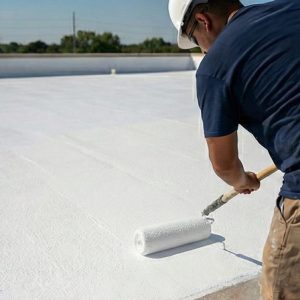
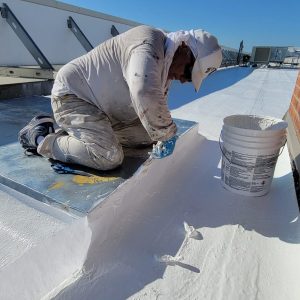
Crews clean and prime the deck, rebuild flashings and terminations, then lay the coating down at the specified mil thickness, with wet-film checks taken as the work proceeds.
You finish with the paperwork that matters: warranty registration, product data, photographs of the deck before and after, and a maintenance routine that protects the coating you have just paid for.
Leaking at the seams, holding water long after the storm has passed, or simply old enough that somebody has started using the word replacement? Tell us what the roof is doing and our team will point you toward the fix that actually suits it.
Call 1-800-785-9927 or click Request A Quote.
Covering San Antonio and the wider Bexar, Comal and Guadalupe county market to the standard owners expect takes more than one roofing crew. So that a property can get everything from major roof and envelope restoration down to routine housekeeping, Presto works alongside specialist partner divisions.
For routine upkeep and the small jobs that come up between projects, property managers are welcome to approach our sister divisions directly:
Building Restoration San Antonio: Concrete, masonry and exterior structural repair taken building by building.
Building Maintenance San Antonio: The scheduled, preventative work that keeps a property presentable between restoration cycles.
Building Services San Antonio: Day-to-day commercial building support for owners and managers across the South Texas market.
A silicone restoration usually lands somewhere between a third and a half of what tear-off and replacement costs on the same building, and where exactly depends on the deck, its present condition and how much repair has to happen before anything is sprayed. The saving is not only on the invoice. The building keeps trading through the work, the old membrane stays out of the landfill, and the roof picks up another decade or more of life. We price restoration in full, so you can hold it against replacement bids line by line.
Ten to twenty years of added life is the normal range, and the spread comes down to which product goes on, at what mil thickness, what shape the substrate was in beforehand, and whether anybody maintains it afterwards. Sprayed correctly and registered under a manufacturer warranty, a premium silicone membrane performs on a par with a new single-ply sheet at a far lower price, and it does so through summers that stay hot for months at a stretch. Keeping drains clear of pollen and dust, and catching small damage early, adds years on top of that. Warranty documentation is handed over at completion.
Most substrates qualify so long as the deck under them is sound. Single-ply in TPO, PVC, EPDM or CSPE; metal that has weathered or carries an older coating; asphaltic build-ups and cap sheets; sprayed polyurethane foam; and acrylic or urethane systems already in place that still hold. Asphaltic decks often need a bleed blocker primer first, so oils do not migrate up and mark the new surface. Whatever the substrate, it is pull-tested before we commit to a system, which confirms the bond and points us to a product rated for the thermal movement and ultraviolet exposure a roof here lives with.
Coating is not a universal fix. Serious structural damage, insulation that has taken on water, substrate failure over large areas, active rot, or an old coating silicone will not bond to all point toward replacement, and we will say that directly rather than sell around it. Testing on the deck itself settles the question, and it happens before any recommendation is made. Tear-off and replacement is not work Presto performs, so when that is the right road, you take it with a roofing contractor who does it for a living.
In this market it is the clearest energy argument we make anywhere. A dark or weathered roof absorbs the sun and drives that heat straight into the deck below, while a silicone surface throws roughly 80 to 90 percent of it back. Air conditioning carries buildings here for most of the year, so a cooler roof shows up on the utility bill month after month, and across the life of the membrane those savings repay a real share of what the restoration cost.
No. The work stays on the roof, so offices, storefronts and trading hours underneath carry on as normal. We map air intakes beforehand and stage the spray so odour is not drawn into the building, and because these products need a dry cure window we watch the forecast closely and schedule around the afternoon storms this city produces. Property management is kept informed daily, and the roof is never left open overnight.
Before you approve a tear-off on a San Antonio building, find out whether the deck can be restored instead. Tell us what the roof is doing and we will tell you plainly whether a reflective silicone system will carry it another decade, and what that would cost set against replacement.
Speak to our team on 1-800-785-9927, or click Request A Quote.