New Orleans protects its architecture more closely than almost any American city, and the rules change with the address. Exterior work in the French Quarter is reviewed by the Vieux Carré Commission, created by state constitutional amendment in 1936 and one of the oldest architectural review bodies in the country. Everywhere else, from the Garden District and the Warehouse District to Bywater, Uptown and Mid-City, the Historic District Landmarks Commission holds that role. Knowing which one governs a building, and what each expects to see in a submittal, is the difference between an approval and a redraw.
The fabric they protect is just as particular. Soft handmade brick, lime mortar and vapour-open lime stucco; cast-iron galleries, balcony rails and column capitals that corrode first at their bolted connections; heavy timber behind the brick of a Warehouse District conversion. All of it sits in a climate that runs about 62 inches of rain a year, drives water sideways during tropical bands, and keeps dew points in the seventies for months on end. Modern commercial repair methods actively damage these materials: a Portland-rich mortar is harder than the brick beside it, so the brick face spalls instead of the joint, and a dense cement render traps the moisture that a lime stucco was designed to let out. Presto Restoration brings hands-on experience with landmark and designated buildings across the country, and every historic assignment gets the same deliberate, materials-first approach. Our scopes generally track the National Park Service’s Preservation Briefs, the field’s most widely respected technical reference, adapted to the material palette and the review body that actually governs each New Orleans property.
Presto delivers a full range of historic property preservation services for landmark buildings, locally designated structures and architecturally significant property across New Orleans, under Vieux Carré Commission or Historic District Landmarks Commission review as the address requires.
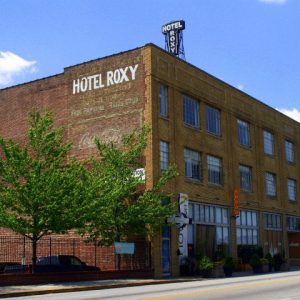
Mortar failure is the most common problem on historic New Orleans masonry and the most frequently botched repair. Much of the older brick in this city was made locally from river clay and fired soft, and it was laid in a lime mortar deliberately weaker than the units around it, so that the joint would take the movement and the sacrificial wear. Repoint that wall with a Portland-rich modern mix and the relationship inverts: the joint becomes the hardest thing in the wall, refuses to yield as the building settles, and the brick face spalls instead. In this climate the damage compounds quickly, because a hard mortar also blocks the drying path and pushes the moisture out through the masonry. We grind eroded joints to proper depth, mix lime-based mortars matched to the original in colour, strength and composition, tool the joint to the wall’s original profile, and prepare the sample panels the Vieux Carré Commission or the HDLC will want to approve before work proceeds.
Granite and marble steps, cast stone trim, brownstone and limestone detailing appear across the Garden District, the Central Business District and the Warehouse District, and each responds differently to cleaning. The risk here is not dirt, it is what an aggressive clean does to a saturated substrate: in a climate this humid, stone carries moisture and dissolved salts most of the time, and a harsh chemical or high-pressure clean drives those salts deeper and blows the surface off weeks later. We evaluate the substrate first, clean at the gentlest effective method, and let the material dry before anything is applied. Damaged sections receive colour-matched repair specified to match the original in porosity as well as appearance, and any sealer is chosen to leave the drying path open.


Two elements define the street-facing character of historic New Orleans, and both are routinely lost to premature replacement. The cast-iron gallery is the first: balconies, rails, columns and ornamental capitals whose deterioration begins at the bolted connections and bearing points, where water sits long after the facade above has dried. Cleaned back, treated, primed and properly coated, original ironwork outlives its replacement by decades. Historic windows are the second. Replacing an original timber or steel unit with a modern insert changes the sightlines and the reveal depth, which is exactly what a review body examines, and it is one of the most common reasons a submittal is refused. Repairing the original frame and sash is usually both cheaper and more likely to be approved.
Stucco over soft brick is the signature wall assembly of the French Quarter, and traditional lime stucco behaves nothing like a modern cement render. It is meant to be sacrificial and vapour-open: moisture that gets into the wall leaves through the render rather than through the brick. Skim that wall with a dense cement coat, which is a very common previous repair here, and the moisture has nowhere else to go, so it exits through the masonry and dissolves the brick face from behind. Hollow-sounding stucco is the giveaway, and it means the render has already lost its bond. We remove failed and inappropriate material, repair with lime-based stucco matched in composition and permeability, and finish to the texture and colour the review body has approved.


Bronze storefronts, wrought-iron gates, ornamental grillework and the cast-iron galleries that hang over the banquette all appear throughout the city’s historic inventory. Warm, salt-bearing, permanently humid air corrodes them continuously, with no cold season to interrupt the cycle, and the failure concentrates where two pieces meet rather than out in the open. We strip corrosion by controlled methods rather than aggressive blasting, repair or replicate missing elements to match, and prime and coat to a specification that will survive this climate. Colour is a review matter in a protected district, so it is submitted and approved rather than chosen on site.
Waterproofing a historic New Orleans building needs an entirely different playbook from waterproofing a modern tower, and the governing rule is that the wall must stay able to dry. Soft brick, lime mortar and lime stucco manage moisture by letting it pass through and evaporate. Apply a modern vapour-tight sealer or elastomeric film to that assembly and you do not stop the water, you relocate it: it collects behind the coating and destroys the substrate from within, faster than leaving the wall untreated would have. We specify breathable, vapour-open treatments only, concentrate on the details that actually admit bulk water, parapets, copings, sills, gallery connections and window heads, and we work above grade only, which suits historic fabric better than any below-grade intervention would.

Working on a protected New Orleans property calls for a slower and more deliberate process than a standard commercial restoration. Every historic project runs through five phases, and design review is built into the programme from the start rather than discovered once a crew is already booked.


We document every area of deterioration and separate original fabric, which is irreplaceable, from later non-original additions. On New Orleans buildings that separation matters more than usual, because a great deal of the visible damage traces to a previous repair in the wrong material rather than to age.
We identify the original materials precisely: the lime mortar mix and its strength, the stucco composition and permeability, the brick’s porosity, ironwork alloy and coating history. The specification is written to match, because on soft masonry a mortar that is too strong does more damage than no repair at all.
Findings become a quantified scope with period-appropriate specifications, then a submittal. Depending on the address that goes to the Vieux Carré Commission or to the Historic District Landmarks Commission, with mortar, stucco and colour samples, alongside the permit application to the Department of Safety and Permits.
Trained crews work with period-appropriate materials and traditional techniques where they are called for. Lime-based work is also weather-sensitive, so curing is managed around humidity and rain rather than pushed to suit a programme date.
You receive complete documentation: before-and-after photography, material data sheets, approved submittals, warranty details and maintenance guidance. For a designated property that record matters at the next review as much as it does at handover.
Whether your property already shows visible deterioration or you are getting ahead of it, tell us what you are seeing and which district the building sits in. Our team will point you toward the right approach and toward the review body that governs it.
Call 1-800-785-9927 or click Request A Quote.
A historic building needs steady attention between projects, and in this climate the gap between routine care and a preservation project is where most damage happens. Presto coordinates a network of specialised divisions so owners across Orleans, Jefferson and St. Tammany Parishes get that continuity.
For day-to-day and preventative support, property managers can approach our sister divisions directly:
Building Restoration New Orleans: Localised structural repair and exterior preservation work.
Building Maintenance New Orleans: Preventative maintenance that keeps a humid-climate property ahead of the damp year-round.
Building Services New Orleans: Day-to-day commercial building support across the New Orleans market.
Recent historic preservation and landmark restoration Presto has completed for property owners in Louisiana.
Ordinary restoration asks what will perform best. Preservation asks what is compatible with what is already there, which is often not the same answer. On a New Orleans building that distinction is concrete rather than philosophical: the strongest mortar available will destroy a soft-brick wall, and the most effective modern sealer will destroy a lime stucco elevation. Preservation work also answers to a review body, so materials, colours and methods are approved in advance rather than chosen on site.
Because the wall was designed around it. Much of the city’s older brick was fired soft from local river clay, and it was bedded in a lime mortar deliberately weaker than the brick, so the joint would absorb movement and wear out first. That is a sacrificial system, and it works: you repoint the joint every few decades and the brick lasts centuries. Substitute a Portland-rich mortar and the joint becomes harder than the brick, so when the building moves, and here it does move as the ground consolidates, the brick face spalls instead. The hard mortar also blocks the drying path, pushing moisture out through the masonry. Repointing a soft-brick wall in the wrong mix causes more damage than leaving it alone.
Yes, and the envelope work usually matters more than the equipment. Sealing the details that actually admit bulk water, parapets, copings, sills, gallery connections and window heads, cuts the moisture load that drives both mould pressure and cooling demand in this climate. Repairing original windows rather than replacing them keeps the sightlines a review body cares about while closing the gaps that leak air. What we avoid is the intervention that appears to help and quietly does harm: wrapping a breathable historic wall in a vapour-tight coating traps moisture inside the assembly and destroys it from within.
Longer than an equivalent modern building, and the extra time sits at both ends. At the front, design review adds weeks: submittals to the Vieux Carré Commission or the Historic District Landmarks Commission, sample panels, and a scheduled hearing. During the work, lime-based mortars and stuccos cure on their own terms and are sensitive to humidity and rain, so a wet stretch genuinely slows the programme rather than merely inconveniencing it. A focused repointing or ironwork scope may run four to eight weeks; a full facade preservation project on a larger building commonly runs three to six months once review is included.
Yes, both. Local designation in New Orleans is the one that governs day-to-day exterior work, through the Vieux Carré Commission in the French Quarter and the Historic District Landmarks Commission in the city’s other local historic districts. National Register listing is a separate matter and carries its own considerations, particularly where rehabilitation tax credits are involved. Tell us the address and the designation and we will confirm which approvals your scope actually requires before anything is priced.
We prepare the submittal and the supporting evidence, and we work with the owner’s architect or preservation consultant where one is engaged. In practice that means documenting existing conditions, specifying materials in terms a reviewer can evaluate, mortar composition and strength rather than a brand name, and providing physical samples: mortar and stucco panels, colour draw-downs, and metal finish samples. Preparing that properly the first time is what keeps a project from losing a review cycle, and a lost cycle here costs weeks rather than days.
Our scopes track the National Park Service’s Preservation Briefs, which are the most authoritative technical guidance available and the reference local reviewers themselves lean on. Several apply directly to New Orleans work: the briefs on repointing historic masonry, on cleaning and water-repellent treatments, and on the repair of historic stucco and architectural metals. Where a client is pursuing rehabilitation tax credits, aligning the scope with those standards from the outset matters a great deal more than trying to justify the work afterwards.

A historic building cannot be recreated once it is gone, and modern materials and shortcuts do not restore it, they shorten its life. Tell us what you are seeing and which district the property sits in, and our team will point you toward the right approach.
Call 1-800-785-9927 or Request A Quote online.