





Raleigh’s older building stock is smaller in scale than the skyline suggests and more varied than most people expect. It runs from the nineteenth and early twentieth century brick storefronts downtown and around Moore Square, through the brick-and-timber warehouses near the Depot that now hold offices and studios, to the cast stone, marble and granite on the state government and institutional buildings. A good deal of it sits inside a Historic Overlay District, and none of it can be bought again. What works on those walls is not what works on a curtain wall built in 2015. The soft lime mortar, the handmade brick, the wood sash and the steel factory windows of that era move, breathe and shed water on their own terms, and they have to do it in a climate that can hold ice on a parapet for days at a stretch and then spend all summer driving vapor back out through the wall. Repair them with standard commercial methods and the usual result is faster decay, not a fix.
Presto Restoration has worked hands-on with landmark and historically designated buildings across the country for more than 25 years. Every historic assignment starts with the material rather than the schedule. Our scopes generally track the National Park Service’s Preservation Briefs, the field’s most widely respected technical reference. From there we work to the material palette actually in front of us and to what the Raleigh Historic Development Commission will approve: lime mortars mixed to the strength, color and sand of the original, cleaning calibrated for soft brick and for marble and granite that has earned its surface, and in-kind repair instead of wholesale replacement. On tax-credit projects the scope also has to satisfy the North Carolina State Historic Preservation Office, and we detail and document it accordingly. Whether your building carries a local designation inside a Historic Overlay District or is individually listed on the National Register, the work has to clear a higher bar than ordinary restoration, and that is the bar we price and build to.
Presto delivers a full range of historic property preservation services for landmark buildings, locally designated structures, and architecturally significant properties in Raleigh and out across the Triangle, from Cary, Morrisville and Apex to Wake Forest and Garner.
Failed mortar is the defect we are called to most often on Raleigh’s older masonry, and hard repointing is the most common way it gets made worse. The brick walls downtown and around Moore Square, laid from the eighteen hundreds through the nineteen thirties, were bedded in soft lime mortar that was meant to be the weakest part of the wall: it takes up movement, it lets moisture leave as vapor, and it gives itself up instead of the brick. Repoint that wall with a hard portland mix and the water has nowhere left to go, so it leaves through the face of the brick instead. A few winters of freezing and thawing later, those faces start popping off, and that loss is permanent, because nobody is firing replacement brick to match. Our masons test the original mortar and match it for strength, color, sand and joint profile, cut failed joints out by hand wherever a grinder would bite the arris, and tool the new work to the profile the wall already carries.
Cast stone, marble and granite carry the public face of Raleigh’s government and institutional buildings, and the mistakes made on them tend to be permanent. Blasting or an over-strong chemical wash will open the pores of cast stone, etch a marble panel, and strip a patina that took eighty years to arrive and cannot be put back. We match the method to the stone and to what is actually sitting on it, whether that is spring pollen filmed onto a light-colored elevation, algae on a face shaded by mature hardwoods, or decades of city grime, and we work up from the gentlest option that does the job: low-pressure water, poultices, preservation-safe cleaners, and micro-abrasion only where it is genuinely warranted. Spalled or cracked units get repairs matched for color and texture and formulated to move with the surrounding stone rather than against it. What comes off the stage should look cared for and its age, not resurfaced.
Original windows are the detail owners get talked into throwing away. On Raleigh’s older brick buildings that means wood sash with putty glazing; in the Warehouse District conversions it means multi-light steel factory sash. Swapping either for a stock aluminum or vinyl unit is the change most likely to be turned down by the Raleigh Historic Development Commission, and the replacement rarely outperforms the original once the original has actually been restored. We keep the glass, the frame and the hardware and fix what is failing: hardened and cracked glazing putty, corroded steel muntins and sash members, seized pulleys and latches, decayed sills, and perimeter sealant that has opened far enough to let wind-driven rain into the reveal. A restored sash with its finish kept up will still be in the opening long after a twenty-year replacement unit has been hauled away.
Above the cornice line is where Raleigh’s masonry takes the worst of it. A parapet is exposed on two faces and capped by a coping, so it wets and dries faster than the wall underneath, and an ice glaze that settles on that coping puts both weight and standing meltwater exactly where the joint is weakest. Freezing and thawing then walks the crack a little wider each season. Lower down, the steel lintels over storefront and warehouse openings corrode, and because rust takes up more room than the steel it came from, the lintel swells and jacks the brickwork above it until the head joints step open and the bearing ends lose their support. We take those areas down in a controlled way and rebuild them: sound brick salvaged and reset, copings and parapets rebuilt with through-wall flashing and a path for water to leave, corroded lintels and relieving angles treated or replaced, and dropped arches and jack arches rebuilt. It all goes back to the original coursing, bond and joint profile, so a rebuilt parapet reads as part of the building instead of as a patch.
Bronze and brass storefronts, cast-iron columns and stair rails, pressed-metal cornices, ornamental grilles and copper flashings turn up all through Raleigh’s older inventory, from downtown shopfronts to the warehouse conversions to the metalwork on civic buildings. What eats them here is trapped water rather than airborne chloride: meltwater held behind a cornice while an ice glaze takes three days to leave, a blocked gutter or scupper keeping a base detail permanently damp, and long humid summers that never let a dissimilar-metal contact dry out. Corrosion that is doing structural damage gets removed and the section repaired or replaced in kind. Patina that is only cosmetic stays put, because on bronze and copper it is both part of the historic surface and part of the protection. Refinishing follows the original method and sheen. Taking historic metal back to bare substrate is a last resort on these buildings, not a starting point.
Waterproofing a historic building in Raleigh is a different exercise from sealing up a new curtain wall, and the difference is not one of degree. Brick bedded in lime mortar was built to take on some water and then give it back: rain driven sideways by a tropical remnant tracking this far inland, or meltwater running off a parapet for two days after an ice event, is meant to leave the wall as vapor. Wrap that assembly in a fully impermeable coating and the water still finds its way in, except now it stays, and it does its damage out of sight behind a surface that looks freshly protected. Our historic work uses vapor-permeable repellents and sealants that are chemically compatible with lime-based masonry, specified for the joint movement a humid Piedmont summer and a freezing week in January actually produce. Impermeable systems go only where the original design put a barrier: a coping, a flashing, a horizontal surface that was never meant to breathe.
A historic property in Raleigh moves at a different pace than a standard commercial restoration, and it should. Every Presto preservation project runs through the same five phases: learn the building first, pin down the materials it is actually made of, write a scope a Certificate of Appropriateness submittal can be built on, execute it with period-correct methods, and document what was done. The point of the sequence is that nothing irreplaceable gets decided on the fly.
Every elevation is photographed and mapped: open joints, spalled brick faces, cracked cast stone, corroded lintels, and any parapet or coping that has moved. Original fabric gets recorded separately from later, non-original alterations, because one of those is replaceable and the other is not. Nothing is specified until we know what the building started as and what has been done to it since.
We pin down the original materials in detail: the lime mortar mix and its sand, the brick, the cast stone, marble or granite, the glazing putty in the sash, and the alloys in the trim. Where a material is in question we send a sample out for analysis instead of guessing at a match.
We translate findings into a detailed scope with quantified line items and period-appropriate product specs. We coordinate directly with property owners, preservation consultants and architects, and we prepare what the Raleigh Historic Development Commission needs to see wherever a Certificate of Appropriateness applies.
Masons trained on soft masonry run the work with the materials and hand methods the era calls for. Inspection happens as the work goes up rather than at the end, because on original fabric there is no second attempt to fall back on.
Closeout hands over the whole record: elevation by elevation photography from before and after, mortar and product data, warranty terms, and the maintenance interval the finished work needs. Inside a Historic Overlay District that file is what an owner opens for the next Certificate of Appropriateness submittal, so the repair history of the building stays in one place.
Whether the wear on your Raleigh historic property is already showing or you are trying to get out in front of it, tell us what you are seeing on the building and our team will get back to you with a preservation-grade read on what it needs.
Call 1-800-785-9927 or Request A Free Quote.
Raleigh’s Historic Overlay Districts sit inside a metro Presto covers as a whole, out through Cary, Morrisville, Apex, Wake Forest and Garner. Preservation is only one part of what any of these buildings needs, so Presto coordinates a network of specialized divisions that reaches from major historic envelope restoration down to routine facility upkeep.
For day-to-day and preventative facility needs, we encourage property managers to reach out to our sister divisions directly:
Building Restoration Cary Raleigh: Focused on localized structural repairs and high-rise exterior preservation.
Building Maintenance Cary Raleigh: Dedicated to the recurring upkeep a Triangle property needs between restoration cycles, the spring pollen washdown included.
Building Services Cary Raleigh: The day-to-day side of commercial building support, covering Wake County and the wider Triangle.
Explore recent historic preservation and landmark restoration projects Presto has completed across North Carolina.
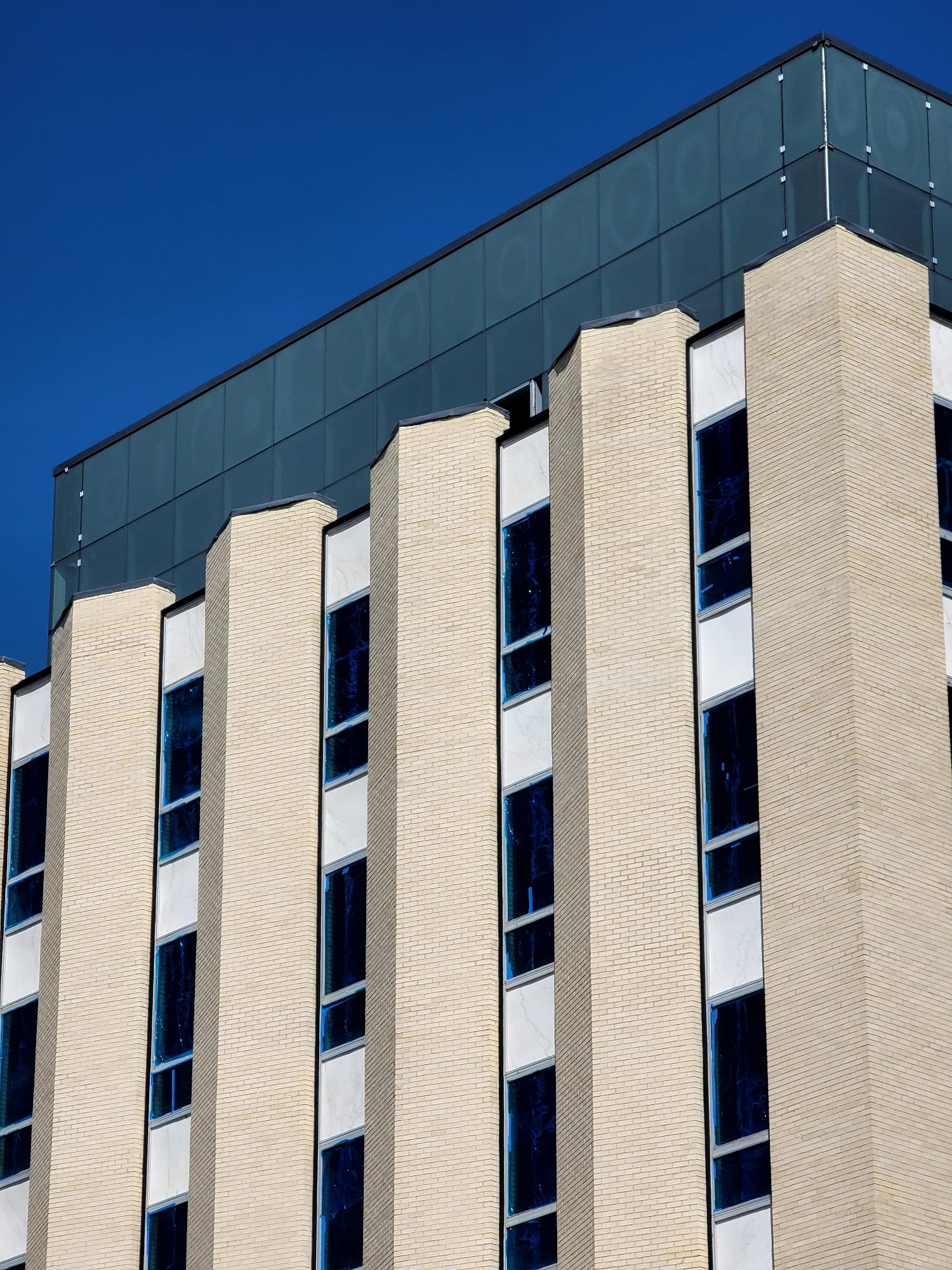
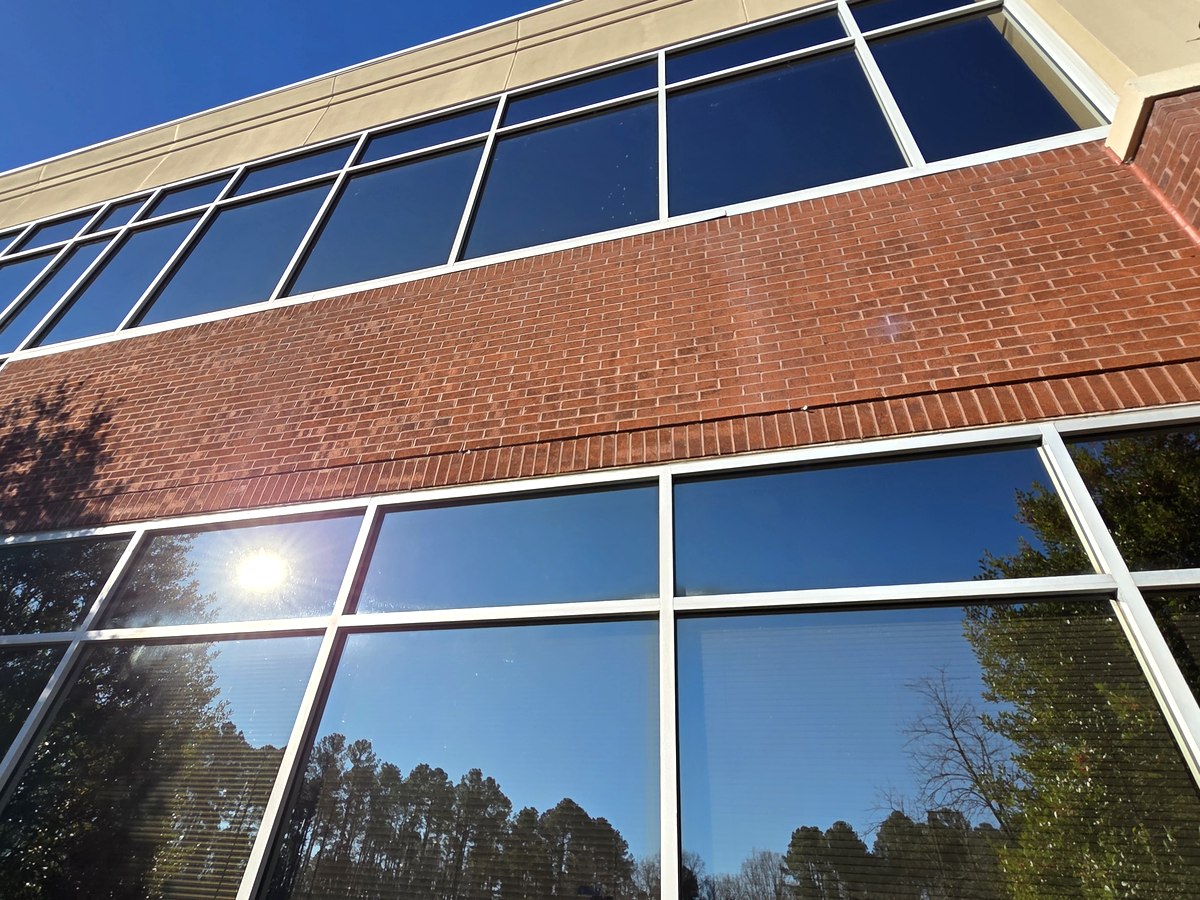
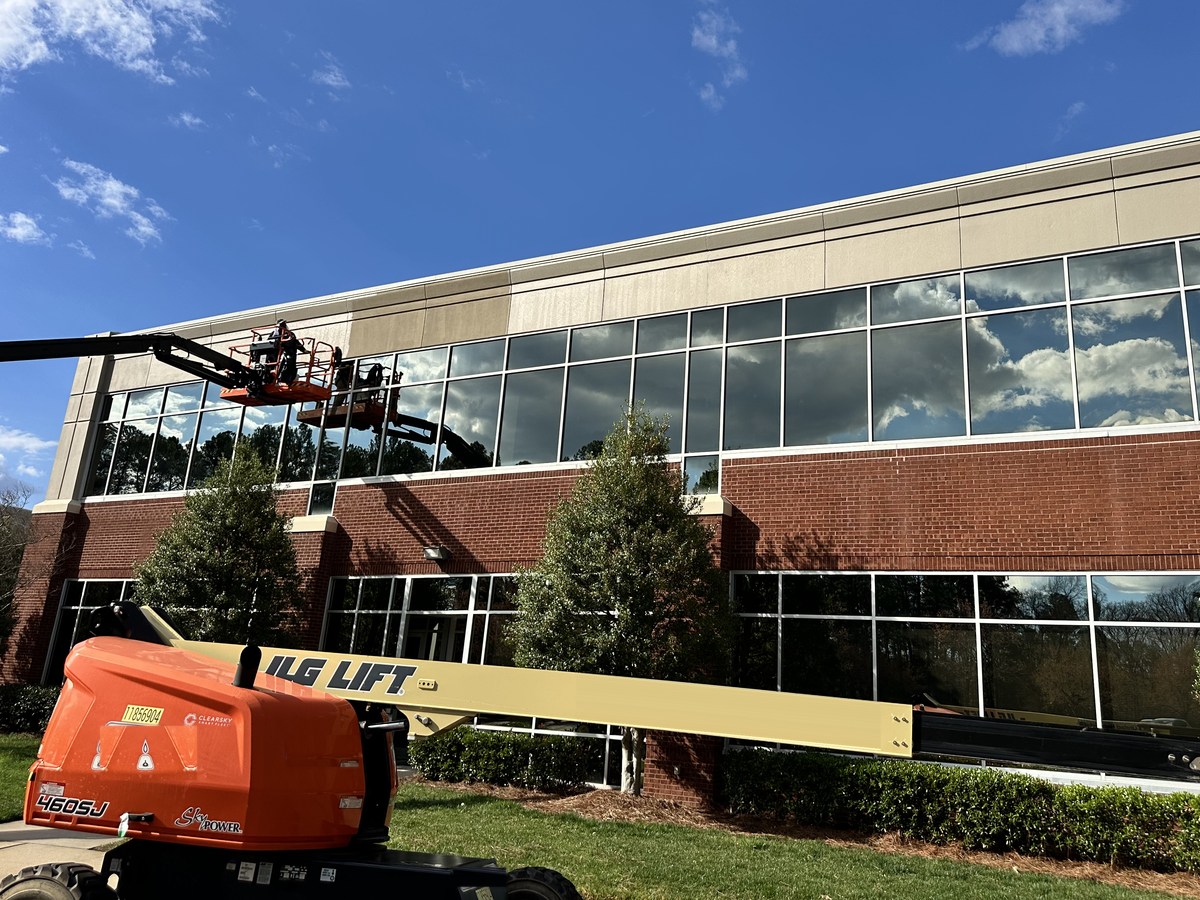
Ordinary restoration is judged on one question: is the building shedding water and working again. Preservation has to answer that one and a second one at the same time, which is whether the fabric that made the building worth designating is still there afterward. On a Raleigh project that rules out most of the fast answers. The joint gets lime mortar mixed to what is already in the wall rather than a portland patch, the cleaning is calibrated to soft handmade brick or to civic marble and granite, and repairs are detailed so a later crew can take them back out. It is slower and it prices higher. It is also the only version of the work that leaves a building in a Historic Overlay District with both its standing and the detail that earned it.
Pre-war masonry buildings, including most of what stands inside Raleigh’s Historic Overlay Districts, were built with soft lime-based mortar that’s intentionally weaker than the surrounding brick or block. That is deliberate. The joint is meant to be the part that gives: it takes up the movement a wall goes through between a humid August and a freezing January week, and it lets water leave the wall as vapor. Repoint the same wall in a hard portland mix and neither of those can happen any more, so water exits through the face of the brick instead, and after a few freezing nights those faces begin to pop off. A lost brick face is permanent on a building whose brick is no longer made, which is why the mortar has to stay the weaker of the two materials.
Usually yes, and the gap between a well restored older building and a new one is narrower than owners are told. Original wood sash and steel factory windows, once restored with fresh glazing putty and a sound perimeter seal, hold up comparably to new replacements. Thick load-bearing brick walls carry real thermal mass, which evens out interior swings through a long humid Piedmont summer. Vapor-permeable repellents also tend to last longer on this kind of wall than impermeable coatings do, because a wall that can dry is not holding the water that eventually takes its surface off. Our scope stops at the envelope. Mechanical and insulation upgrades inside a designated building are a specialty of their own, and owners are better off with a contractor who does that work on historic-rated systems.
Preservation runs slower than standard restoration for three reasons: the hand work, the cure times of traditional materials, and the number of details that have to be looked at before they get covered up. A facade restoration on a smaller historic commercial building in Raleigh might run 2 to 4 months. A full preservation scope on a larger landmark property can stretch to 6 to 12 months or more. Timelines also depend heavily on the Certificate of Appropriateness review the Raleigh Historic Development Commission has to complete before work can start, which can add weeks or months on top of the construction schedule itself. We schedule the review window and the construction window separately at scoping, so an owner is planning around both from the start instead of meeting the second one late.
We’ve worked across a range of designation levels, from locally designated sites inside Raleigh’s Historic Overlay Districts to properties individually listed on the National Register. Requirements differ depending on the specific designation, whether a certificate of appropriateness or similar local board review is required, and what portions of the scope actually trigger that review. We confirm your property’s designation status at the start of scoping and map out what coordination the proposed work will need.
For designated properties, the approval process is usually driven by the owner working alongside a preservation architect or consultant familiar with what the Raleigh Historic Development Commission expects. Our job is to provide an accurate scope, period-appropriate material specifications, and documentation that holds up to that level of scrutiny. Through construction we keep the owner and that consultant current on what is actually happening on the wall, so an added submittal or an amendment to a Certificate of Appropriateness rests on the record rather than on somebody’s memory of it. Local and state requirements are met on every job we run.
Yes. Our historic preservation scopes typically track the National Park Service’s Preservation Briefs, the most widely used technical reference for historic restoration work in the country. The Briefs cover the topics that come up on Raleigh’s building stock: masonry cleaning, lime mortar formulation, historic window restoration, and parapet and cornice repair. Where a property is chasing a state or federal tax credit, the North Carolina State Historic Preservation Office has its own expectations for the same work, and those get built into the scope rather than bolted on later. Owners working with a preservation architect are welcome to review our proposed scope against the relevant Briefs before work begins.
Once a historic building is gone it does not come back, and modern shortcuts do not restore one so much as run down the clock on it. Tell us what your Raleigh building is doing, whether that is open mortar joints, a parapet that has moved, rust bleed under a lintel or a stain that shows up two days after an ice storm, and we will tell you what holding onto its character, its performance and its value is going to take.
Call 1-800-785-9927 or Request A Quote online.