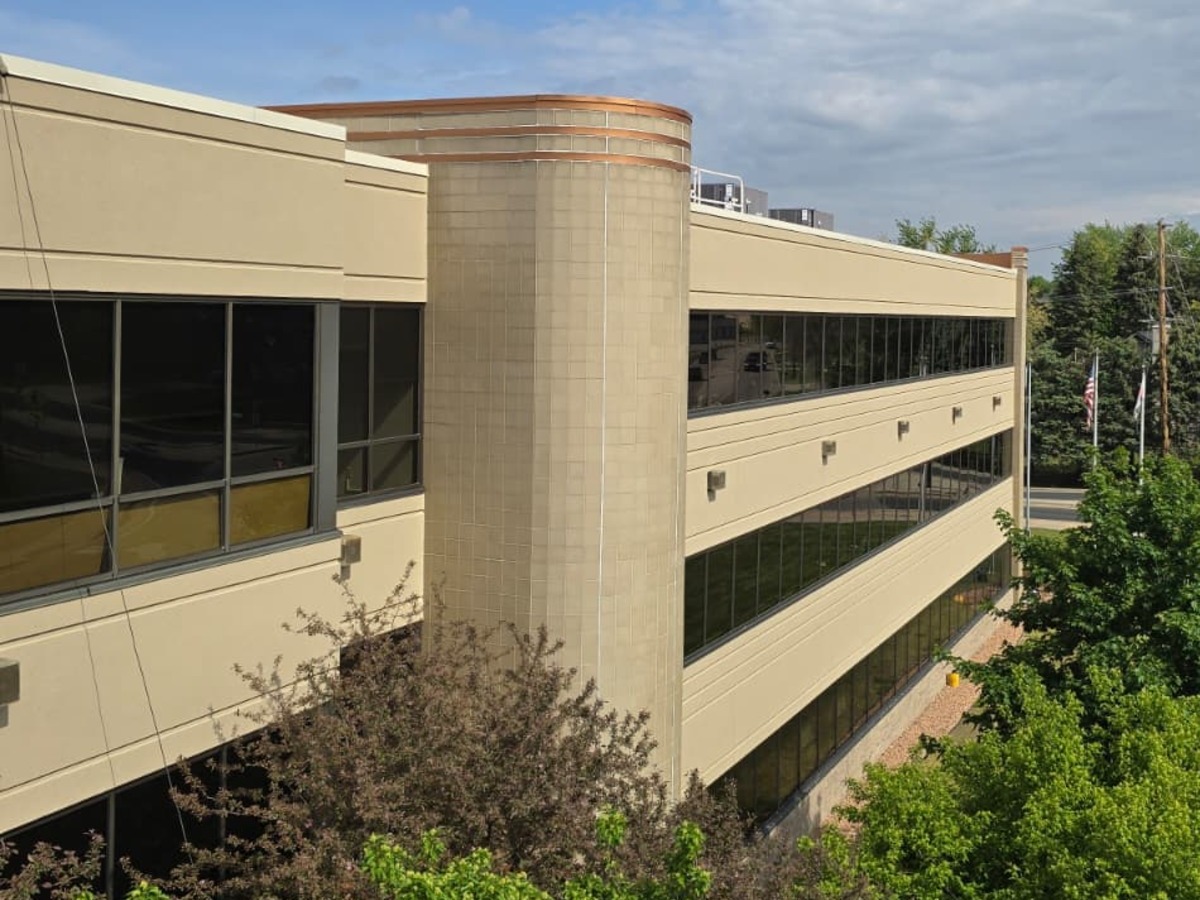
Presto Building Facade Restoration & Waterproofing
Building Facade Waterproofing & Restoration Services 1-800-785-9927

St. Paul has one of the richest collections of historic buildings in the upper Midwest. The James J. Hill House, built of red sandstone on Summit Avenue, was finished in 1891. Landmark Center opened in 1902 as the federal courts building, and the State Capitol, crowned by one of the largest self-supported marble domes in the world, was completed in 1905. The Cathedral of Saint Paul followed in 1915 and Union Depot in 1926, with the brick warehouses of Lowertown filling in the old riverfront district. Granite, marble, sandstone, limestone and brick all face hard freezes, road salt and heavy snow.
Older buildings need repairs that respect how they were built. Mortar must stay softer than historic brick and stone, sandstone and marble need compatible repair materials, and harsh cleaning can erode soft surfaces. Presto Restoration bases every historic scope on the National Park Service’s Preservation Briefs and works with your architect when a project needs review by the Saint Paul Heritage Preservation Commission or the Minnesota State Historic Preservation Office.
With more than 25 years of experience, our crews repoint brick and stone with matched lime mortars, repair sandstone, granite and marble, restore historic windows, copper and decorative metal and apply breathable treatments that protect older walls without trapping moisture that would freeze.
From Summit Avenue sandstone to the Capitol’s marble and the warehouses of Lowertown, Presto preserves St. Paul’s historic buildings with materials matched to how they were built.

St. Paul’s historic brick and stone were set in soft lime mortar, and each winter pushes weathered joints a little further out. Hard cement patches are stiffer than the masonry and cause the brick or stone to crack instead of the joint. We clear failing joints by hand and repoint with lime mortar matched in strength, color and profile.
Red and brown sandstone on Summit Avenue and in older downtown buildings is soft and soaks up water, so it flakes and scales when that water freezes. Granite and marble crack at joints and rusting anchors. We consolidate and patch sandstone with compatible repair mortars, replace badly damaged stone, re-anchor loose pieces and clean with methods that will not wear the surface.


Original wood and steel windows are central to the look of St. Paul’s mansions, churches and warehouses. We repair and refinish frames, re-glaze with fresh compound and seal perimeters so original windows stay in place and keep winter wind and meltwater out.
Domes, towers, cornices and carved ornament carry snow and ice through the winter and usually show damage first. We secure loose pieces, repair cracked ones and recreate missing details from the originals.


Copper roofs and domes, bronze doors, iron railings and decorative grilles are part of St. Paul’s historic character, and road salt and moisture attack them. We clean and restore historic metals, stop corrosion, apply protective finishes and reseal where metal meets masonry.
Sandstone and old brick have to dry out between storms, especially in a freezing climate. A sealer on the face can trap water that later freezes and breaks the surface, so we fix the real leaks first and use breathable treatments only where they help.

Before any work on a historic St. Paul building, we sort out what is original, what was added later and what is actually causing the damage, then plan repairs that protect its history.


We record each elevation’s condition, original materials, earlier repairs, freeze damage and any landmark designation.
Samples of mortar, brick, sandstone and other stone guide our repair materials.
Results become a scope written to preservation standards and ready for local or state review.
Crews experienced in historic work protect original details and keep visitors, worshippers and staff safe.
Photo records and material documentation go into the building’s permanent file.
Flaking sandstone, crumbling mortar or worn historic windows? Call us or request a quote, and our team will respond to discuss your St. Paul building.
Historic buildings in a cold climate stay healthiest with small repairs every spring. Presto works with a local support network so St. Paul owners can keep older properties in good condition.
For routine upkeep and everyday facility support, owners can also contact our sister companies:
Building Restoration St. Paul: Localized repairs and exterior preservation for St. Paul buildings.
Building Maintenance St. Paul: Preventive maintenance for older St. Paul properties.
Building Services St. Paul: Day-to-day support for St. Paul commercial buildings.
Explore Presto’s restoration work in Minnesota.
Restoration gets a building sound and dry. Preservation does that while keeping as much original material and detail as possible, using matched mortar, compatible repairs and gentle cleaning.
Sandstone is soft and absorbs water. When that water freezes, it pushes the outer layers off. Lime mortar, compatible repairs and breathable treatments help the stone dry out between freezes.
Yes. Leaks in older St. Paul buildings usually trace to worn mortar, cracked stone, tired flashings and failing window seals, all of which can be repaired with compatible materials.
A small building may take a few weeks, while a mansion, church or civic landmark can take many months, depending on scope, review and the building season.
Yes. For buildings that need review by the Saint Paul Heritage Preservation Commission or the Minnesota State Historic Preservation Office, we provide the scope and material details required.
We share survey results, lab findings and proposed methods at the start and send photo updates throughout the work.
Yes. Our repointing, stone repair, masonry cleaning and window work follow the National Park Service Preservation Briefs.

Every winter takes a little more original stone and brick from a historic building. Tell us about your St. Paul property, and we will help you plan restoration for the next building season.
Call 1-800-785-9927 or Request A Historic Restoration Quote online.