Presto Building Facade Restoration & Waterproofing
Building Facade Waterproofing & Restoration Services 1-800-785-9927

Water almost never enters a commercial building at the place the damage shows. A wet ceiling tile on an upper floor can originate at a split sealant joint three stories higher, at corroded flashing, at a hairline fracture in masonry, or at a window perimeter that has been quietly taking water since fall. Springfield, MA adds a timing problem on top of the location problem: the envelope can fail in January and say nothing about it until April. Water driven into a parapet or wall cavity sits frozen until the thaw sets it loose, and ice standing at a roof edge can force meltwater back under the membrane, so the stain that finally appears is nowhere near the defect that caused it. Owners and managers who go straight to repair without a diagnostic usually buy the wrong repair, and the stain returns on the next cycle.
We treat diagnostics as step one of every commercial restoration contract we sign, not as an add-on. Before any scope is priced, our team establishes the entry point, the mechanism behind it, and the restoration method that will actually close it. That sequence is the reason our work does not turn into repeat callbacks. One clarification worth stating up front: we do not sell standalone one-off leak inspections. Diagnostic and consulting work is folded into full commercial restoration projects, which generally start around $50,000.
Several diagnostic techniques are available to us, and the useful question is which ones this building and this season justify. Building type, reported symptoms and suspected failure mode decide most of it. In Springfield, MA the calendar decides the rest, since thermography wants a cold night and water testing wants a mild day.

Putting water on a suspected defect and watching what happens is still the most reliable confirmation available. Controlled water testing isolates one variable at a time: a single sealant joint, a window or door perimeter, a coping or parapet detail, a discrete section of wall. We flood each candidate under controlled conditions and either confirm it or rule it out. Often this is the only method that separates the real entry point from the place the stain chose to appear. It earns its keep in this climate in particular, because a defect that only leaks during a thaw, once ice has blocked the path water normally takes, can be recreated on demand instead of waited out for months.
Infrared imaging comes in when the surface symptoms will not settle the question. It finds temperature anomalies across a facade or roof field that mark trapped moisture, saturated insulation or envelope failures still invisible to the eye. Wet material stores and releases heat differently from dry material, so a thermal scan screens a large elevation or roof efficiently and without opening anything. The climate here helps rather than hinders: the wider the gap between inside and outside temperature, the more clearly the wet areas read, which makes a cold clear winter evening close to ideal.


Moisture meters return hard numbers for the water content of drywall, wood framing, concrete, masonry and other porous assemblies. Those readings let us chart how far water has moved from a suspected entry point and verify whether a candidate defect is still actively wetting the material around it. The value of this rises sharply in a cold climate. Condensation forming on a chilled wall or window assembly produces damp drywall that presents exactly like a roof leak, and treating one as the other wastes the budget entirely. Measuring the moisture instead of assuming its source is what tells an intrusion problem apart from a condensation problem, and those two need entirely unrelated repairs.
Drones let us photograph upper elevations, parapets and roof assemblies at close range without rigging swing stages or putting crews on ropes, which saves both money and scheduling. Across larger Springfield, MA properties, including downtown office stock, civic buildings and institutional campuses with long roof runs and heavy penetration counts, aerial imagery gives us a full record of facade and roof condition, flags what is visibly failing, and tells us which elevations deserve a closer physical look. After a hard winter or a severe storm it is the quickest way to survey an entire envelope before committing anyone to a specific wall, and it puts a camera exactly where cold-climate leaks tend to begin, at parapet tops and roof perimeters.


Sometimes infrared, moisture readings and water testing all come back inconclusive, and the only remaining option is to open the assembly. Invasive testing means cutting a small, deliberately placed section out of wall, roof or cladding to see directly what the finish has been hiding. Our crews make targeted openings, photograph and write up everything exposed, and close the test area back to a clean weathertight condition before the day ends. In winter that last part is not negotiable: an opening left overnight takes on snow. We hold this method in reserve for the cases where nothing non-destructive will produce a confident answer.
You get a written report at the close of every diagnostic engagement, written for the building it came from. It sets out what was inspected, names each failure point with photographs attached, explains the reasoning behind our conclusions, and proposes a restoration approach sorted by urgency, separating what has to be closed before winter from what can reasonably hold. How the report is framed depends on who is reading it. An association board weighing an assessment is asking a different question than a single owner with a capital budget, so we write to the decision in front of you. Whatever scope and specification we propose afterward traces directly back to that document.

Every commercial restoration project we run here opens with a diagnostic investigation, and it is complete before the restoration scope is finalized. That ordering is what distinguishes these projects from a quote written off visible symptoms.


Visible symptoms get recorded: interior staining, exterior deterioration, tenant reports, prior leak history. The question we add is timing, because a leak that runs only in a thaw, only in driving rain, or only in cold dry weather points at three different defects before anyone has climbed anything.
What the walk-through turns up sets the method: controlled water testing, infrared thermography, moisture metering, drone survey, or invasive testing if it comes to that. On a large roof with many penetrations the drone goes first, because narrowing the field before anyone rigs access saves both money and time.
A written report specific to the building, issued with a restoration scope beside it, so the findings, the proposed remedy and the items that must not sit through another winter are all visible in one place.
Whichever Presto service line fits carries out the repair: facade, waterproofing, parking deck, historic preservation or roof restoration. The work is aimed at the failure points the investigation confirmed and placed in the part of the season when the materials will actually install.
Post-restoration testing confirms the intrusion has stopped where that is practical, and full documentation follows at closeout. On freeze-thaw work the honest proof is the following spring, so we tell owners what to look for over the first winter rather than declaring victory in October.
Repairs that keep failing are usually repairs aimed at the wrong place. Diagnostics first means the actual source gets found, and that includes the Springfield, MA leaks which only run during a thaw and have therefore never been watched while active. This work is included within comprehensive restoration projects, which typically start around $50,000.
Call 1-800-785-9927 or Request A Free Quote.
Finding the leak is one piece of work. Stopping the building from generating the next one is mostly routine attention paid between projects, which is a different discipline. Presto works alongside a set of specialist divisions so both are covered rather than only the dramatic half.
Managers looking for that routine cover can approach our sister divisions directly:
Building Restoration Springfield: Structural repair and exterior preservation at a local scale.
Building Maintenance Springfield: The preventative work that decides how long a restoration actually lasts.
Building Services Springfield: Day-to-day commercial building support throughout the Springfield, MA market.
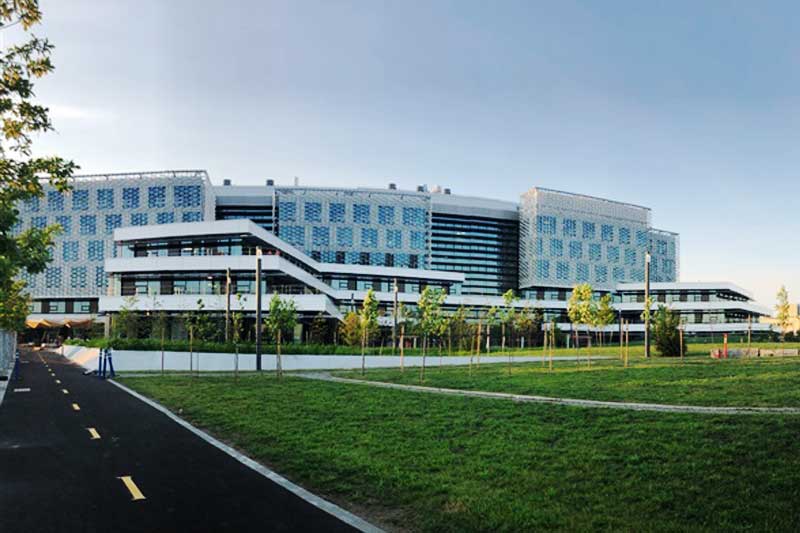
A selection of recent commercial restoration projects around Massachusetts, where the diagnostic investigation found the true source of water intrusion and set the restoration scope.
We do not sell it separately. Diagnostics sit inside a comprehensive restoration project, typically from $50,000 upward, and the reason is that our method is built to generate a scope rather than a document. A report that names a failure and leaves it open through a Springfield, MA winter costs the owner more than it saved. Where what you actually want is a one-off inspection, a residential assessment, or consulting on a small budget, a specialty inspection firm is the right call and we will point you there.
That is decided by the building, the symptoms it is showing and what we suspect lies behind them. The toolkit: isolated controlled water testing, infrared thermography, moisture meter readings, drone survey, and invasive testing, which means small investigative openings. Season narrows the choice more than people expect. Thermography needs a real temperature gradient across the envelope before it reads anything useful, so the winter months are the productive ones, while controlled water testing will not run below freezing. Selection comes down to what can change the restoration scope. Anything that cannot is not worth charging you for.
Entry point and exit point are rarely the same place, and a freeze-thaw climate adds months of delay on top of the distance. A stain arriving on a fourth-floor ceiling during a March thaw may originate at parapet flashing that gave way in December, or at an ice dam along the roof edge that forced meltwater backward beneath the membrane. Contractors who skip straight to repair fix whatever is closest to the damage; the defect stays, the water keeps coming, and the owner meets it again next spring having paid for the job two or three times. Work out the mechanism first and the repair only has to happen once.
No. Forensic engineering, expert witness work and litigation support are outside what we do, and a specialty forensic engineering firm is the right place to take that. We are often on site alongside one. Restoration projects tied up in insurance disputes or in an association argument over who owns a leak frequently involve both of us, with the forensic firm handling the findings that go into the record and Presto handling the repair itself. We are glad to work that way. We simply do not take on the forensic role.
The report is assembled around your building, not issued from a template. Expect the inspection findings with photography, each failure point we identified together with its likely cause, our conclusions, and the restoration scope we recommend on the back of them. Because this is Springfield, MA, the recommendations carry a sequence as well as a list: what has to be closed before the ground freezes, and what is genuinely safe to hold until spring. Those specifications then drive the project itself.
It depends on the size of the building, how tangled the intrusion is, and which methods the investigation calls for. One suspected failure point, targeted, is often done inside a day or two. A full envelope assessment covering several suspect areas, with controlled water testing at each, runs anywhere from one to three weeks. You get a timeline during initial scoping so the work can be planned around, and we will be straight with you about the calendar: much of the investigation can go ahead in cold weather, but the repairs that follow mostly need the warm end of the year, so a December diagnostic commonly means a spring construction start.

Chronic water intrusion that has already survived one or more repair attempts is almost always entering somewhere other than where it shows, and in Springfield, MA it may not be leaking at all on the day someone comes to look. Our diagnostic-first approach finds the real entry point and delivers restoration that closes it rather than deferring it.
Note: diagnostic and consulting work is included within comprehensive commercial restoration projects, typically starting around $50,000.
Call 1-800-785-9927 or Request A Quote online.




