










Houston is a city that literally moves. Decades of groundwater withdrawal have pulled aquifer levels down 300 to 400 feet, and roughly 3,200 square miles of the Houston-Galveston region has sunk more than a foot since 1836. In some locations the land has dropped twelve or thirteen feet. Four subsidence districts were created to slow it: Harris-Galveston in 1975, Fort Bend in 1989, Lone Star in 2001 and Brazoria in 2003. Levels are still falling under northern and western Harris County and southern Montgomery County, so this is a live condition rather than a historical one. Layer Gulf Coast clays on top, swelling through the wet season and shrinking through drought, and you get continuous differential movement. Envelopes here fail at the joints first.
The weather finishes what the ground starts. Houston averages 51.84 inches of rain and a mean temperature of 70.5 degrees Fahrenheit, so the cooling season is long, UV exposure is sustained and vapour drives inward for most of the calendar rather than outward. Hard freezes amount to a handful of nights a year, which means almost nothing here fails from freeze cycling. It fails from heat, water and movement. Storm wind belongs on the list too: on 16 May 2024 a derecho crossed the city with winds the National Weather Service estimated near 100 mph downtown, blew glass out of high-rise towers and left the streets below covered in it.
For more than 25 years Presto Restoration has restored and waterproofed commercial towers, parking structures and landmark buildings nationwide. On a Houston assignment that means specifying sealants and coatings for high movement capability and heat rather than frost, detailing glazing perimeters that have to hold against horizontal rain, and reading a facade the way a building on settling ground actually behaves. Our coverage runs from the CBD and the Texas Medical Center out through Uptown-Galleria, Greenway Plaza, Westchase and the Energy Corridor, into the tilt-up and precast stock along the Ship Channel, and across Harris, Fort Bend and Montgomery counties.
Presto Restoration delivers a complete lineup of exterior building restoration, waterproofing and envelope consulting services for commercial property across Houston and the wider Harris, Fort Bend and Montgomery county market.
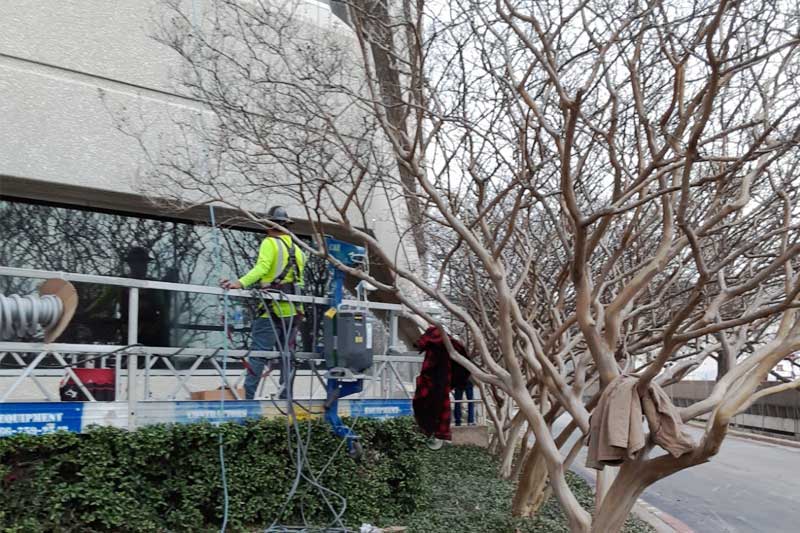
Water gets into a Houston building at the joints, and the ground underneath keeps opening them. We treat the above-grade envelope as one continuous system: movement joints, control joints, glazing perimeters, wall assemblies, parapets and plaza decks, sealed with materials chosen for high movement capability and sustained Gulf Coast heat rather than for a freeze cycle that never arrives. Presto works above grade only, not on foundations or below-grade waterproofing, because that focus is what makes the above-grade work hold.
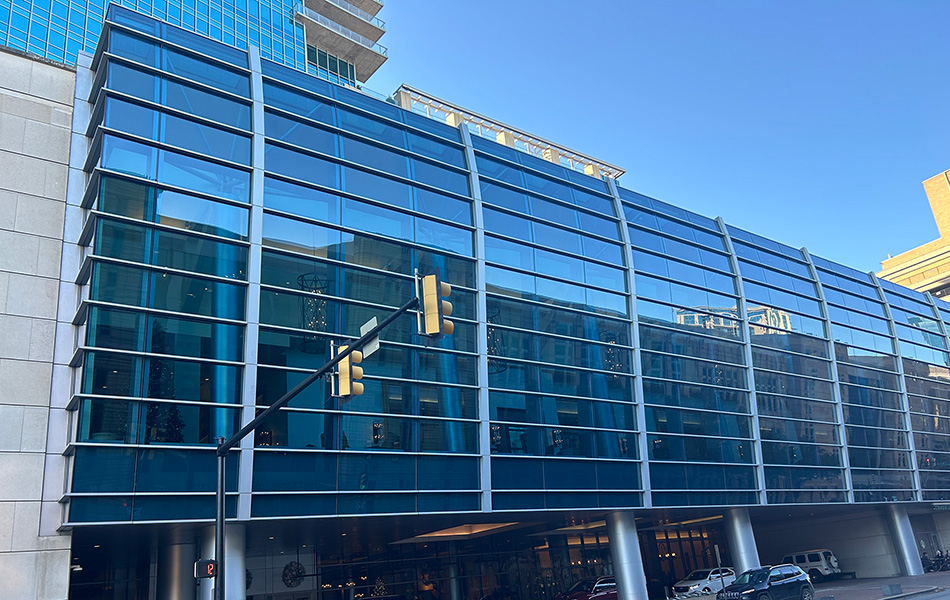
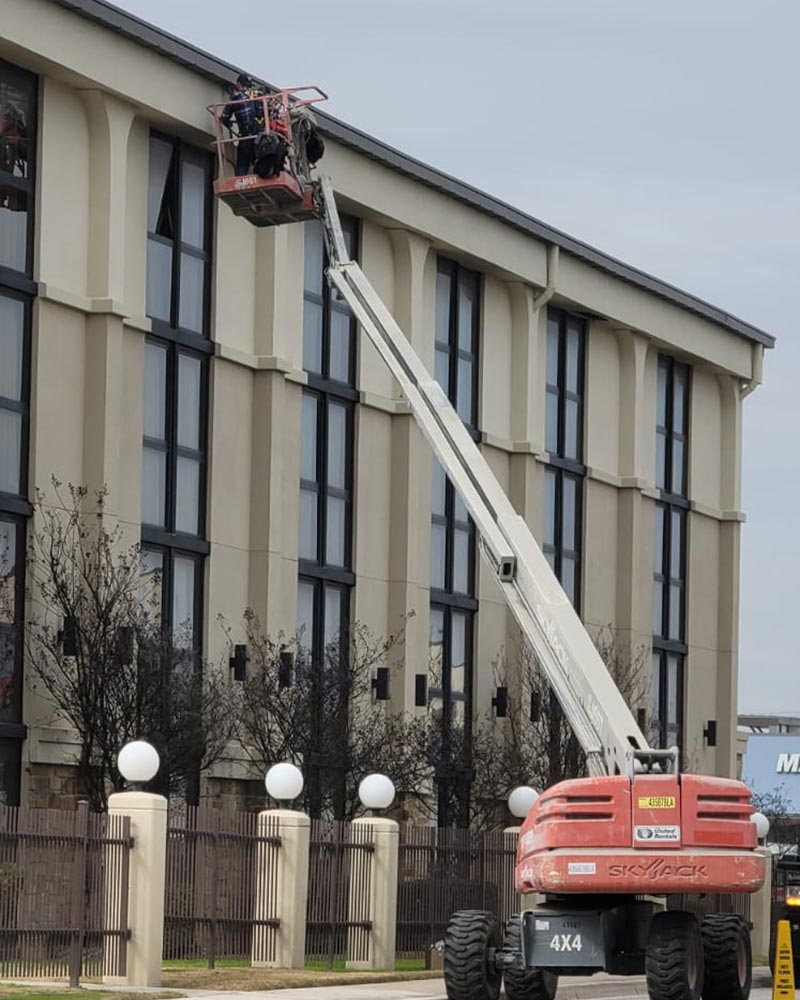
Houston asks two things of a facade: hold a Gulf Coast storm out, and tell tenants the asset is being looked after. May 2024 made the first one concrete, when derecho winds took glass out of downtown towers and left it on the sidewalk. We rebuild both functions through full sealant replacement, wet glazing, architectural metal refinishing, glass restoration and elastomeric coatings, with brick repointing and precast repair where the stock calls for it.
View Our Houston Facade Restoration Services →
Structured parking is everywhere in Houston: stacked under the CBD towers, spread across the Texas Medical Center campus, wrapped around the Galleria and standing free beside Energy Corridor and Westchase office buildings. Those decks absorb constant traffic, dripped fluids and open-deck rainfall on a scale few metros match. When a traffic membrane wears through or an expansion joint gives up, water reaches the reinforcing steel and spalling begins. Ground movement accelerates the whole sequence by working joints open faster than the original coating schedule assumed. We reverse it with traffic coating systems, concrete repair, full expansion joint replacement and above-grade structural waterproofing.
A tear-off is disruptive and expensive, and on a structurally sound Houston roof it is frequently unnecessary. Restoration can buy a serviceable low-slope roof another 10 to 20 years for a fraction of replacement cost. We install silicone and elastomeric coating systems, rebuild flashings and penetration seals, and correct ponding before it becomes a leak, which matters where nearly 52 inches of rain a year has to find its way off the deck. Reflective coatings also pull down surface temperatures through a cooling season that barely pauses.
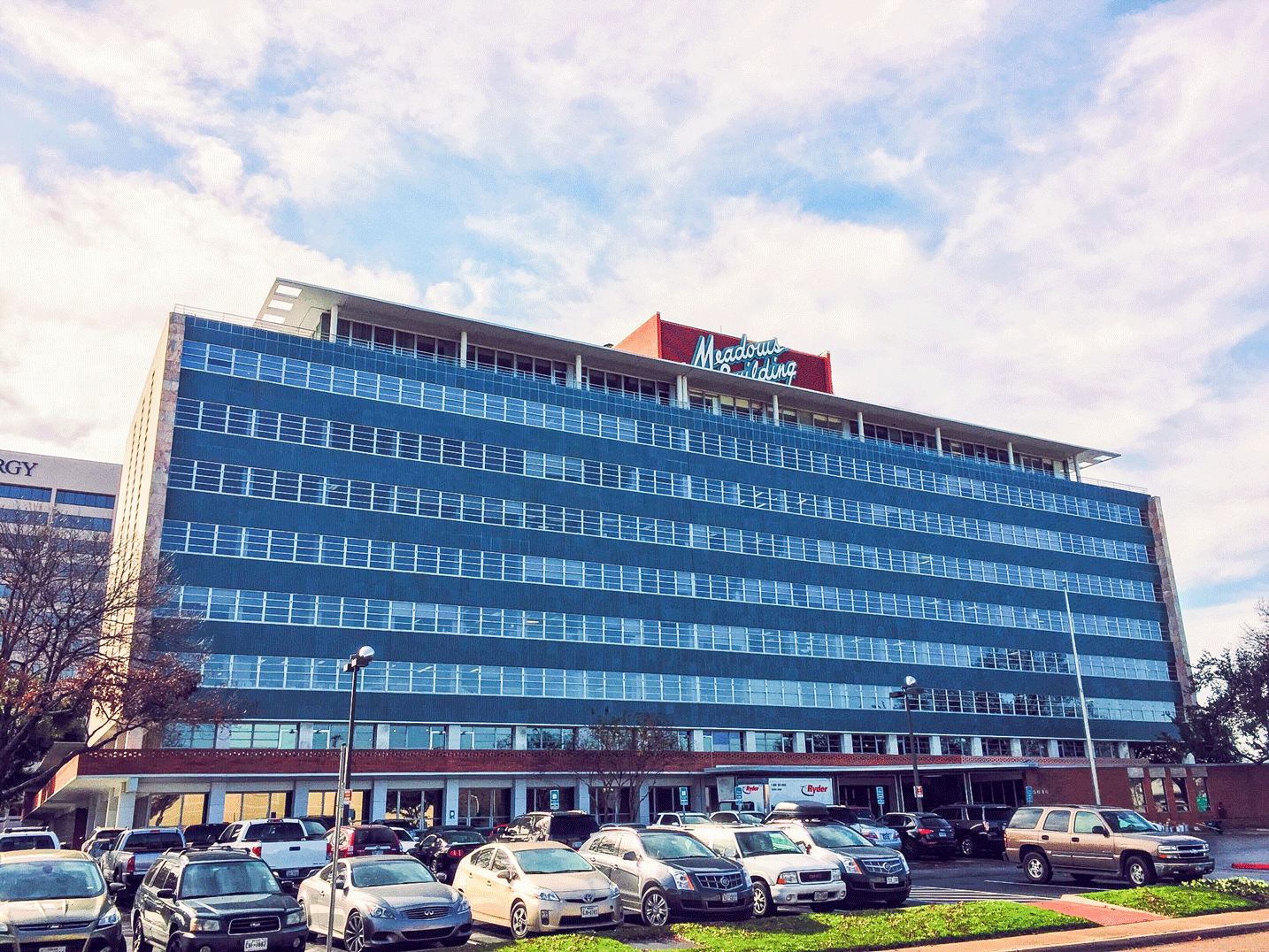
Most of Houston’s designated historic districts are residential neighbourhoods. The commercial exception is Main Street Market Square downtown, where one- and two-part commercial blocks span Classical Revival, Queen Anne, Italianate and Art Deco across roughly a century of construction. Alongside it sit individually designated City Landmarks and Protected Landmarks scattered through the city. Work on any of them runs through the Houston Archaeological and Historical Commission, which issues Certificates of Appropriateness, with appeals to the Historic Preservation Appeals Board. We coordinate with owners, preservation architects and the Commission to stabilise original fabric rather than replace it.
A leak in a Houston high-rise almost never announces itself where it started. Rain arriving sideways off a Gulf system can enter a glazing perimeter twenty floors above the ceiling stain. Our diagnostic team isolates the real failure with controlled water testing, infrared thermography where conditions allow, moisture meter surveys, drone imagery and hands-on facade inspection. The written findings turn a restoration scope into documented fact instead of an educated guess.
For more than 25 years Presto Restoration has protected commercial buildings across the United States. On the Texas Gulf Coast that experience is aimed at a specific set of problems: envelopes that have to absorb continuous ground movement, sealants and coatings selected for heat and sustained UV rather than frost, glazing that has to survive straight-line storm wind, and the 2021 International Building Code with Houston amendments, in force since 1 January 2024.
A metro that stretches from the Ship Channel out past Katy and The Woodlands needs more than one kind of building care. Presto coordinates with specialized Texas support networks so owners and managers can cover the whole range, from major envelope restoration down to the routine upkeep between projects.
For everyday facility work and localized services, property managers are welcome to explore our sister divisions:
Building Restoration Houston: Focused on localized structural repairs and high-rise exterior preservation.
Building Maintenance Houston: Dedicated to the ongoing preventative maintenance that keeps a Houston property performing between restoration cycles.
Building Services Houston: Your resource for comprehensive, day-to-day commercial building support across the Houston market.
Presto works on commercial and institutional property at scale across the Houston metro: CBD and Uptown-Galleria office towers, Texas Medical Center campus buildings, hotels, mid-rise and high-rise residential, structured parking, corporate campuses in the Energy Corridor and Westchase, and tilt-up and precast industrial stock along the Ship Channel. Every exterior surface type is in scope, including curtain wall glass, architectural metal and Alucobond, precast and cast stone, brick, stucco, EIFS, concrete and low-slope roofing.
Two forces work on a Houston envelope at the same time. First, the ground moves. Groundwater withdrawal has pulled aquifer levels down 300 to 400 feet and sunk roughly 3,200 square miles of the region more than a foot since 1836, and Gulf Coast clays swell and shrink with the wet and dry seasons on top of that. Movement concentrates at expansion joints, control joints and glazing perimeters, which is exactly where sealant lets go first. Second, the weather. Nearly 52 inches of rain a year, a long cooling season with sustained UV, high dew points that drive vapour inward rather than outward, and straight-line storm wind of the kind the May 2024 derecho delivered downtown. Freeze cycling plays almost no part here, which often surprises owners who have managed buildings further north.
Scope and building height drive the schedule. A focused sealant and wet-glazing replacement on a mid-rise can run two to four weeks. A full facade restoration on a twenty-plus storey tower downtown or in the Galleria usually spans three to six months. We phase by elevation and by zone so lobbies, garages and tenant floors stay in use, and we plan weather-sensitive scopes around the heat, dew point and afternoon convection that dominate a Houston summer.
Yes. Our project managers file permit applications through the City of Houston Permitting Center, and work with Harris County Engineering or the Fort Bend and Montgomery county authorities for property outside city limits. Houston adopted the 2021 International Building Code with local amendments effective 1 January 2024, and our specifications are written to it. Houston has no zoning, so use classifications never enter the conversation; what does apply on many properties is a private deed restriction, and we work within those. Where a general contractor is running broader construction on site, we permit through the GC. Presto carries nationwide general liability and workers’ compensation coverage on every project.
Maintenance is the recurring cosmetic cycle, window washing, pressure cleaning and touch-ups, that keeps a property presentable. Restoration is corrective. It replaces failed sealant and glazing, rebuilds waterproofing, repairs spalled concrete and corroded metal, and re-establishes the envelope’s ability to keep water out. In a metro where the ground under a building is still settling, restoration is what stops movement from turning into water damage. Maintenance only manages appearance between restoration cycles.
Look for sealant that has cracked, shrunk or pulled away from a joint face; stains that show up only after a storm with wind behind it; efflorescence on masonry or precast; rust bleed running below metal components; spalled concrete or exposed rebar at a deck or balcony edge; and glass that stays hazy after cleaning. Diagonal cracking at an opening, or a joint that has visibly gone out of square, points to differential movement rather than a surface problem. Any of these is envelope failure, not a cleaning issue. Call 1-800-785-9927 or use Request A Quote and tell us what you are seeing.
Seeing joint failure, staining, or water getting into your Houston building? Tell us what you are looking at and our team will point you toward the right fix.
Call us today at 1-800-785-9927 or click Request A Quote.