








Fort Worth’s commercial heritage is compact, and it is almost all masonry. The 1895 Tarrant County Courthouse in pink granite, Beaux Arts, roughly 200 feet and among the earliest structural steel in the Southwest. The 1914 Burk Burnett Building at 500 Main, white terra cotta with an elaborate cornice. The 1925 STS Tower on Houston Street, a limestone shaft under a terra cotta cornice. The 1929 Electric Building at 410 West 7th, its cast stone carved into hands grasping electrical bolts. The 1930 Sinclair Building at 512 Main, one of the city’s finest pieces of Art Deco, and Central Fire Station No. 2 of the same year with its ornate brickwork and 70-foot siren tower. The 1931 Texas & Pacific Terminal with an eagle worked into a zigzag motif over the entrance. Add the Stockyards, on the National Register since 1976 with 42 buildings in the district. Every one of those materials, lime-jointed brick, glazed terra cotta, cast stone, limestone, has a specific vulnerability, and none of them were designed for a hard modern cement repair.
What acts on that stock here is impact and freeze, not corrosion. Hail crazes terra cotta glaze and chips a cast stone arris, and on 5 May 1995 the Mayfest storm destroyed windows and skylights throughout downtown, including City Hall’s. Roughly 29 nights a year at or below freezing turn any water held in a soft joint into a wedge. A recorded range from 113 °F to −8 °F cycles the whole wall annually. Presto Restoration brings hands-on experience with landmark and designated buildings across the country, and every historic assignment gets the same materials-first approach. Our scopes generally track the National Park Service’s Preservation Briefs, then get tailored to the style, the material palette and the local review requirements of the specific property: lime mortars matched to historic strength and color, cleaning gentle enough for glazed terra cotta and soft brick, and in-kind repair rather than wholesale replacement. On a designated Fort Worth building that is also what a Certificate of Appropriateness is judged on.
Presto delivers a full range of historic property preservation services for Fort Worth’s designated commercial landmarks, Stockyards buildings, Cultural District institutional stock and architecturally significant downtown property.
Mortar failure is the commonest problem on historic Fort Worth masonry and the most frequently botched repair. Buildings from the 1890s through the 1930s here were laid in soft lime mortar that could flex with the wall, absorb minor stress without cracking, and let moisture leave as vapor. Repoint one with a modern Portland-cement mix and that moisture is trapped inside the softer historic brick or terra cotta, and the next run of freeze nights spalls the face rather than the joint. Our masons match new mortar to the original in strength, color and composition, rake out failed joints without chewing into the surrounding units, and tool the new work to the original profile. It is the slower, correct way to repoint a historic building rather than the shortcut that ruins one.
Limestone, cast stone, granite and glazed terra cotta define Fort Worth’s pre-war commercial architecture, and getting the cleaning wrong on any of them is permanent. Aggressive methods etch soft limestone, strip a century of patina, or break the glaze on terra cotta and turn a weatherproof unit into a sponge. We match method to material and condition, using micro-abrasion, historic-safe chemical cleaners and controlled water pressure rather than defaulting to one process for every substrate. Where a unit has spalled, cracked or taken a hail chip along an arris, we carry out color- and texture-matched repair engineered to behave like the surrounding original rather than harder than it. The aim is a surface that reads as authentically preserved, never over-polished.
Original steel and wood windows are routinely lost to premature replacement, and in a hail market the argument for replacing them sounds more convincing than it is. Fort Worth has direct experience of what a severe storm does to glazing: Mayfest 1995 took out windows and skylights right through downtown. But replacing a historic window with a modern unit usually ends any Certificate of Appropriateness prospect, and the replacement rarely outperforms a properly restored original. Our window work keeps the original glass, frames and hardware in place and fixes what is actually failing: hardened glazing compound, corroded muntins, seized hardware and gapped perimeter sealant that admits water under a driving rain. A well-restored historic window, properly maintained, outlasts a modern replacement rated for twenty years.
Stucco appears across Fort Worth’s older commercial and institutional stock, and traditional lime stucco behaves nothing like the acrylic and EIFS products used now. It was troweled on in several coats over wood or metal lath, each layer designed to let moisture pass rather than trap it. Patch it with a modern cement or acrylic product and moisture is sealed into the wall assembly, where 29 freeze nights a year then work on it, and the deterioration spreads through the surrounding original stucco. We rebuild historic stucco with lime-based formulations, repair failed lath, and finish to match the original texture and hand-applied character. On a Near Southside or Stockyards-area building that hand character is a large part of what the property is worth.
Bronze storefronts, cast-iron detail, wrought-iron gates and ornamental grillework run right through Fort Worth’s historic inventory, from Art Deco entrances downtown to Stockyards ironwork. Inland the corrosion driver is not salt but water sitting in a detail through a freeze, plus hail denting on anything exposed. Meanwhile the developed patina on bronze and copper is part of what makes the metal historically valuable. We remove active, structurally damaging corrosion while keeping authentic patina wherever it is not compromising the metal, then refinish using methods that respect the original character. Stripping historic metalwork to bare substrate is a last resort rather than a default, because the goal is keeping historic character, not manufacturing a new look.
Waterproofing a historic Fort Worth building takes a different playbook from waterproofing a modern curtain wall. Older masonry, lime mortar and stucco assemblies were built to breathe: water that gets in during a convective storm is meant to evaporate back out through the wall, not sit behind a sealed membrane. Trap it and the next freeze does the damage, from the inside, on material that cannot be replaced. Our approach to historic facade waterproofing uses vapor-permeable water repellents and joint sealants compatible with lime-based construction, and applies fully impermeable systems only where the original design called for one, typically at a coping, a cornice top or a flashing detail.
Working on a designated Fort Worth property calls for a slower, more deliberate process than a standard commercial restoration. Every Presto historic project runs through the same five phases, built to surface every issue before pricing, specify period-correct materials, and carry out the work without harming original fabric that cannot be replaced or a review body will not approve replacing.
We document every area of deterioration and separate original fabric, which is irreplaceable, from later non-original additions, which are modifiable. Nothing is touched until the building’s history is understood, and on a hail-exposed elevation the cornice, coping and glazing get their own record.
We identify the original materials precisely: the lime mortar mix, the limestone or cast stone type, the terra cotta body and glaze, the stucco composition, the glazing and the metal alloys. Lab analysis is recommended wherever the material is uncertain rather than assumed from appearance.
Findings become a detailed scope with quantified line items and period-appropriate product specifications, written so it can go straight into a Certificate of Appropriateness application. We coordinate with owners, preservation consultants, architects and the Landmarks Commission as required.
Trained crews carry out the work with period-appropriate materials and traditional technique where it is called for, mock-up panels first where the finish is contentious. Quality control is strict, because a historic substrate leaves no room for rework.
You receive complete documentation: before-and-after photography, material data sheets, warranty details and maintenance guidance. On a designated property that record supports future Landmarks Commission reviews, and it says what to inspect after a hail event.
Whether a designated Fort Worth property is already showing visible deterioration or you are getting ahead of it, tell us what you are looking at. Our specialists will come back with recommendations grounded in preservation-grade practice and written so they stand up to Landmarks Commission review.
Call 1-800-785-9927 or Request A Free Quote.
Covering downtown’s designated buildings, the Stockyards and the wider Tarrant County market at a consistently high level takes more than one kind of crew. Presto coordinates a network of specialized regional divisions so clients get seamless coverage, from major historic envelope restoration down to routine facility upkeep.
For day-to-day and preventative facility needs, we encourage property managers to reach out to our sister divisions directly:
Building Restoration Fort Worth: Focused on localized structural repair and exterior masonry preservation.
Building Maintenance Fort Worth: Dedicated to the preventative maintenance that keeps a Tarrant County property performing between restoration cycles.
Building Services Fort Worth: Your resource for day-to-day commercial building support across the Fort Worth market.
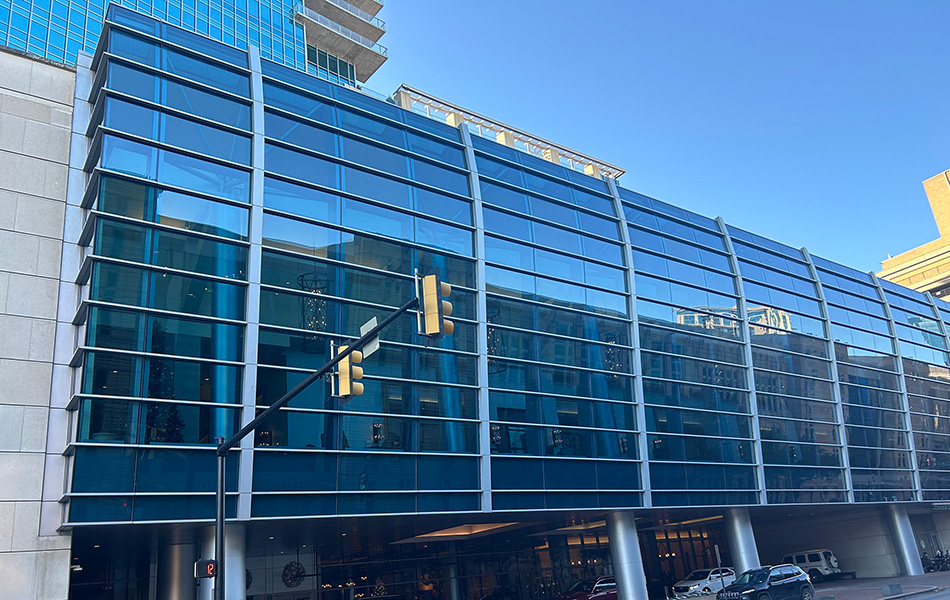
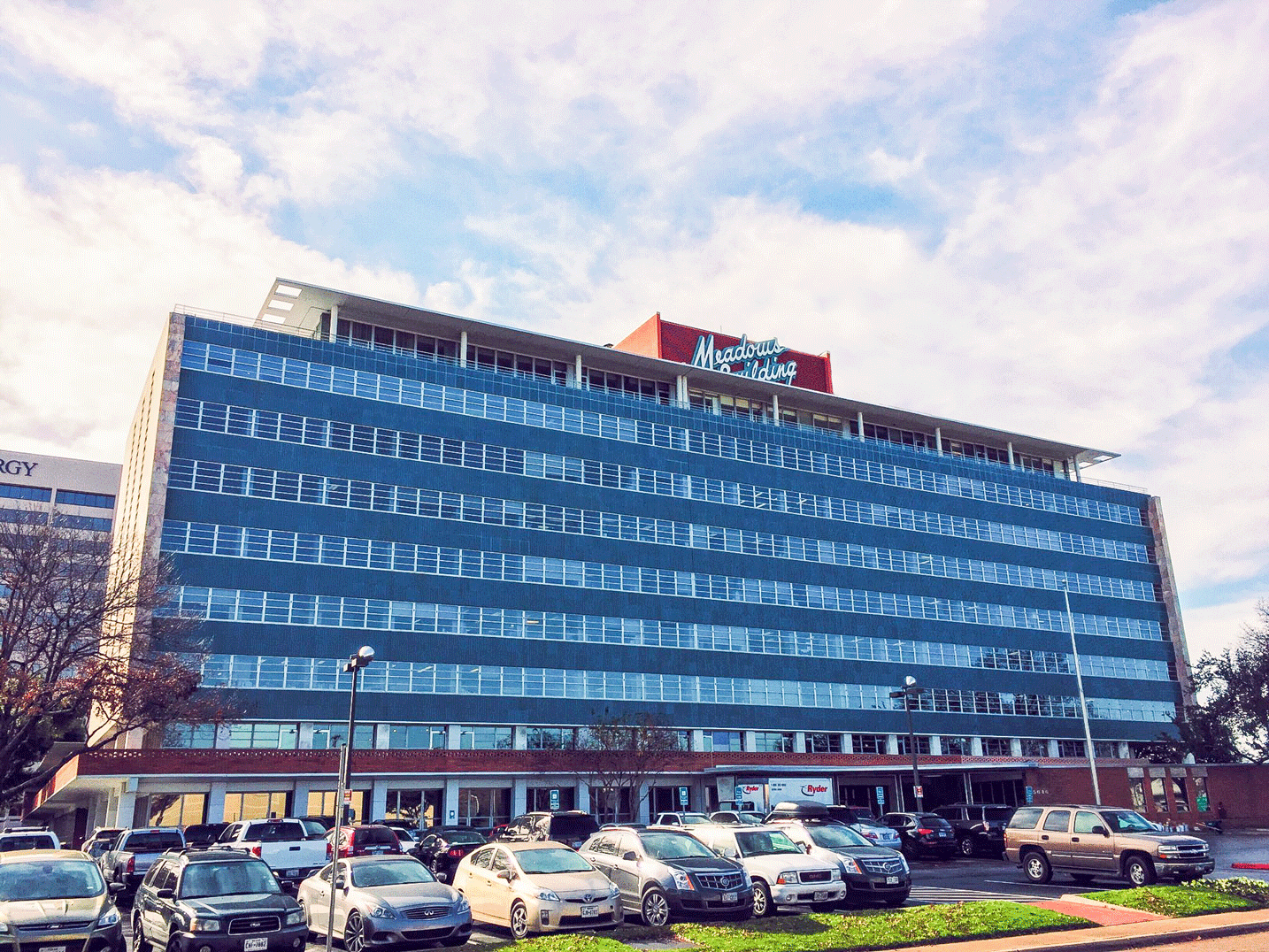
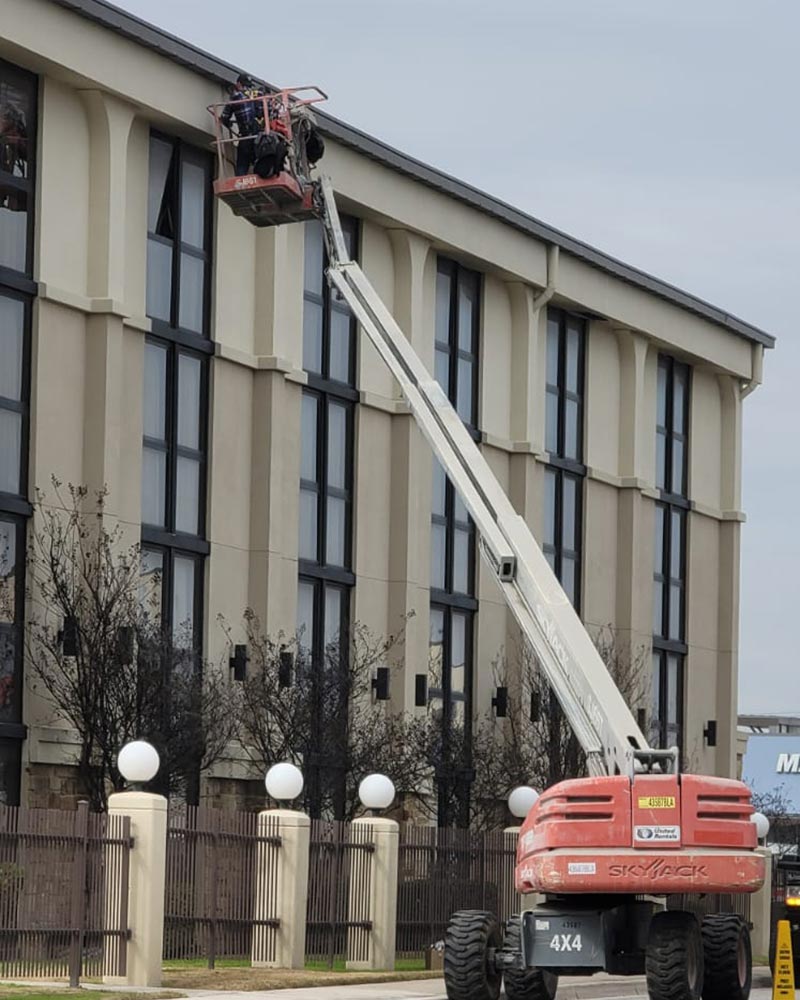
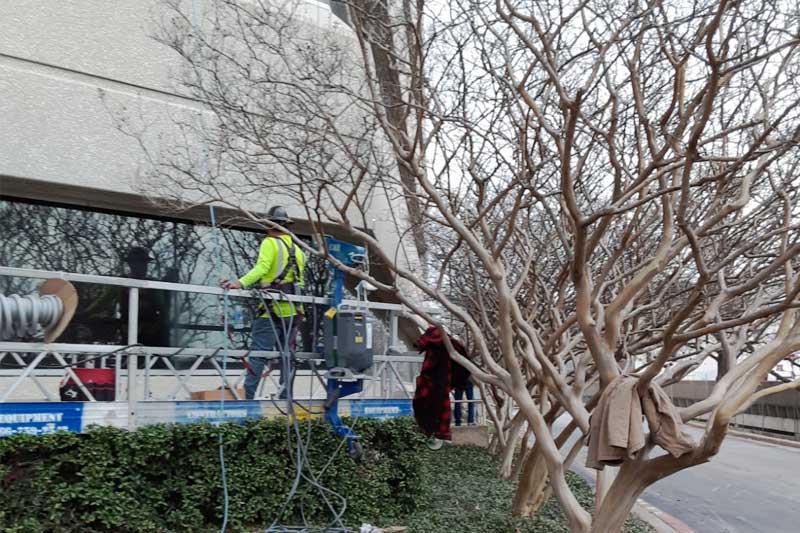
Historic and landmark restoration projects Presto has carried out on Texas buildings, including natural stone restoration and caulking at 1300 Houston Street in downtown Fort Worth.
Ordinary restoration gets a building watertight and functional again with whatever modern material does the job best. Preservation adds a harder second requirement: keep the original character, materials and craftsmanship while restoring performance. In practice that means lime mortar rather than Portland cement, calibrated cleaning rather than blasting, and reversible repairs wherever they are feasible so the next generation is not locked into our decisions. On a designated Fort Worth property there is a third layer, because a Certificate of Appropriateness from the Historic and Cultural Landmarks Commission is judged against the Secretary of the Interior’s Standards, and a repair that is technically sound but visually wrong can still be refused.
The commercial buildings that define this city, from the 1895 courthouse through the Burk Burnett Building of 1914 and the Sinclair Building of 1930, were laid in soft lime mortar deliberately weaker than the surrounding brick, terra cotta or stone. When the wall moves, the joint takes the movement instead of the unit cracking, and vapor held in the wall leaves through the joint rather than through the face. North Texas makes that mechanism load-bearing rather than academic: roughly 29 freeze nights a year plus a recorded 121-degree annual range means real annual movement and real freeze pressure. Repoint that wall with a hard modern cement mix and the joint stops yielding, so the brick face spalls instead. Getting the mix right is what keeps the original masonry.
Yes, and a properly restored one often performs better than expected. Original steel or wood windows, restored with fresh glazing compound and a sound perimeter seal, hold up comparably to new replacements. Thick masonry walls give real thermal mass, which matters in a market that has recorded 113 °F and runs a long cooling season: the wall evens out the swing instead of transmitting it. Breathable, vapor-permeable water repellents frequently outlast impermeable coatings because they do not trap moisture where the next freeze can act on it. We work the envelope. For interior mechanical or insulation upgrades, owners generally bring in a contractor who specializes in historic-rated work.
Historic work moves more slowly than standard restoration because the materials, the hand techniques and the quality control are more exacting. A facade restoration on a smaller designated commercial building might run two to four months. A full preservation scope on a larger downtown landmark can run six to twelve months or more, and ornament is the reason: terra cotta units and cast stone details are repaired individually. Two Fort Worth factors shape the program on top of that. Certificate of Appropriateness review has to happen before work starts, and it adds weeks. And September to November is the best working season here, which is worth planning toward rather than against.
Yes, across the range of designation levels. Fort Worth has eleven local Historic and Cultural Landmark districts and eleven National Register districts, plus individually designated landmarks, and the requirements differ by category. Our commercial work sits with the individually designated downtown buildings and the Stockyards rather than with the local districts, which are residential neighborhoods. What triggers review also varies: some scopes need a Certificate of Appropriateness and some do not. We establish exactly where your property sits at the assessment stage and map out the coordination the proposed work will actually need.
The Commission is nine citizens appointed by the Mayor and City Council, and it judges applications for a Certificate of Appropriateness against the Secretary of the Interior’s Standards together with the applicable design guidelines. In practice the application is usually driven by the owner alongside a preservation architect or consultant. Our job is to supply an accurate scope, period-appropriate material specifications and documentation that stands up to that level of scrutiny, including mortar analysis and mock-up panels where they help. We stay in close contact with the owner’s preservation team through the project so the work supports the submission rather than complicating it.
Yes. Our scopes typically track the National Park Service’s Preservation Briefs, the most widely used technical reference for historic restoration in the country, and they map closely onto what Fort Worth’s stock actually needs: masonry cleaning, mortar formulation, architectural terra cotta, cast stone, historic window restoration and stucco repair. Since a Certificate of Appropriateness here is judged against the Secretary of the Interior’s Standards, the two references pull in the same direction. Owners working with a preservation architect are welcome to review our proposed scope against the relevant Briefs before anything begins.
A terra cotta unit, a carved cast stone panel or a 1930s steel window cannot be bought again, and a modern shortcut does not restore one, it finishes it. Tell us what your Fort Worth building is doing and we will set out what it takes to hold its character, its performance and its designation for the next generation.
Call 1-800-785-9927 or Request A Historic Property Assessment online.