









Augusta sits on the Fall Line, where the Piedmont drops away to the Coastal Plain and the Savannah River runs past the edge of downtown. That position sets the terms for every building envelope in the city. Dew points stay high from May into September, so masonry and roof surfaces spend months damp enough to grow algae, mildew, and moss on any elevation the sun does not reach. The forty-five inches of rain that fall in a year arrive mostly as short convective storms, which means water hits a parapet or a window perimeter moving sideways rather than simply falling on it. Winter is mild by Piedmont standards but not gentle: an ice storm can load gutters, copings, and flashings in a single night, and the shallow freeze behind it works at joints the summer already opened. The ground here is Fall Line sandhill sand, so what pulls joints apart at grade is erosion and washout under slabs and plaza decks rather than a soil that swells.
Presto Restoration has spent more than 25 years restoring and waterproofing commercial buildings, and Augusta puts an unusually wide range of substrates in front of a crew. Broad Street runs to nineteenth-century load-bearing brick and cast-iron storefronts, where mortar has to be matched rather than overpowered. The canal-era mills at Enterprise, Sibley, and King were built as heavy timber and brick industrial shells and now carry offices and apartments. The Medical District around Augusta University is concrete, masonry, and glass on buildings that cannot stop operating while work goes on around them. We restore how each of these reads from the street, and we re-establish the continuous moisture barrier underneath it.
Presto Restoration provides a full range of exterior building restoration, waterproofing, and envelope consulting services for commercial property across Augusta, Olde Town, the Medical District, and the wider CSRA, including Evans and Martinez in Columbia County.
Unchecked water intrusion erodes a commercial asset faster than anything else on a maintenance budget. In Augusta it arrives two ways: hard convective rain pushed flat against parapets and window perimeters, and a river-valley dew point that keeps a wall assembly from ever drying out between storms. Our crews treat the above-grade envelope as one continuous system, from wall assemblies and plaza decks to the sealant joints, copings, and penetrations that tie them together, specified for humidity that does not let up rather than for a single wet season.
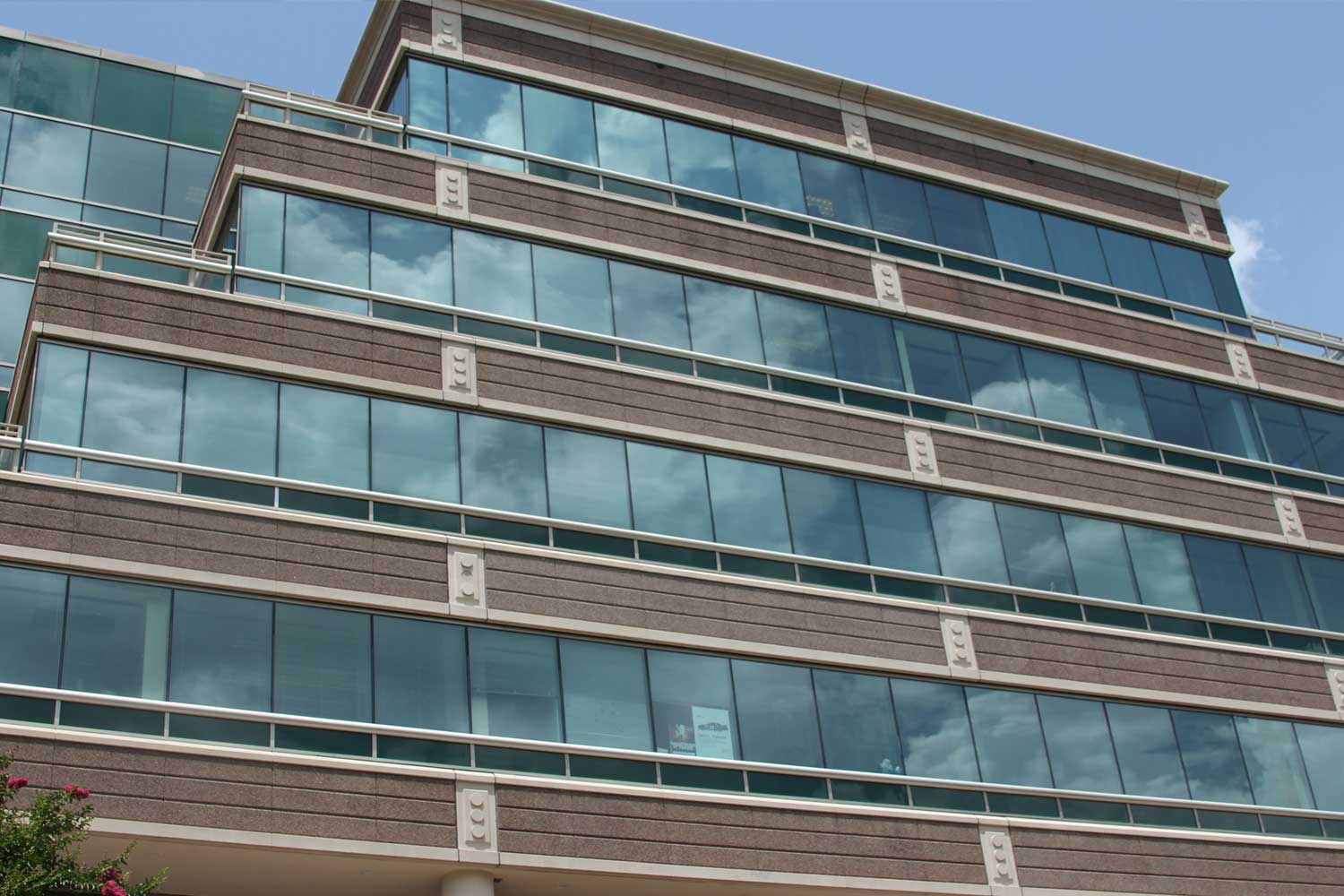
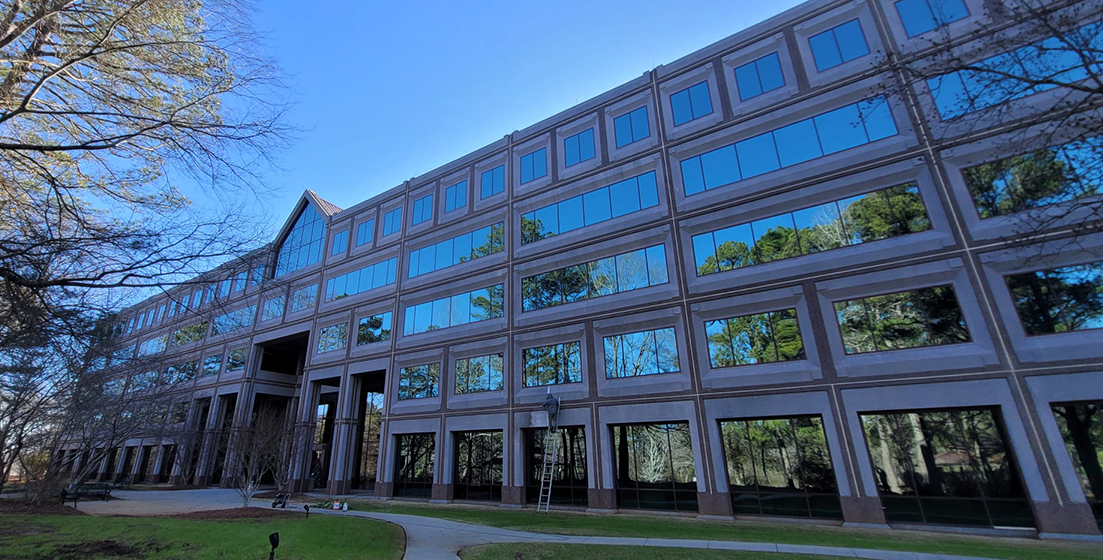
A facade in Augusta does two jobs at once. It keeps driven rain and river-valley damp out of the structure, and it tells tenants and lenders how carefully the building is being run. We rebuild both: full caulking and sealant replacement, architectural metal refinishing, glass restoration, masonry repointing where mortar has gone soft, and elastomeric coatings where a wall needs a continuous skin. Cast-iron storefront elements and cast stone get treated on their own terms instead of being coated over.
View Our Augusta Facade Restoration Services →
An Augusta parking deck fails from water and traffic, not from salt spray. Rain finds its way through worn traffic coatings, humidity keeps the slab from drying between storms, and daily vehicle loading grinds joints and sealant apart. Once moisture and chlorides reach the reinforcing steel, spalling starts and the number on the repair grows quickly. We interrupt that sequence with traffic coating systems, concrete and spall repair, expansion joint replacement, and above-grade structural waterproofing, phased so a deck serving the Medical District or downtown keeps operating while the work runs.
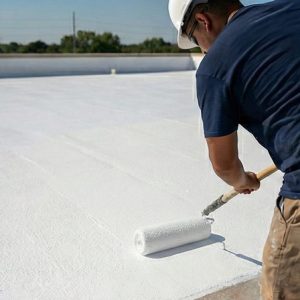
A tear-off is the loudest and costliest way to fix an Augusta roof, and frequently it is not the one the roof needs. Restoration can add another 10 to 20 years to a sound deck for a fraction of replacement cost. We apply silicone and elastomeric coating systems, rebuild flashings and penetration seals, and correct the ponding that heavy summer storms leave behind. Reflective coatings earn their keep here, because the cooling season on the Savannah River is long and rooftop surface temperatures run high through it.
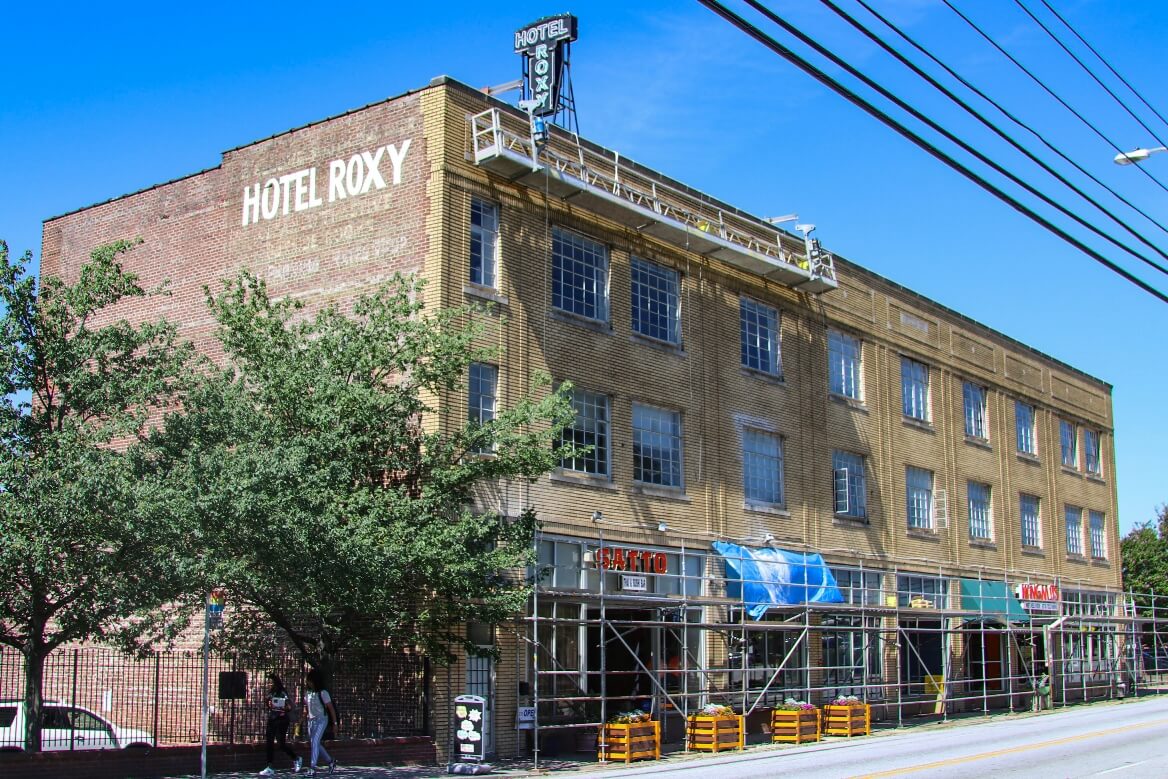
Augusta holds an unusually deep run of nineteenth-century commercial fabric, from the cast-iron storefronts and load-bearing brick along Broad Street to the residential blocks of Olde Town and the canal-era mills at Enterprise, Sibley, and King. Work on these buildings means matching lime-based mortar instead of overpowering it with modern cement, sourcing period-correct replacements, and moving through review with the Augusta Historic Preservation Commission. Where the Augusta Canal National Historic Landmark district or a rehabilitation tax credit is in play, we coordinate with Georgia’s Historic Preservation Division as well.
Water rarely enters a building anywhere near where it finally shows up. It can run along a slab edge or inside a wall cavity for several floors before it reaches a ceiling tile, and in a climate this humid, condensation can imitate a leak convincingly enough to send a crew to the wrong elevation entirely. Our diagnostic team finds the real breach through controlled water testing, moisture meter surveys, infrared thermography where conditions allow, drone imaging, and close-up facade review. What comes back is a documented scope built on evidence.
Presto Restoration has protected commercial buildings across the United States for more than 25 years, and in Augusta that experience gets pointed at a specific set of problems: a river-valley dew point that keeps envelopes wet for months, convective storms that drive rain sideways, ice storms in place of snow load, and Fall Line sandhill soils moving under slabs and plaza decks.
Augusta and the wider CSRA cover a lot of ground, from downtown and Olde Town out to Evans and Martinez, and covering it properly takes locally rooted infrastructure. So that an owner gets complete building care, from major structural restoration down to routine facility upkeep, Presto works alongside specialized Georgia support networks.
For everyday upkeep and localized facility services, we invite property managers to explore our sister divisions:
Building Restoration Augusta: Focused on targeted structural repair and exterior preservation work on Augusta buildings.
Building Maintenance Augusta: Dedicated to the preventative upkeep that keeps humidity and organic growth from turning into an Augusta restoration project.
Building Services Augusta: Your resource for comprehensive, day-to-day commercial building support across Augusta and the CSRA.
Presto works across the full range of commercial property in Augusta and the CSRA: Broad Street retail and office blocks, the converted canal mills at Enterprise and Sibley, mid-rise towers downtown, hospitals and research buildings in the Medical District, hotels, apartment and condominium buildings, parking decks, institutional and government facilities in and around Fort Eisenhower, and designated landmarks in Olde Town and Summerville. The substrates run to load-bearing brick, cast iron, cast stone, stucco, EIFS, architectural metal, glass curtain wall, concrete, and every common low-slope roofing system.
The dominant force here is moisture that never fully leaves. Augusta sits in the Savannah River valley at the Fall Line, and dew points stay high enough from late spring into early autumn that shaded and north-facing masonry stays damp for weeks at a stretch. That feeds algae, mildew, and moss, and it keeps sealant joints working in a swollen state. The forty-five inches of annual rain mostly arrives in short convective storms, which loads a wall differently from steady rain because the water is moving sideways when it reaches a parapet or a window perimeter. Winter contributes ice storms rather than snow load, plus a shallow freeze that finishes off joints the summer already opened. Systems that make landfall well to the southeast arrive here as inland rain, not as design wind.
Scope and building size set the schedule. Targeted caulking and sealant replacement on a Broad Street block or a mid-rise commonly runs two to four weeks. A full facade restoration on a downtown tower or a mill conversion can run three to six months. Humidity is the local scheduling constraint rather than cold: sealants and coatings need a substrate that is genuinely dry, which in an Augusta summer often means starting early and working around afternoon storms. In the Medical District we phase by elevation and by entrance so clinical operations and patient access are never interrupted.
Yes. Permitting inside the city runs through Augusta-Richmond County, the consolidated city-county government, and its Planning and Development Department; work in Evans, Martinez, and the rest of the suburbs runs through Columbia County. A project inside a local historic district also goes before the Augusta Historic Preservation Commission, and anything touching the Augusta Canal National Historic Landmark district or a state or federal rehabilitation tax credit is coordinated with the Historic Preservation Division of Georgia DNR. When a General Contractor is running the wider job, we work under the GC’s permits, and owners who prefer to pull their own are welcome to. Presto carries nationwide general liability and workers’ compensation coverage on every project.
Maintenance keeps a building presentable: window cleaning, pressure washing, touch-up paint. Restoration is corrective work on the parts that keep water out, which means replacing failed sealant, repointing masonry, repairing spalled concrete and corroded metal, rebuilding flashings, and re-establishing a continuous barrier across the envelope. In a humid river valley the distinction matters more than it does in a dry climate, because a building here can look freshly cleaned and still be taking on water through joints that stopped working two summers ago.
Look for sealant that has cracked, shrunk, or pulled away from its joint; rust bleed running below metal components and lintels; spalled concrete or exposed rebar on decks and ledges; interior stains that appear only after a hard, wind-driven storm; efflorescence blooming across brick; algae or moss returning on shaded elevations within weeks of a cleaning; and glass that stays hazy no matter how it is washed. Any of those is envelope failure rather than a housekeeping problem. Tell us what you are seeing on your Augusta building and our team will point you to the right scope. Call 1-800-785-9927 or use the Request A Quote form.
Noticing open joints, rust bleed, or a stain that keeps coming back on your Augusta building? Send us the details and we will tell you what the repair actually involves.
Call us today at 1-800-785-9927 or click Request A Quote.