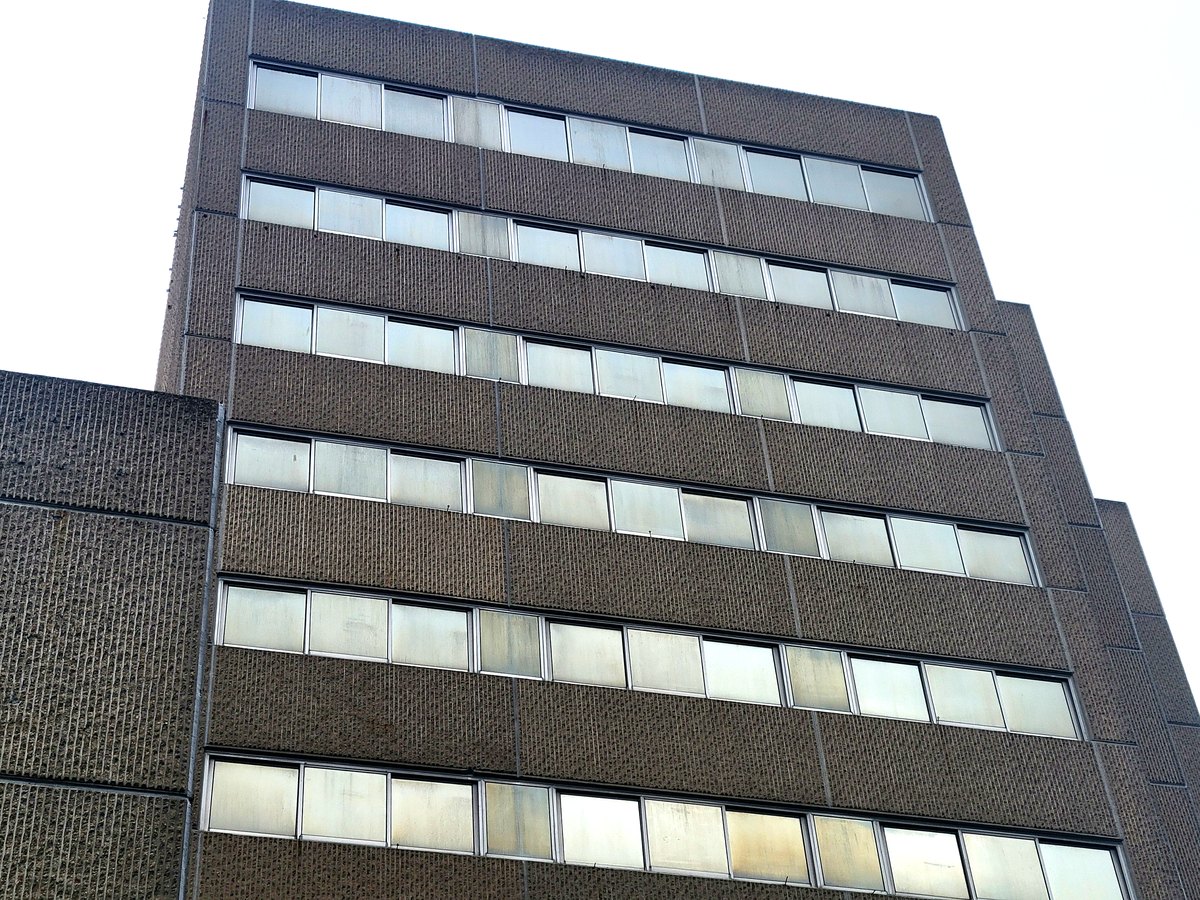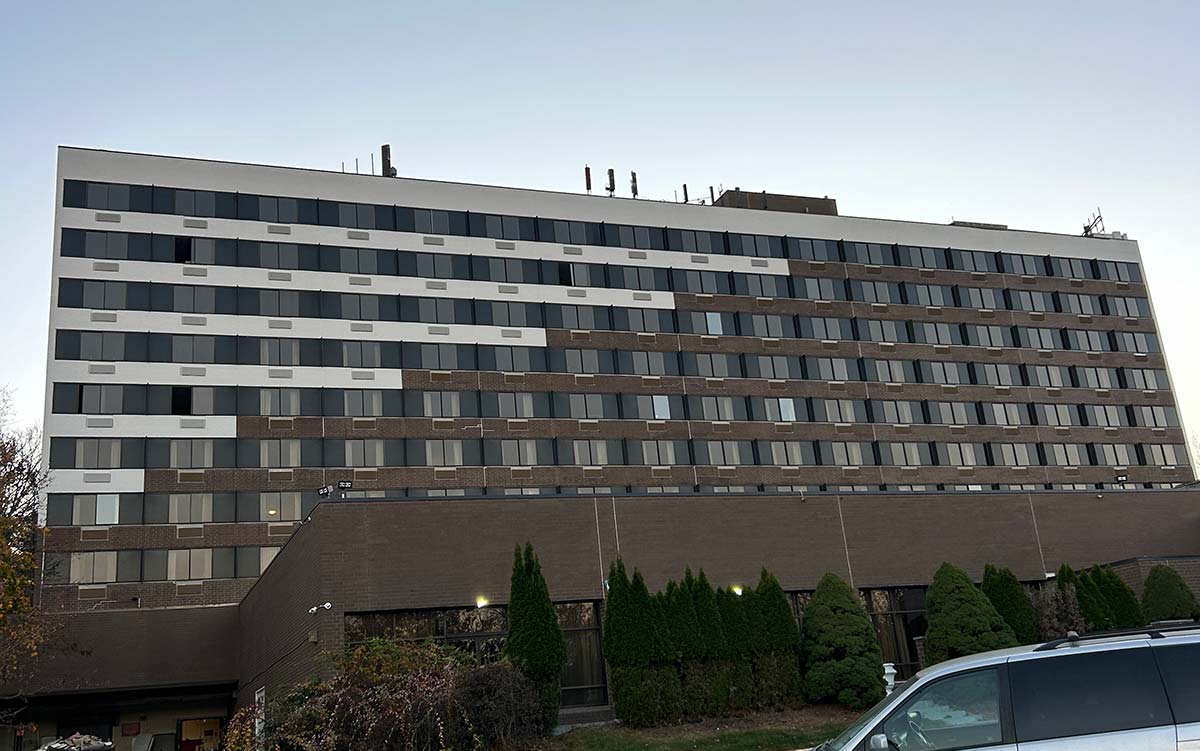
New Haven is a stone city in a climate that is hard on stone. The university’s collegiate Gothic quadrangles, the churches and civic buildings around the Green, the brownstone rowhouses and commercial blocks of the Nine Square, and the older buildings of the medical district are faced in materials that absorb water: Portland brownstone above all, with sandstone, limestone and the softer brick of the nineteenth-century blocks alongside it. Absorbency is not a defect in any of them. It is how these walls were meant to work, taking water in during a storm and giving it up again in the days afterward.
What goes wrong is what happens when the water cannot leave before it freezes. Brownstone is a sedimentary stone laid down in beds, strong across those beds and weak along them. Where a block was set with its bedding running parallel to the wall face, which happened often because the stone cuts and carves more easily that way, water travels along the planes and freezes between them, and the face then lifts away in sheets. That is not weathering. That is the stone coming apart along its grain. The same logic governs the joints. Repoint an absorbent wall in hard Portland-cement mortar and you close off the route the joint used to give the water, so movement and moisture are taken up by the stone instead. The mortar was meant to be the part that surrenders. Once it is harder than what it beds, the wall itself becomes the sacrificial element, and a brownstone or brick face that has spalled away cannot be put back on.
Which is why the work here is mostly an argument for restraint: the gentlest cleaning that achieves the result, mortar softer than the stone beside it, breathable repellents instead of sealed surfaces, and repairs specified so that both the city’s review and an institution’s own reviewers can follow the reasoning.
Presto works on New Haven’s designated buildings, its institutional and medical district stock, and the brownstone and masonry blocks that make up the historic core of the city.

Repointing decides how long the stone lasts, which earns it more attention than it usually gets. The governing rule is short and widely broken: the mortar must be softer than whatever it beds. On a New Haven brownstone elevation, or on the soft brick of a Nine Square block, a hard cement joint passes stress into the surrounding stone and holds moisture against it, and the stone is the half of the wall that cannot be remade. We identify the original binder and aggregate, rake out failed joints by hand wherever a power tool would bruise an arris or open up a fine ashlar joint, and refill with lime mortar matched for strength, color, texture and finish. On close-jointed ashlar the joint width is a visual element in itself, so a repoint that gets the chemistry right and the joint wrong still reads as a repair from across the street.
Brownstone fails in a way that few other facing stones do, shedding its face in layers rather than wearing back evenly, and the usual response of skimming the damage with a tinted cementitious patch is close to the worst option available. A hard patch on a soft absorbent stone traps moisture behind itself and lifts off within a few winters, generally taking more of the original face with it than the original defect ever would have. Where loss is shallow we consolidate and repair using mixes formulated to the porosity and strength of the stone itself. Where a unit has delaminated badly we cut the failed area out and set a Dutchman, a piece of matching stone let into the original block, which lasts precisely because it behaves like the material around it rather than fighting it.


Institutional and ecclesiastical buildings here carry openings that a standard replacement schedule cannot address at all: leaded and stained glazing, carved stone tracery, and steel or wood casements set into worked stone surrounds. Leaded panels bow outward over time as the lead came fatigues, and the first symptom is usually rattling and water at the sill rather than broken glass. The tracery holding those panels suffers wherever water stands in a molding and freezes. We release and reglaze panels, renew came and support ties, repair or piece in tracery where sections have been lost, and rebuild the sill and perimeter details that were letting water reach the stone in the first place. Replacement is the last resort on these windows, because the glazing and the stonework were designed as one thing.
Collegiate Gothic buys its character with exposed carved detail, and every projection on it is somewhere water can collect and freeze. Crockets, finials, hood molds, string courses, buttress weatherings and parapet copings all shed water in principle and hold it in practice, once an original weathering profile has eroded or a joint above has opened up. Slate roofs open a second front, because one slipped slate or a failed valley puts water straight into the head of a wall. We reinstate weathering profiles so the stone throws water clear the way it was cut to, repair or replicate carved units where the loss has gone too far to consolidate, reset copings over proper flashing, and make good the slate and valley details feeding the problem from above. Work at the top of a building protects everything underneath it.


The metal on New Haven’s institutional buildings is mostly bronze and copper: entrance doors and screens, memorial plaques and lettering, roof coverings, gutters and downspouts and flashings, with iron in the gates and railings. Copper and bronze both build a patina that protects the metal beneath it and carries a fair amount of the building’s character, so taking them back to bright metal is nearly always the wrong instinct. What does need attention is where the water goes, because run-off carrying copper salts will stain the stone below, and a split downspout or a failed gutter joint delivers water directly into masonry that is going to freeze it. We conserve patina, arrest active corrosion, remake failing seams in roofing and rainwater fittings, and lift copper staining off stone with poultices rather than with anything that would etch the surface.
On an absorbent New Haven wall the specification question is not how to keep water out, it is how to let water leave. Brownstone, sandstone and soft brick take water on in every storm and release it as vapor over the days that follow. A film-forming sealer or an impermeable coating interrupts the second half of that cycle without reliably preventing the first, so the water that still enters at a coping, a sill or an open joint is held inside the stone right through the winter, and freezing there is what lifts the face. Our specification stays vapor-permeable throughout: repellents compatible with lime-bedded construction, joint sealants chosen for movement and permeability together, and impermeable systems confined to horizontal surfaces and concealed flashings, which is where they were always supposed to be.

Preservation work in New Haven has two clocks running on it, the building’s and the institution’s. Our five phases are arranged so that material investigation and review routing happen early enough to survive both, and so the physical work lands in a window that the weather and the occupants can actually share.


We map deterioration elevation by elevation and establish which stone, brick and mortar are original. On brownstone that includes checking how each block was bedded, because a face-bedded unit fails along its grain and needs a different repair from one that does not.
We characterize the original materials: the mortar's binder and aggregate, the brownstone's porosity and strength, brick, slate and metal alloys. Where the match is not obvious we recommend laboratory work, because a repair mix stronger than the stone is the most expensive mistake on offer.
The scope is quantified and specified in period-correct materials, then routed to the right authority: the New Haven Historic District Commission where a property falls under it, or an institution's own review where it does not. Working out which applies is a first-phase task, not a late surprise.
Trained crews work with traditional materials and hand techniques. Lime and coatings have temperature limits, and campus and hospital buildings come with fixed calendars of their own, so phasing is agreed before mobilization rather than argued over during it.
We provide photographic records, material data, warranty information and a maintenance regime. Institutional owners tend to hold buildings for a very long time, and a proper record is what lets the next specification start from evidence instead of from scratch.
If a New Haven building is losing stone, staining after storms, or simply overdue a serious look at its masonry, describe what you are seeing and our team will tell you where to start.
Call 1-800-785-9927 or Request A Free Quote.
A large institutional estate needs two kinds of attention at once: the corrective work, and the routine care that stops it being needed again so soon. Presto handles the first and coordinates with regional divisions for the second, so an owner is not running two disconnected relationships.
For day-to-day and preventative facility needs, we encourage property managers to reach out to our sister divisions directly:
Building Restoration New Haven: Targeted structural repair and exterior preservation at height.
Building Maintenance New Haven: Routine and preventative care through the New England freeze.
Building Services New Haven: General commercial building support, day to day, across New Haven.
A selection of the preservation and landmark restoration projects Presto has completed in Connecticut.
Ordinary restoration is judged on whether the building performs again afterward. Preservation is judged on that and on how much of the original survived the process. In practice the constraint shows up as a series of refusals: no cleaning method harsher than the substrate can take, no mortar harder than the stone beside it, no coating that stops an absorbent wall drying, and no repair a later generation cannot reverse. Those refusals are what keep a New Haven building recognizably itself rather than merely watertight, and they are the reason this work is costed and programmed differently from the start.
Because it comes apart along its bedding rather than wearing back evenly. Brownstone was laid down in sedimentary beds, and it is strong across them and weak along them. A block set with its beds running parallel to the wall face takes water in along those planes, and once that water freezes the outer layer separates and falls away, often in sheets the thickness of a coin. The instinct is to patch it flush with a cement-based mortar, which makes matters worse: the patch is denser than the stone, so moisture collects behind it and the next frost takes the patch and a further layer of original stone with it. The repairs that hold are consolidation where the loss is shallow and a Dutchman of matching stone where it is not.
Generally yes, provided the envelope is left able to breathe. Restored leaded and casement windows, properly reglazed and sealed at the perimeter, perform far better than their reputation suggests. Heavy stone and masonry walls hold temperature well on their own. The measures that cause harm are the ones that seal an absorbent wall or pack an impermeable layer against its inner face, because the water the wall still takes in then has nowhere to go and freezes inside the stone. We deal with the envelope itself. Interior mechanical and insulation work on a protected building is best handled by a specialist in that field, working to the same constraint.
The scope drives it. Targeted repointing and stone repair on a single elevation is often six to ten weeks. A comprehensive scope on a large institutional or ecclesiastical building runs six to twelve months and sometimes beyond. Two things here stretch a schedule that would be shorter elsewhere. Lime mortars and coatings will not cure below certain temperatures, so the exterior season is shorter than the calendar year. And campus, hospital and church calendars frequently rule out precisely the months the weather would allow, which is why phasing gets settled during scoping rather than afterward.
Yes, and the distinction matters more for process than for the physical work. A building in a city historic district and a building held by a large institution can present the same brownstone elevation with the same delamination, but the route to an approved scope differs, and so does who has to sign off on material samples and mock-ups. We establish the ownership and designation position at the outset so the specification is written once, for the right audience, rather than rewritten after somebody objects.
It depends on who owns the building. Permits and inspections run through the City of New Haven building department, and a property inside a designated district also goes to the New Haven Historic District Commission. Connecticut has no operative county government, so no county authority appears anywhere in that chain. University-owned buildings are the exception worth naming early, because they sit under their own institutional review rather than the city’s process, and the two have different documentation expectations and different timescales. Our part in either case is an accurate scope, period-correct specifications, and evidence that stands up to the level of scrutiny being applied.
The National Park Service Preservation Briefs, which are the standard technical reference for preservation work in the United States, together with any further requirements a specific designation or institutional standard imposes. On New Haven buildings the Briefs that come up most are those covering the repointing of historic masonry, the dangers of abrasive cleaning methods, the treatment of absorbent sandstone, and slate roofing. Where an owner has a preservation architect engaged, we are glad to have our proposed scope checked against the relevant guidance before any work is mobilized.

Stone that has lost its face does not grow back, and a surprising share of the damage we are called to has a well-meant repair somewhere in its history. Tell us what your New Haven building is showing and our team will tell you what it actually needs.
Call 1-800-785-9927 or Request A Quote online.