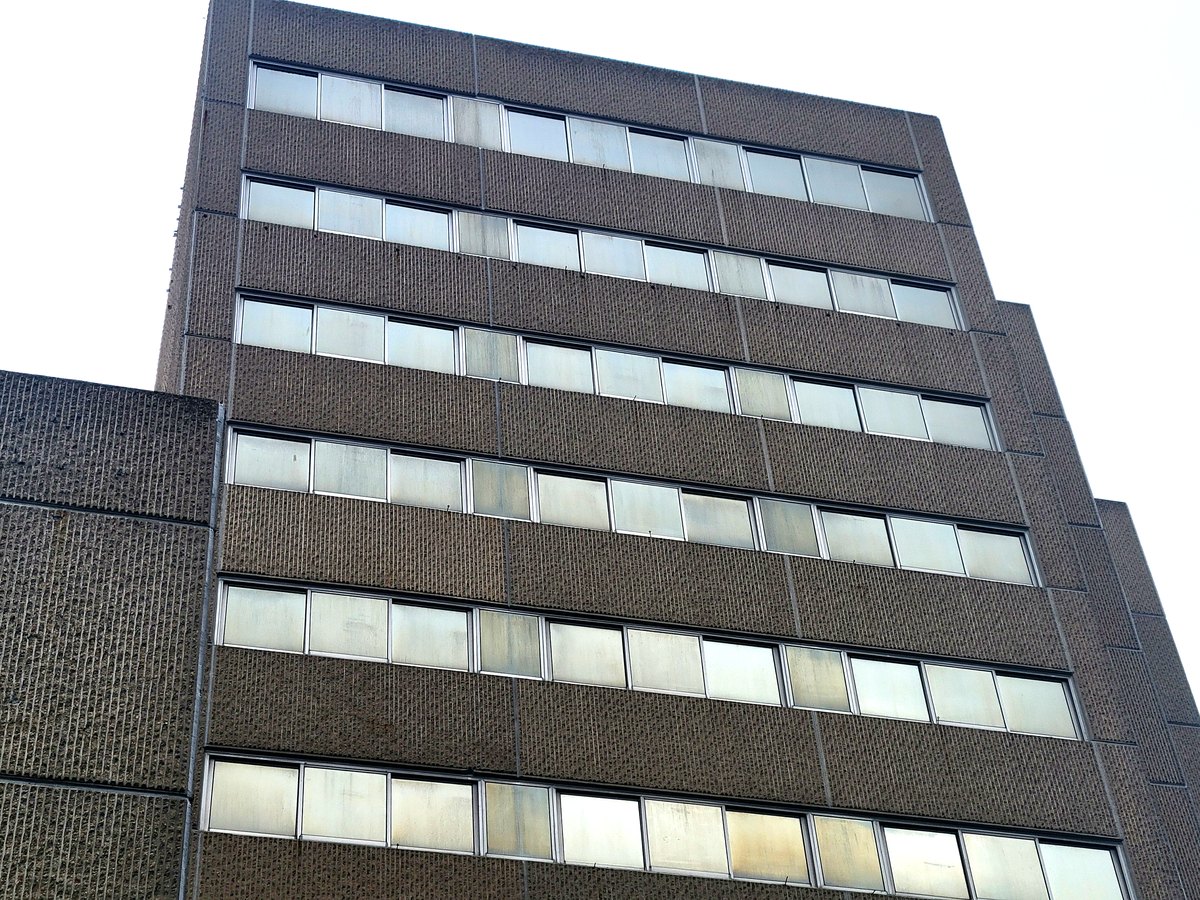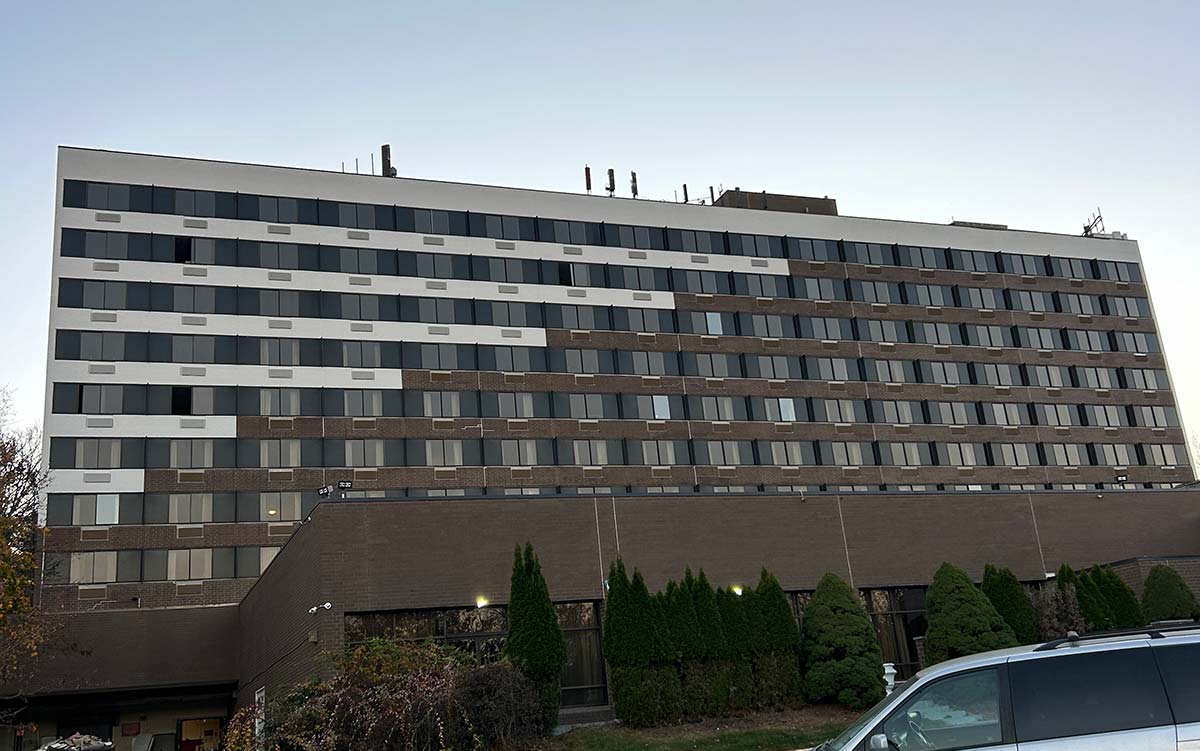
Bridgeport’s historic fabric is working architecture. It is the brick of nineteenth-century factories and mills, the civic and institutional masonry that went up downtown while the city was still making things the country wanted, the cast-iron shopfronts along the older commercial streets, and the residential and small commercial blocks out at Black Rock. Very little of it was built to be looked at. It was built to hold machinery and people, for an economy that has since gone elsewhere, and a good deal of it is now being asked to work as offices, housing, healthcare or civic space instead. That leaves a city holding an unusual quantity of significant fabric with fewer owners in a position to maintain it, and a building standing part-empty loses ground faster than a building in use.
The physical failure underneath is narrower than it looks, and it is almost always the same one. Soft nineteenth-century brick and the lime mortar it was bedded in were designed as a pair, with the mortar deliberately the weaker of the two. When the wall moves, or takes on water, the joint is meant to give way first so the brick does not. Repoint that wall in a hard modern Portland-cement mortar and the relationship inverts. The joint becomes the strongest thing in the wall and the masonry becomes the sacrificial element instead. Then the freeze arrives, the water the wall has taken in has nowhere to leave from, and it takes the face off the brick rather than out of the joint. There is no repair for that. A joint can be raked out and refilled as many times as a building needs it. A brick that has lost its fired face is gone, and in a few more winters so are the ones around it.
So the decisions that matter on a Bridgeport preservation project are made before anyone is on the wall: what the original mortar actually was, what the brick will tolerate, which alterations are original and which arrived in 1955, and what the city’s historic review will expect to see. We work to those answers rather than to a standard specification.
Presto carries out preservation work on Bridgeport’s designated landmarks, its industrial and civic masonry, and the older commercial buildings that still give the city its character.

Repointing is the most common job on Bridgeport’s older brick and the one most often done in a way that shortens the building’s life. A mill or factory wall from the 1870s through the 1910s was laid in lime mortar softer than the brick around it, on purpose. Grind those joints out, refill them with a hard Portland mix, and the wall stops behaving the way it was engineered to behave. Movement the joint used to absorb now goes into the brick, and water that used to leave as vapor through the joint stays in the masonry until it freezes. Our masons establish the original mix from what is still sound in the wall, cut out failed joints without widening them into the arrises, and refill with lime mortar matched for strength, color, sand and joint profile. On a segmental arch over a factory opening, or on a corbelled cornice, that profile is half of what the detail looks like.
Downtown is where Bridgeport spent money on stone: granite and brownstone trim on the banks and halls, limestone facing, and glazed architectural terra cotta across the commercial blocks. Terra cotta is the material that punishes guesswork. Each unit is a hollow fired shell with a glazed face, anchored back to the structure, and once the glaze is crazed the block starts taking on water and the concealed anchors rust and swell inside it. Cleaning is equally unforgiving, because pressure or abrasive media that a granite plinth shrugs off will strip glaze and open the body underneath. We test on an inconspicuous unit first, clean at the lowest setting that works, and repair or replicate failed units rather than coating over a problem that has become structural.


Multi-light steel sash is one of the defining details of Bridgeport’s industrial buildings, and on a conversion project it is usually the first thing proposed for the skip. What is actually failing is rarely the frame. It is hardened glazing putty, muntins corroded where water has stood in the bottom rail, seized hardware, and a perimeter seal that gave up decades ago. Steel windows can be stripped, descaled, primed and reglazed, and a properly restored unit will outlive most of the replacements offered as an upgrade to it. Where a sash is genuinely beyond saving we match the original section rather than the nearest catalog profile, because the thin sightline is the entire reason the elevation reads the way it does.
Nearly every historic industrial building in Bridgeport is flat-roofed, and nearly every one of them loses its wall at the top first. A parapet is exposed on both faces, so it wets and freezes from two sides while the rest of the elevation only does it from one. Add an ice dam at the roof edge, which backs meltwater up and holds it against the coping and the top courses instead of letting it run off, and the masonry up there takes several times the punishment of the masonry at street level. The symptoms are consistent: coping lifting, top courses loose, a corbelled cornice shedding units onto the sidewalk, and staining on the top floor that arrives in a thaw rather than in rain. We rebuild parapets in matched brick and lime mortar, reset or replace coping with through-flashing behind it, and reinstate cornice profiles that have already been lost. It is unglamorous work and it protects more of the building than anything else on this page.


Cast-iron storefront columns and lintels, pressed-metal cornices, iron stairs and fire escapes, and bronze entrance hardware run right through the older commercial streets here, and marine air keeps working on all of them without taking a season off. Cast iron fails from the inside out: water gets behind the paint film through a hairline crack, the iron corrodes and expands, and that expansion splits the section further, which is why a cosmetic repaint over rusting ironwork tends to be back on the schedule within a few years. We take corrosion back to sound metal, repair or cast replacement sections where a piece has been lost, and rebuild the paint system properly. On bronze we keep the patina wherever it is protecting the metal instead of stripping the surface bright.
The instinct on a wall that leaks is to seal it, and on a nineteenth-century Bridgeport masonry wall that instinct does real damage. These walls were never built to be impermeable. They take water in during a storm and give it back as vapor afterward, and every part of the assembly assumes that cycle continues. Coat one in a modern impermeable membrane or a film-forming sealer and the water still finds a way in, at the parapet, around a window, through a crack, and then it cannot get back out. It sits in the masonry through the winter and freezes there. We specify vapor-permeable repellents compatible with lime-based construction, hold fully impermeable systems to the details that were always meant to shed water, and fix the actual entry points instead of wrapping the symptom.

A historic property in Bridgeport runs on a slower sequence than a standard commercial restoration, and most of the risk sits at the front of it. Our five phases are built to establish what the building actually is before anything is specified, to get review coordination moving early, and to keep irreplaceable fabric out of the way of the work itself.


We record every area of deterioration and separate original fabric from later alteration, which on a Bridgeport industrial building can mean three or four campaigns of change stacked on one elevation. Nothing gets specified until that sequence is understood.
We establish what is actually in the wall: the lime mortar mix and its sand, the brick and how hard it was fired, terra cotta bodies and glazes, stone type, and metal alloys. Where the original is uncertain we recommend laboratory analysis rather than a confident guess.
Findings become a quantified scope with period-correct product specifications. We coordinate with owners, architects, preservation consultants and the City of Bridgeport's historic district review, so approvals are moving before crews are scheduled rather than after.
Trained crews carry out the work with period-appropriate materials and hand techniques. Lime mortar, coatings and sealants all have temperature and moisture limits, so the work is planned into the months Connecticut actually allows instead of being pushed against a frost date.
We hand over before-and-after photography, material data sheets, warranty detail and maintenance guidance. On a designated Bridgeport property that record is what supports the next review, and what the next owner inherits instead of guesswork.
Whether your Bridgeport historic property is already shedding material or you are trying to get ahead of it, tell us what you are looking at and our team will point you toward the right fix.
Call 1-800-785-9927 or Request A Free Quote.
Keeping historic property in Bridgeport in order takes more than a crew that turns up once something has already failed. Presto coordinates a network of regional divisions so that major envelope restoration and routine upkeep sit inside one relationship rather than two unrelated ones.
For day-to-day and preventative facility needs, we encourage property managers to reach out to our sister divisions directly:
Building Restoration Bridgeport: Localized structural repair and high-rise exterior preservation.
Building Maintenance Bridgeport: The preventative work that carries an older building through a Connecticut winter.
Building Services Bridgeport: Day-to-day commercial building support across the Bridgeport market.
Recent historic preservation and landmark restoration work Presto has completed on Connecticut properties.
Ordinary restoration asks whether the building is watertight and serviceable again. Preservation asks that, and then asks what the repair cost the building. The difference shows up in material choice: lime mortar rather than Portland cement, a cleaning method calibrated to the substrate rather than the fastest one on the truck, and repairs a future owner can undo rather than ones that lock the building into decisions made today. It is slower and it costs more. It is also the only version of the work that leaves a Bridgeport landmark still holding the fabric that made it worth designating.
Because it decides which part of the wall breaks. A nineteenth-century brick wall here was laid in lime mortar deliberately softer and weaker than the brick. Movement and moisture are supposed to be absorbed by the joint, which is replaceable, rather than by the brick, which is not. Repoint it in a hard Portland mix and that arrangement reverses. The joint becomes the strongest element in the wall, so stress and trapped water go into the masonry instead, and the first hard winter after that repointing is usually when faces start coming off the brick. Raking a joint out and doing it again is routine work. Putting a fired face back onto a brick is not possible at all.
Usually, and the elements people assume have to go are often the ones most worth keeping. Restored steel sash performs far better than its reputation and holds the sightlines that make a mill elevation read correctly. Heavy masonry walls carry real thermal mass. The changes that cause trouble are the ones that seal an old wall shut, because a building designed to dry outward will simply hold the water instead, and in this climate it will freeze there. We work on the envelope. Interior mechanical and insulation upgrades in a conversion are normally handled by a contractor who specializes in that side of the job.
Scope sets most of it. Focused repointing and parapet work on a smaller commercial building runs two to four months. A full preservation scope on a larger mill or civic building can run six to twelve months or longer. Two local factors stretch the number. Lime mortar, coatings and sealants all have temperature and moisture limits, so the working season here is genuinely shorter than the calendar year, and a schedule that ignores that finds out in November. Historic district review also has to be closed out before work starts, which can add weeks or months ahead of the construction schedule itself. We put realistic dates against both when we scope.
Yes, across the range of designation levels, from locally designated buildings to properties listed individually on the National Register. What a designation actually requires varies a good deal: whether a certificate of appropriateness or a similar review is needed, and which parts of a scope trigger it at all. On plenty of Bridgeport buildings some elements of the exterior work need review and others need none. We establish which is which at the start, so it does not surface halfway through the job.
Permits and inspections run through the City of Bridgeport building department, and where a property sits inside one of the city’s historic districts the review coordination is handled alongside them. Connecticut has no operative county government, so there is no county authority anywhere in that chain and it all goes through the city. On a designated property the approval is usually driven by the owner working with a preservation architect or consultant. Our part is an accurate scope, period-correct material specifications, and documentation that stands up to that level of scrutiny, and we stay in contact with the owner’s team so our work supports whatever submissions are required.
Yes. Our scopes track the National Park Service Preservation Briefs, the most widely used technical reference for this work in the country. The Briefs that come up most often on Bridgeport buildings are the ones covering the repointing of mortar joints in historic masonry, cleaning masonry without damaging it, architectural terra cotta, and the repair of historic steel windows. Where a property’s designation brings further standards with it we work to those as well, and an owner working with a preservation architect is welcome to check our proposed scope against the relevant Briefs before anything begins.

A historic building cannot be put back once it is gone, and the shortcuts that suit modern construction are precisely the ones that destroy an old wall. Tell us what your Bridgeport property is doing and our team will tell you what it needs to hold its character, its performance and its value.
Call 1-800-785-9927 or Request A Quote online.