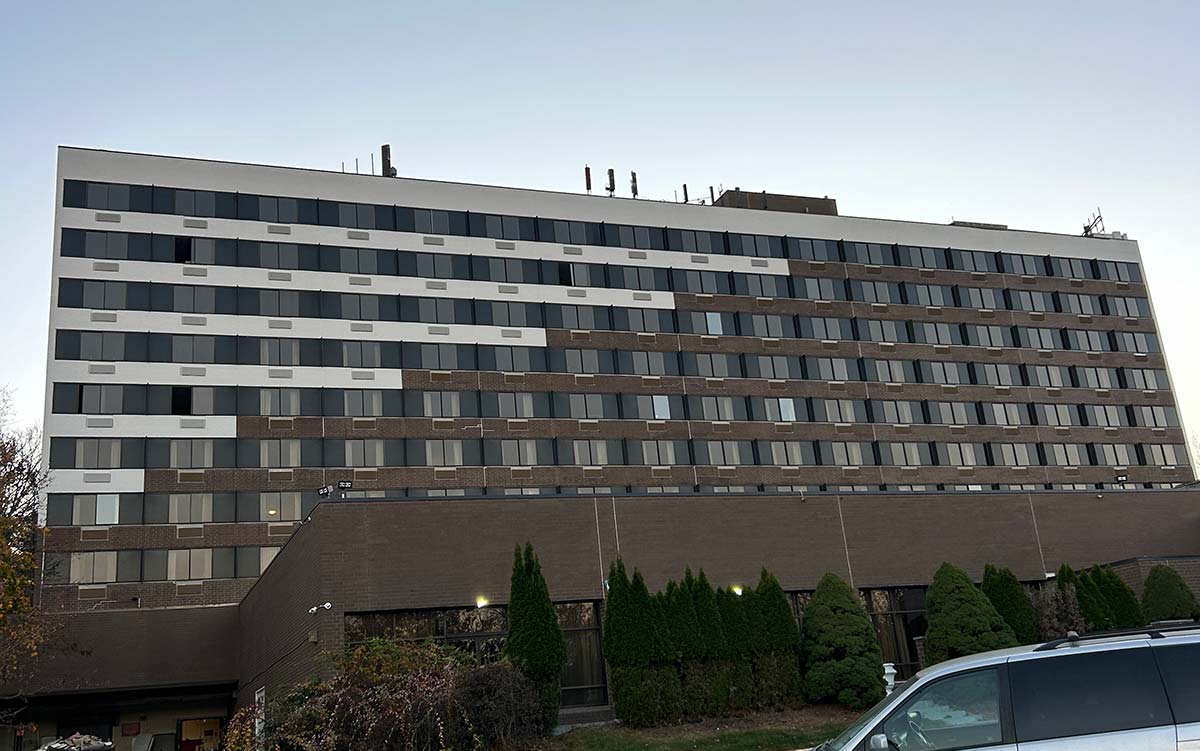
Presto Building Facade Restoration & Waterproofing
Building Facade Waterproofing & Restoration Services 1-800-785-9927

A commercial roof in Hartford works hardest between December and March. Wet Atlantic snow lands heavy, drifts against parapets and mechanical curbs, then thaws on a mild afternoon. The meltwater runs toward a drain that is still frozen, backs up across the field, and refreezes overnight. Ice is what finds the weakness. It works into a lap seam, a flashing termination, or a hairline split in a cap sheet, expands, and opens the gap a little wider on every cycle. A single Connecticut winter delivers that cycle over and over. By the spring thaw, a roof that shed water perfectly in October is staining ceiling tiles. Most owners are then told the only answer is a full tear-off. That is a capital decision made on incomplete information.
Presto Restoration coats and restores structurally sound commercial roofs across Greater Hartford with silicone systems chosen for a cold, wet climate rather than a hot one. A properly installed coating adds a decade or more of service life for a fraction of replacement cost, and it does it without opening a building to the weather. We work on TPO, PVC, EPDM and CSPE single-ply, aged or previously coated metal, built-up roofing, modified bitumen and cap sheets, spray polyurethane foam, and most existing acrylic or urethane coatings. The finished result is one continuous membrane with nothing to lift or delaminate at a joint. That matters more here than it does anywhere warm, because a seam is exactly what backed-up meltwater looks for.
Presto installs silicone coating systems built for freeze-thaw, snow load and standing water rather than for constant sun. Below are the roof assemblies we most often coat and restore on buildings in Hartford and the surrounding towns.

Silicone is the chemistry to reach for when water sits still on a roof. On a Hartford low-slope deck that water spends part of the winter as ice, and freezing is the harder test of the two. Silicone stays hydrophobic and does not soften or re-emulsify after days under a ponded slab, which is where acrylic and elastomeric coatings start to give up. It also cures into one continuous film with no laps, so there is no seam for backed-up meltwater to travel under. Presto installs premium silicone systems, including GE Enduris, over compatible substrates after adhesion testing, flashing repair and full surface preparation. The finished membrane carries manufacturer warranty terms.
Single-ply membranes age differently in Connecticut than they do in the South. The driver here is thermal movement more than sunlight alone. A Hartford roof can swing from single digits in January to the low nineties in July, and the sheet expands and contracts across that whole range every year. Seams fatigue, fasteners back out, and small punctures open at corners and curbs. Then winter meltwater finds them. Coating an intact membrane with silicone bridges those weak points, re-establishes a watertight surface, and lays a flexible film over a sheet that has already lost some of its own elasticity. On sound single-ply roofs in the Connecticut River valley it is the least disruptive way to buy another decade.


Spray polyurethane foam performs well on New England buildings for as long as its top coat stays intact. That coat is sacrificial. It thins with weathering, foot traffic and snow removal, and snow removal is the part owners tend to underestimate. A metal shovel or a badly aimed scraper opens the coat in a few minutes. Once bare foam takes on water, that water freezes, expands and crumbles the cells from the surface down. Presto recoats existing SPF roofs to rebuild the protective layer, sealing shallow damage before it turns into cellular breakdown underneath. A recoat costs a small fraction of stripping and respraying a full foam system, and on most sound SPF roofs it is simply the correct maintenance decision.
Asphaltic roofing is everywhere on Hartford’s older commercial and industrial stock, from the Colt-era mill buildings in Coltsville to mid-century flat roofs downtown. Built-up roofing, modified bitumen and cap sheets take silicone well when the deck and the insulation under it are still dry. These assemblies almost always fail at the edges first, at seams, terminations, base flashings and penetrations, long before the field membrane itself is worn out. Cold accelerates it, because asphalt stiffens as the temperature drops and a stiff sheet cracks where it used to flex. Silicone seals those failure points and holds them through the movement. Where an asphaltic substrate is likely to bleed oils into the new film, we prime with a manufacturer-approved bleed blocker first.


Restoration is not right for every roof, and saying so early saves money. Structural deterioration, saturated insulation under the membrane, widespread substrate failure, or an existing coating that silicone will not bond to all point toward replacement rather than a coating. Wet insulation is the one we find most often on Hartford buildings, because insulation that took on water through a winter of ice damming does not dry out over one short summer. So before any coating work is recommended, we test adhesion on the actual substrate and confirm the assembly beneath it is dry and sound. If your roof is not a candidate, you will hear it plainly, in time to go to a replacement contractor without losing a construction season.
Every roof restoration we take on in Hartford runs through the same five phases, and the order matters. Confirm the roof is worth coating. Prove the coating will bond to what is actually up there, not to what the original spec sheet says. Then prep and install inside a weather window Connecticut will genuinely give us.


We go over the whole assembly: membrane condition, laps and seams, base flashings, penetrations, drains and scuppers, and the parapet edge where ice tends to build. Anything structural that would rule out coating is flagged before a scope gets written.
Coatings fail at the bond line, not out in the middle of the field. We pull test patches on your actual substrate before a system is specified, which catches incompatibility with an older coating while it is still a cheap problem to have.
We specify the silicone system, any primer or bleed blocker it needs, the flashing and penetration repairs, the square footage, and a schedule built around Connecticut's real coating season rather than an optimistic one.
Crews clean and prepare the surface, complete the flashing and detail repairs, then apply silicone at the manufacturer's specified thickness. Wet-mil readings are taken as the material goes down, not estimated afterward.
Handoff includes warranty registration, product data sheets, before-and-after photography, and a maintenance plan covering drain clearing before the first freeze and a check of the details after the thaw.
Leaking, ponding, staining ceiling tiles after every thaw, or simply nearing the end of its expected life? Before you commit capital to a tear-off, find out whether the roof can be restored instead. Describe what you are seeing on the building and our team will tell you which of the two you are actually dealing with.
Call 1-800-785-9927 or Request A Quote.
Keeping a roof watertight is one trade among several that a Hartford property calls on over the course of a year. Presto brings in specialized partners so an owner can cover the whole building, from major envelope restoration through to routine facility work, without assembling a vendor list from scratch.
For recurring maintenance and facility-level work, these sister divisions are the right first call:
Building Restoration Hartford: Concentrated repair work on a single elevation or structural element.
Building Maintenance Hartford: Year-round upkeep on the components that do not warrant a project of their own.
Building Services Hartford: A single point of contact for the day-to-day work a building generates between restoration projects.
A silicone restoration typically lands between 30% and 50% of the cost of tear-off and replacement, depending on the assembly, its current condition, and how much detail repair it needs. The savings are not only financial. Restoration keeps the building running, keeps old membrane and wet insulation out of the waste stream, and avoids opening a roof deck to the weather in a climate that can turn on you in a day. We price the work as a scoped project so you can set it directly beside a replacement bid.
Most silicone systems add 10 to 20 years of service life. Where a Hartford roof lands in that range comes down to the product, the applied thickness, the condition of the substrate underneath, and whether drains stay clear through the winter. Applied to specification and backed by a manufacturer warranty, a premium silicone membrane performs comparably to a new single-ply at a much lower cost. Clearing drains before the first freeze and checking the details after the thaw does more for that number than anything else an owner controls.
We coat structurally sound TPO, PVC, EPDM and CSPE single-ply; metal roofs that are aged or previously coated; built-up roofing, modified bitumen and cap sheets; spray polyurethane foam; and most existing acrylic or urethane coatings. Asphaltic substrates sometimes need a bleed blocker primer so oils do not migrate into the new film. Every roof gets substrate-specific adhesion testing before a system is specified, because what the original spec sheet says and what is actually on the deck after thirty New England winters are frequently two different things.
When the problem is under the membrane rather than on it. Serious structural damage, saturated insulation, widespread substrate failure, rot, or an existing coating that silicone will not bond to all point to replacement. Saturated insulation is the common one on older buildings here, and a core cut settles the question quickly. We do not perform tear-off and replacement ourselves, so if that is the honest answer you will get it early and can take it to a roofing contractor who specializes in the work.
Not on its own, and any contractor who tells you otherwise is overselling. Ice damming is driven by heat escaping through the assembly, melting snow that then refreezes at a cold edge or a cold drain. What a seamless silicone membrane changes is the consequence. When meltwater does back up, there are no laps, seams or fastener heads for it to travel under, and the details at drains, scuppers and the parapet edge get rebuilt as part of the work. That is usually the difference between a stained ceiling tile and a dry one.
Tenants stay. The work happens on the roof, so daily operations continue, and we coordinate around air intakes to manage odor during application. Timing is the real constraint rather than occupancy. Silicone needs surface temperatures and a dry cure window, which in Connecticut means most projects are scheduled from roughly late spring into autumn. We plan the sequence with property management so the schedule survives contact with the weather rather than assuming perfect conditions.

Before you approve a tear-off on a Hartford commercial building, find out whether the existing roof still qualifies for restoration. On a sound deck, a silicone system can add a decade of service life and keep that capital in the budget where you need it.
Call us today at 1-800-785-9927 or click Request A Quote.