




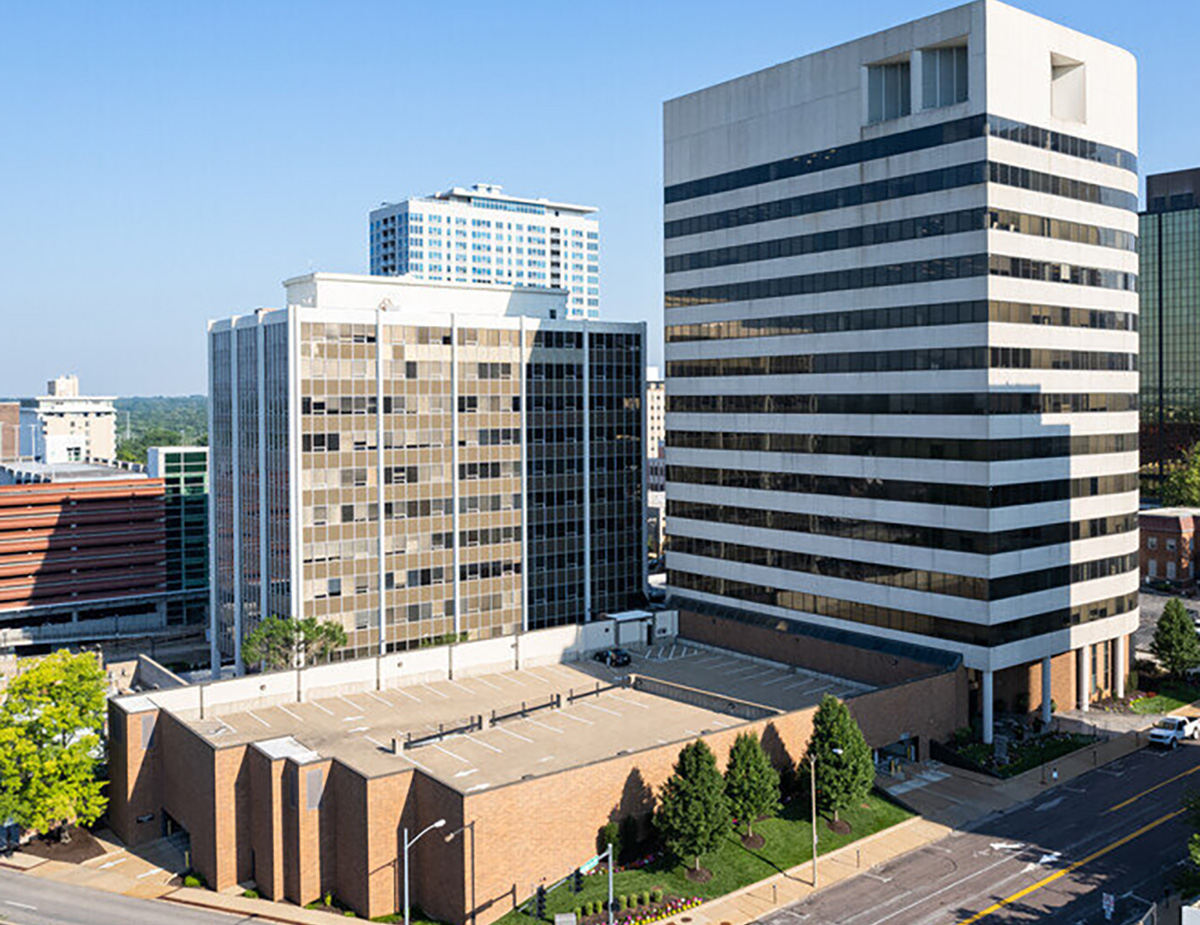



Kansas City sits in the middle of the continent, and its buildings pay for that every winter. Water finds a sealant joint or a hairline crack, freezes, expands, thaws, and does it again, and each pass leaves the opening slightly wider than it started. De-icing salt then rides that same meltwater into parking decks and plaza slabs, where dissolved chlorides reach embedded steel and start corrosion that cracks concrete from the inside out. Spring and summer add hail, which bruises roof membranes and dents metal panels without always leaving a mark anyone notices from the sidewalk. None of this is dramatic on any single day, and that is exactly the difficulty. By the time a stain shows up on a ceiling in the Crossroads or a piece of concrete drops onto a deck downtown, the envelope has been losing ground for years.
Presto Restoration is a nationwide commercial contractor with more than 25 years of experience restoring and waterproofing high-rise buildings, parking structures, and historic properties. On a Kansas City building that experience shows up in the material choices: sealants that stay flexible at low temperature instead of going rigid in January, traffic-bearing membranes rated for chloride exposure, and coating systems matched to the substrate actually in front of us. That might be glazed architectural terra cotta on a 1920s commercial block, cast stone and stucco around the Country Club Plaza, or precast and curtain wall downtown. Everything we do is above grade; foundations and below-grade waterproofing are not our work.
Presto Restoration delivers a complete lineup of exterior building restoration, waterproofing, and consulting services for commercial properties in Kansas City, Independence, Lee’s Summit, Blue Springs, Liberty, and across Jackson, Clay and Platte counties.
Water gets into a Kansas City building through joints, not through walls. We treat the above-grade envelope as one continuous system, which means wall assemblies, window and door perimeters, plaza decks over occupied space, parapets and copings all get specified together, because one failed joint feeds everything below it. We work above grade only, not on foundations or below-grade waterproofing. Sealants are chosen to stay flexible through a Missouri winter rather than to survive a single season.
A Kansas City facade has two jobs, and winter is hard on both of them. It has to keep water out of a wall that freezes and thaws all season, and it has to read as an asset somebody is paying attention to. Our scope covers full caulking and sealant replacement, glazed terra cotta and cast stone repair, architectural metal refinishing, glass restoration, tuckpointing, and elastomeric coatings put onto a properly prepared substrate rather than painted over a failing one. On an older commercial block that is craft work; on a downtown curtain wall it is a joint-by-joint rebuild.
View Our Kansas City Facade Restoration Services →
Parking structures take the worst of a Kansas City winter, and they take it from above. Salt and slush arrive on tires, sit on the slab, and carry chlorides down through every crack and cold joint. Once those chlorides reach the reinforcing steel they strip away the alkaline film protecting it; the steel corrodes, corroded steel takes up more room than sound steel, and the concrete above it delaminates and eventually breaks free. Rust streaks, hollow-sounding slabs and split joint sealant are the visible end of a process that began several winters earlier. We reverse it with traffic-bearing coating systems, removal and replacement of delaminated concrete, expansion joint renewal, and drainage corrections that stop salt water standing where it does the most damage.
A roof with a sound deck and dry insulation rarely needs tearing off, and restoring one costs a fraction of replacing it. In Kansas City the damage worth catching early is hail bruising, where an impact weakens a membrane without opening it and the leak turns up months later, together with split seams and lifted flashings that a season of thermal movement has worked loose. We coat with silicone and elastomeric systems, rebuild flashings and penetration details, and correct the low spots that hold meltwater against a seam until it lets go.
Kansas City’s older commercial architecture is unusually rich in glazed architectural terra cotta, and terra cotta fails in a specific, well-documented order. Water enters through a crazed glaze or an open mortar joint, the porous body behind the glaze takes it up, and freezing pressure pushes the glaze off in plates; where that water reaches the iron anchors holding the units to the structure, expanding rust cracks them from behind. Work like this cannot be improvised. We handle it with period-appropriate mortars, unit repair and in-kind replacement, anchor treatment, and submissions prepared for the Certificate of Appropriateness review the Kansas City Historic Preservation Commission requires before an exterior permit is issued on a Kansas City Register property.
A leak almost never enters where it appears. Water that gets past a Kansas City parapet or a failed window head can run along a slab edge for two or three floors before it finds a ceiling tile to stain, which is why replacing the ceiling tile is so rarely the end of it. Our diagnostic work isolates the real entry point with controlled water testing, moisture meter surveys, infrared thermography when conditions allow it, drone imagery, and close inspection from rope access. What comes back is a documented finding rather than an opinion, and a repair scope sized to the failure instead of to the stain.
For more than 25 years Presto Restoration has protected commercial buildings across the United States, and that national record is what we bring to a Kansas City envelope: freeze-thaw joint failure, chloride damage on decks and plaza slabs, hail-struck roofing and coatings, and glazed terra cotta that needs handling rather than patching. Exterior work here runs through the City Planning and Development Department, and on a Kansas City Register property it also runs through the Historic Preservation Commission.
Kansas City is a bi-state metro with a compact downtown core, a ring of older commercial districts around it, and a lot of suburban stock beyond that, and covering it properly takes more than one kind of crew. So that owners and managers get complete building care, from major exterior restoration down to routine upkeep, Presto coordinates with specialized local support networks.
For day-to-day upkeep and site-level facility work, property managers can go straight to our sister divisions:
Building Restoration Kansas City: Focused on structural repair and exterior preservation on the taller buildings in the market.
Building Maintenance Kansas City: Dedicated to the preventative maintenance schedule that keeps a Kansas City property ahead of winter.
Building Services Kansas City: Your first call for the day-to-day commercial building support a portfolio needs between projects.
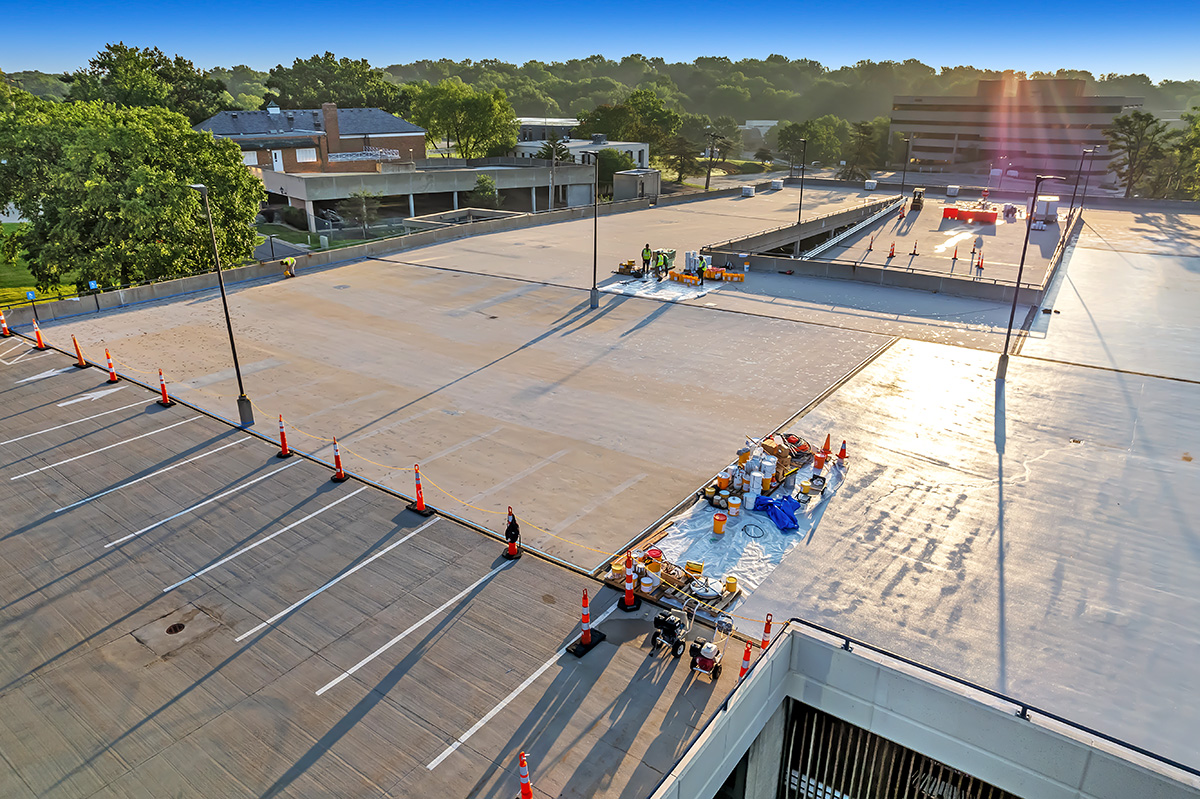

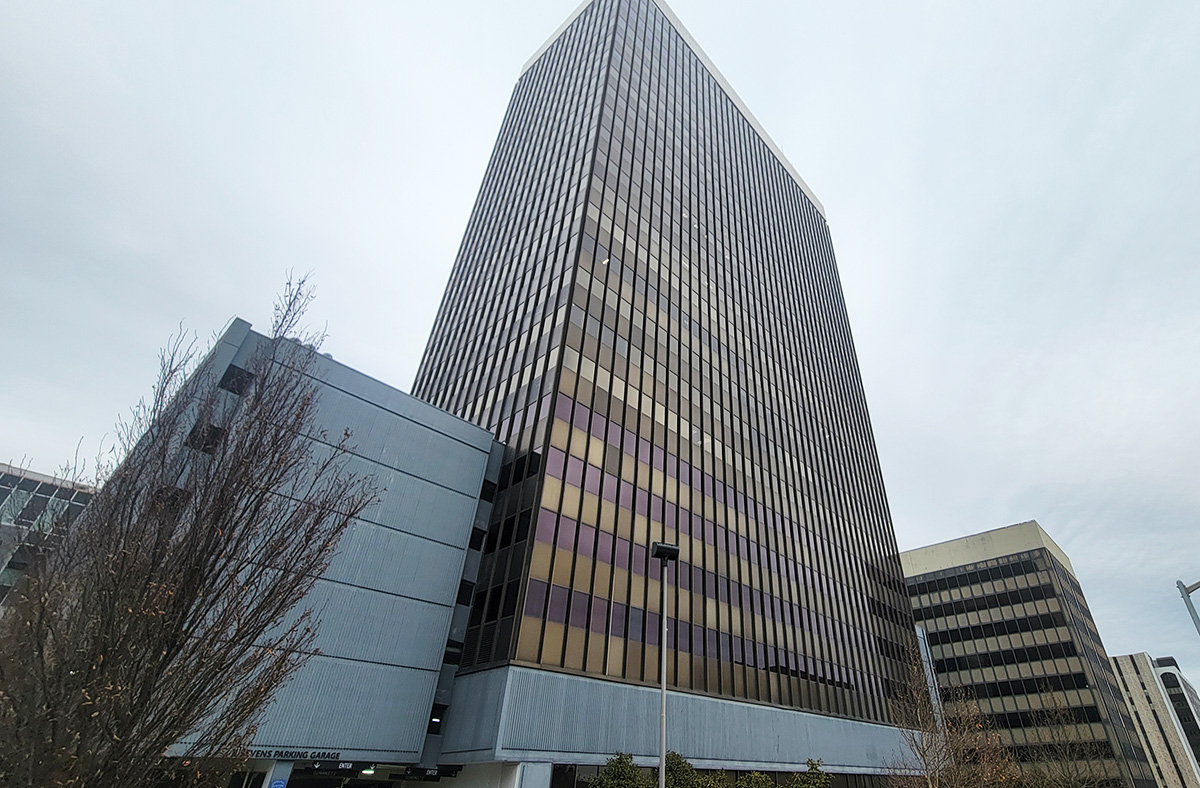
Most categories of commercial property in the market: downtown office towers, mixed-use blocks in the Crossroads Arts District and River Market, retail and office space around the Country Club Plaza, hotels, parking structures, hospitals, schools, government buildings, warehouse conversions in the West Bottoms, and properties on the Kansas City Register of Historic Places. Substrates we handle include glazed architectural terra cotta, cast stone, masonry, stucco, precast concrete, architectural metal, curtain wall glass, and low-slope roofing.
It works joints open. Every porous material on the exterior holds a little water: mortar, the body behind a crazed terra cotta glaze, cast stone, concrete. Each time that water freezes it expands and pushes, and each thaw leaves the opening a little larger. Run that through a full continental winter and sealant loses adhesion, mortar loses its face, and glaze starts coming away in plates. De-icing salt does not add a new problem so much as accelerate this one, because chlorides carried in meltwater reach embedded steel and start corrosion that cracks concrete outward. Add spring and summer hail on roofing and coatings and the restoration threshold here is set by weather rather than by the age of the building.
Scope sets the duration. A focused caulking and sealant replacement on a mid-rise is often two to four weeks; a full facade restoration on a large downtown building can run several months. The bigger scheduling question in this market is temperature, because sealants, coatings and mortars all have a minimum application temperature, so cold-weather work needs either a heated enclosure or a place in the next season’s queue. We plan around that window and phase work zones so tenants, parking and building entrances stay usable.
Yes. We prepare and manage permit applications through the City Planning and Development Department, and where a property sits on the Kansas City Register of Historic Places we prepare the Certificate of Appropriateness submission the Historic Preservation Commission reviews before an exterior permit is issued. When a General Contractor is running broader construction on site we route permitting through the GC, and owners who prefer to pull their own permits are welcome to do so. Presto carries nationwide general liability and workers’ compensation coverage on every project.
Maintenance runs on a calendar and keeps a building presentable: cleaning, window washing, touch-ups. Restoration is corrective. It means replacing sealant that has lost adhesion, taking out and replacing delaminated concrete, repairing or resetting terra cotta units, treating corroded anchors, rebuilding flashings. Where a building goes through a full freeze-thaw season every year, maintenance slows the clock and only restoration resets it, and skipping the restoration cycle does not save money because it turns a repair into a capital project.
From the ground: sealant joints that have split, shrunk or pulled away from one side; rust streaks running down from anchors, lintels or railings; mortar eroded back from the face of the masonry; terra cotta or cast stone showing hairline crazing, lost glaze or a chipped arris; efflorescence on masonry. On a deck: a hollow sound underfoot, cracks tracking the reinforcement, standing water, torn joint seals. Inside: stains that show up after a thaw rather than after rain. Every one of those is a symptom of envelope failure, not of a building that needs cleaning. Call 1-800-785-9927 or use the Request A Quote form, tell us what you are looking at, and our team will point you toward the right fix.
Seeing split joints, rust streaks or a leak on your Kansas City building? Describe it to us and we will tell you what is behind it and what the sensible next step is.
Call us today at 1-800-785-9927 or click Request A Quote.